


Blog: facade advice and flexible stone
Practical articles on cladding facades with flexible stone: choosing a texture, installation, insulation, cost and common mistakes.
 News
15.10.2026
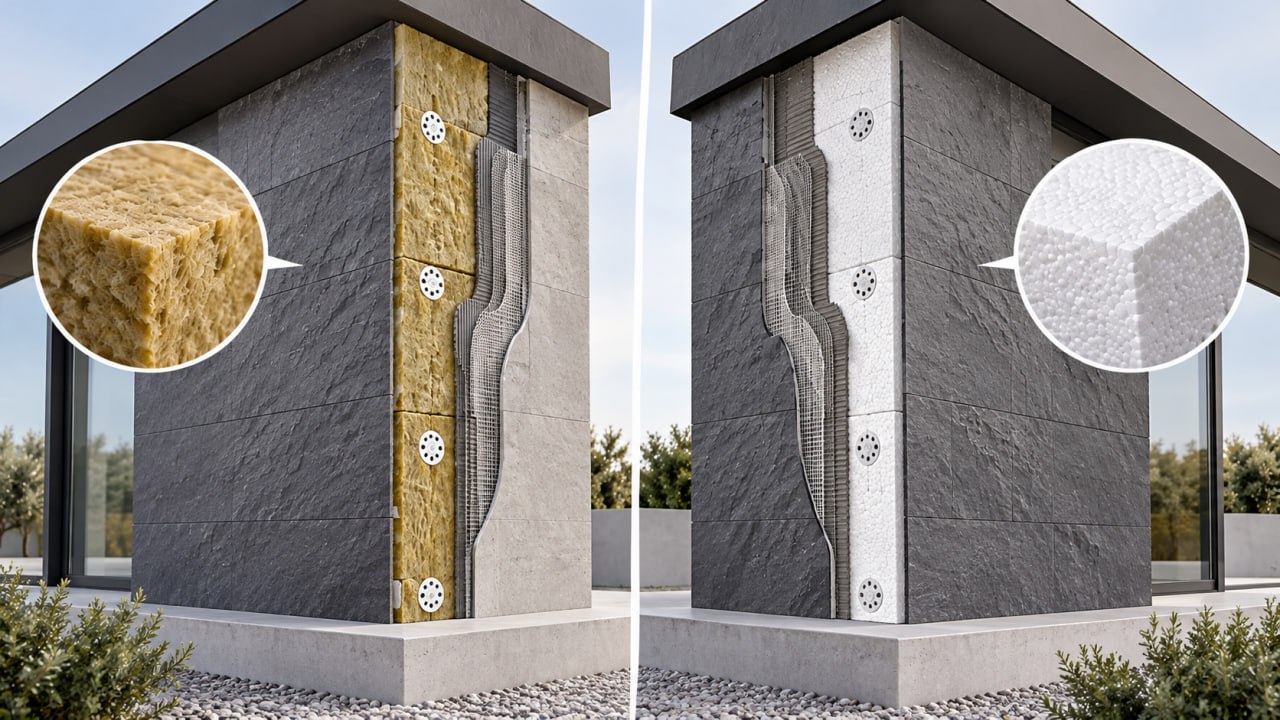
Mineral Wool or Expanded Polystyrene: Which Insulation to Put Under Flexible Tile
Expanded polystyrene is cheaper, lighter and easier to install; mineral wool is vapour-permeable, non-combustible and better at damping noise. We compare both insulations on eight criteria, walk through the typical build-up of an insulated facade under KORDEKO flexible tile and explain why installation mistakes cost more than any saving on the material.
Read more
 News
13.10.2026
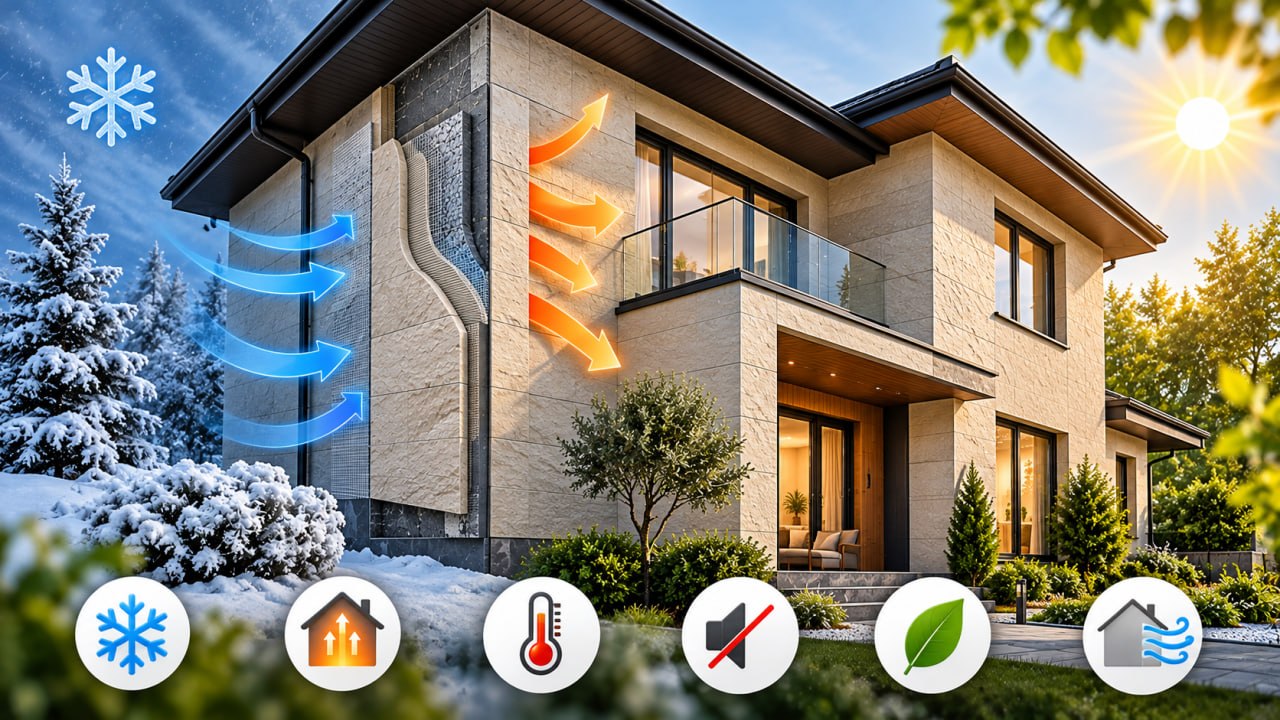
Energy-Efficient Facade: How Flexible Tile Helps Reduce a Home’s Heat Loss
External walls can account for about 25–40 % of a home’s heat loss. Four causes: insufficient insulation, thermal bridges, installation mistakes and moisture. An honest word on the role of cladding: flexible tile does not replace insulation, but as the finishing layer it shields the system from water and UV. How an insulated facade is built and which mistakes cancel its effect.
Read more
 News
13.10.2026
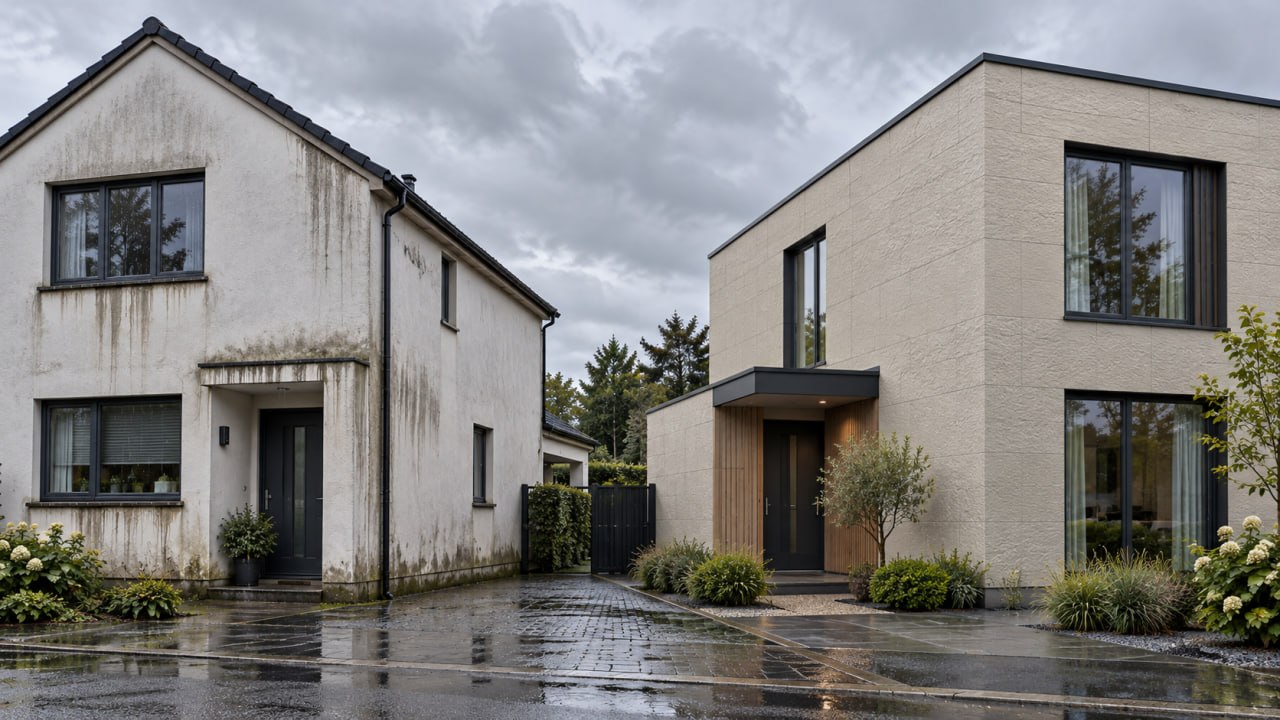
Why Rain Streaks Appear on Facades and How to Keep Walls Clean
Dark lines under windows and dirty marks near downpipes appear wherever rainwater runs down the wall instead of being led away from it. Five causes of streaks, how cladding texture affects soiling, which parts of the building need attention first, and how to care for flexible tile so the facade stays clean longer.
Read more
 News
13.10.2026
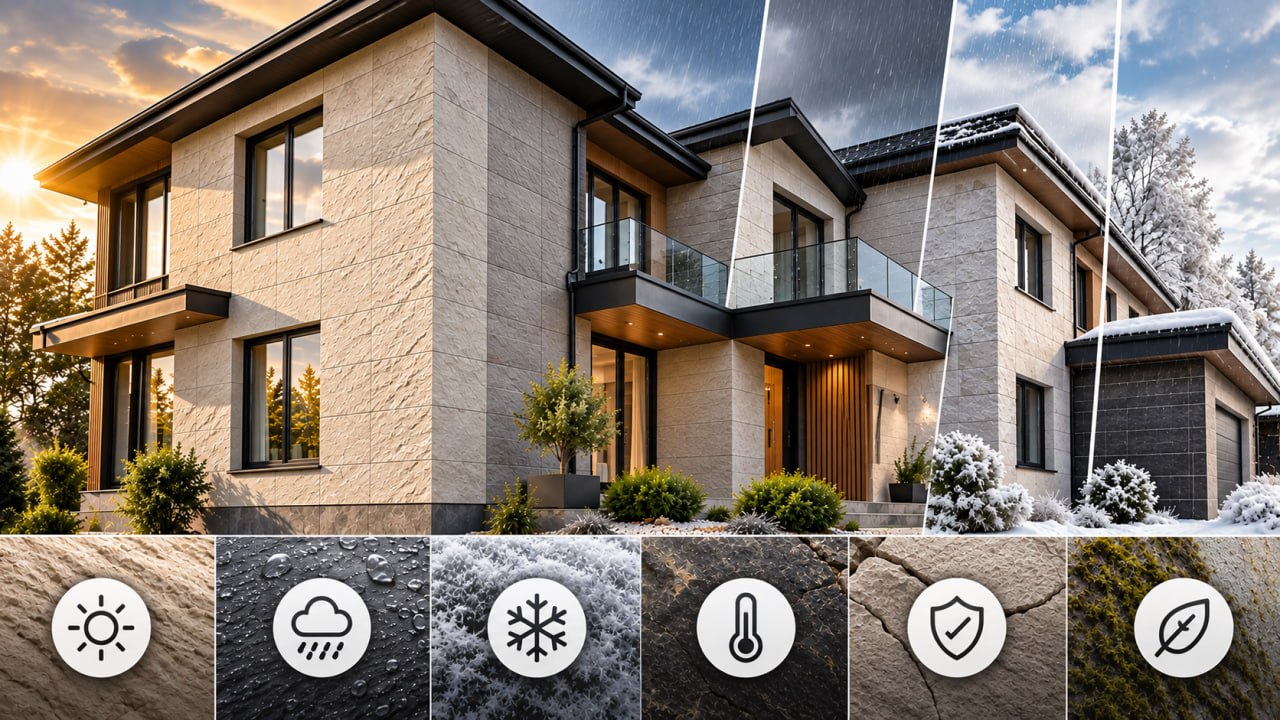
How Long a House Facade Lasts: What Determines Cladding Durability
Render, porcelain tile, natural stone and flexible tile age differently, but the service life of a finish and the durability of a facade are not the same thing. Five factors that matter more than the material: substrate, moisture and frost, thermal movement, installation and maintenance. What is declared for KORDEKO flexible stone and why insulation and installation extend a facade’s life.
Read more
 News
13.10.2026
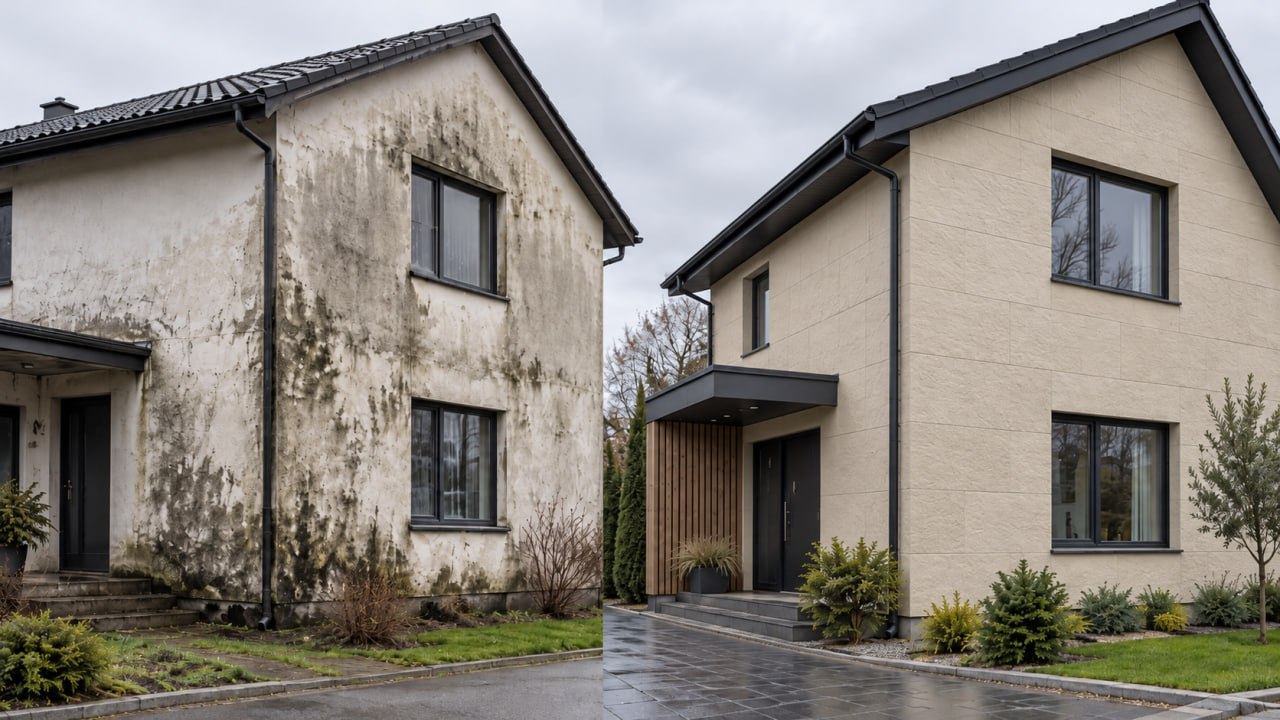
Cheap Render or Flexible Tile: Which Facade Finish Pays Off Over the Years
Cheap render saves money at construction, but after 10–15 years the bill looks different: cracks, repainting, local repairs. We compare the two on six criteria in a table, work through two identical houses, explain why installation matters more than the material, and say when render is still the sensible choice.
Read more
 News
13.10.2026
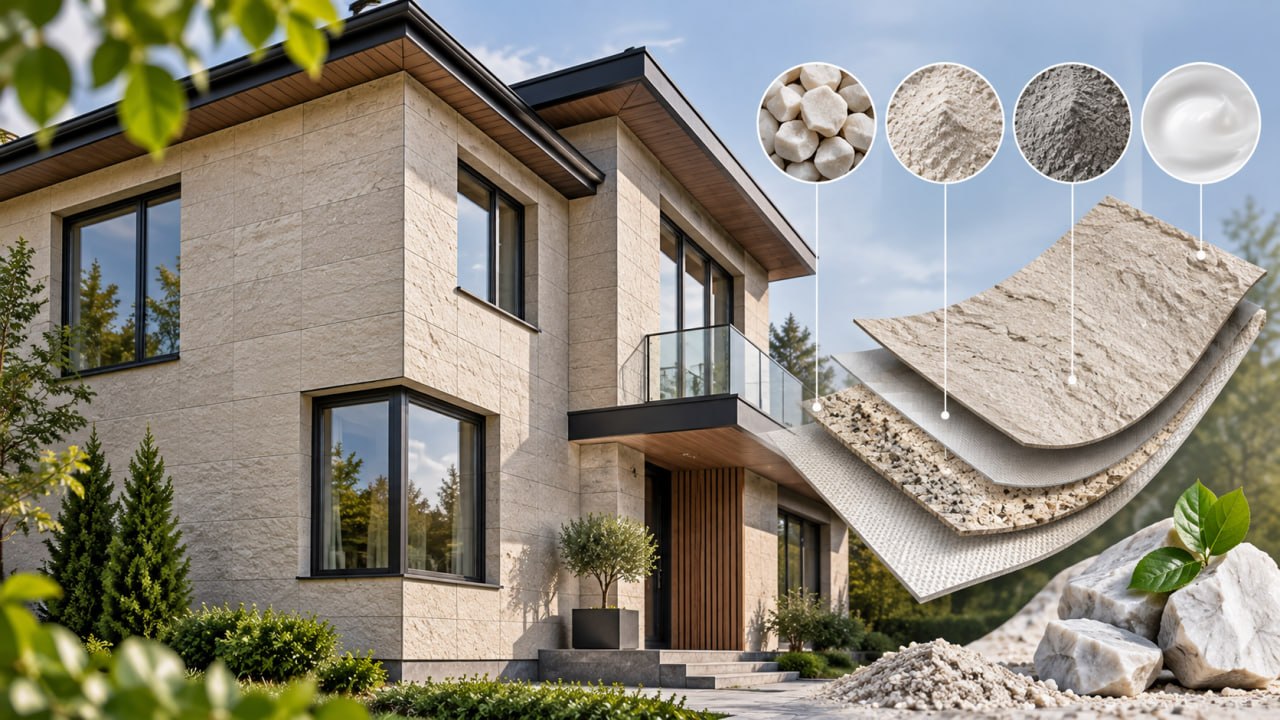
Eco-Friendly Facade Finishing: What KORDEKO Flexible Tile Is Made Of
What flexible tile is really made of: white cement, quartz sand or marble flour, acrylic dispersion, oxide pigments and a reinforcing membrane. What the technical data sheet says about safety, what an ISO 14001 certificate confirms and what it does not, and why composition should be judged together with the facade’s performance.
Read more
 News
13.10.2026
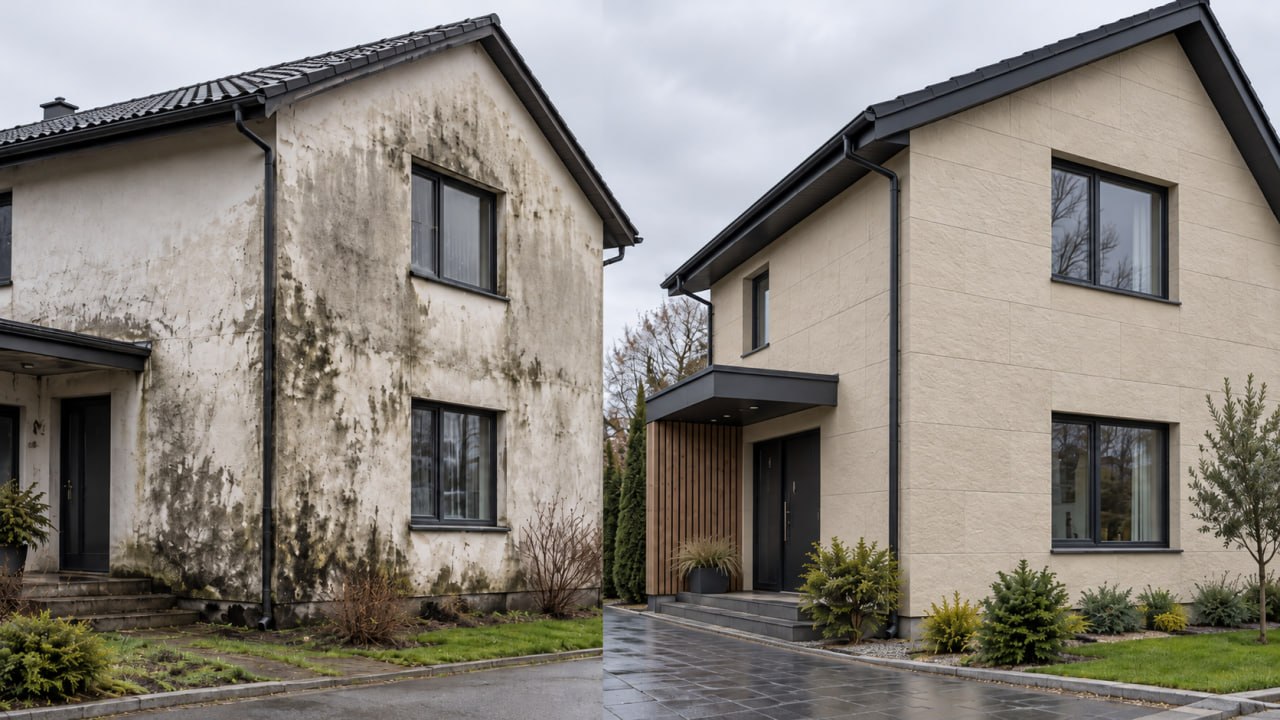
Why Mold and Fungi Appear on Facades and How Flexible Tile Protects Walls
Dark stains and green deposits on a facade mean the wall gets wet regularly and never dries out. Five causes of dampness: constant moisture, shade, insulation mistakes, faulty junctions and damaged finishes. How a water-resistant cladding changes the picture, why correct insulation matters, and what to do when mold is already there.
Read more
 News
13.10.2026
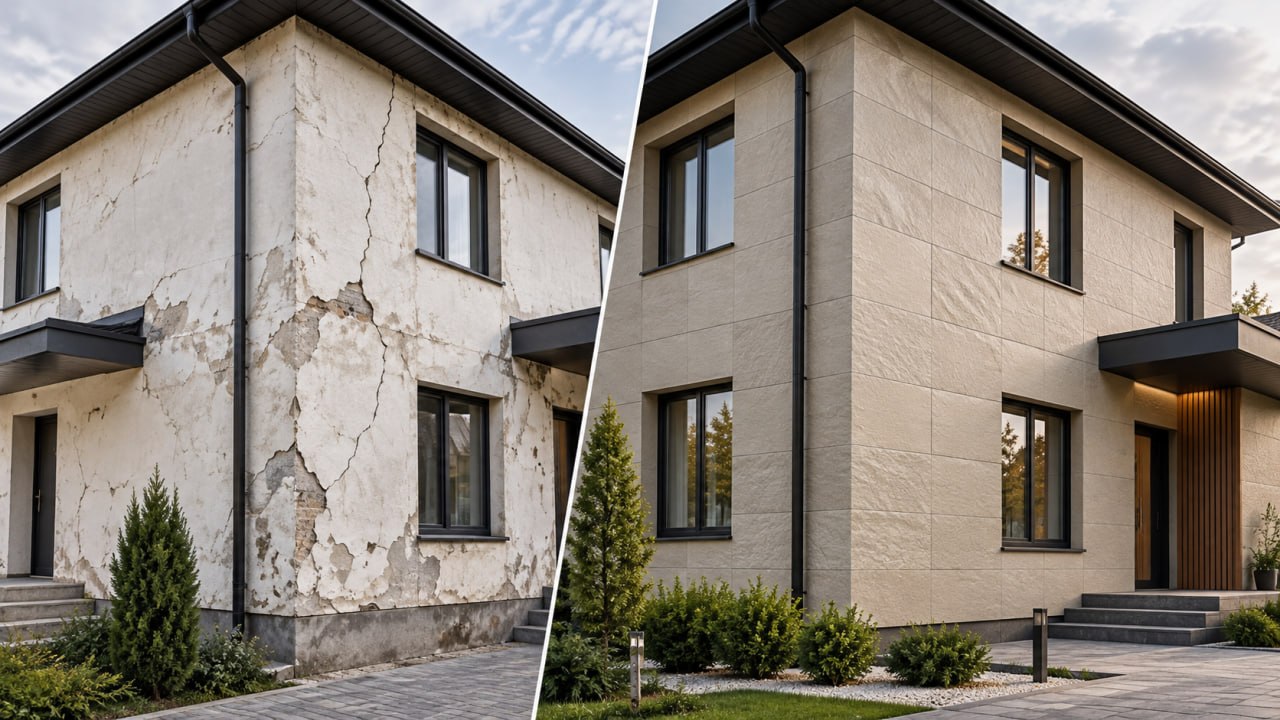
Why House Facades Crack and How Flexible Tile Helps Reduce Cracking
Facade cracks show up a few years after renovation even with good materials. We look at five causes: settlement, temperature swings, reinforcement mistakes, a weak substrate and moisture. Why an elastic mineral-polymer tile tolerates small movements, what it does not fix, and which installation conditions keep cracks away.
Read more
 News
08.10.2026
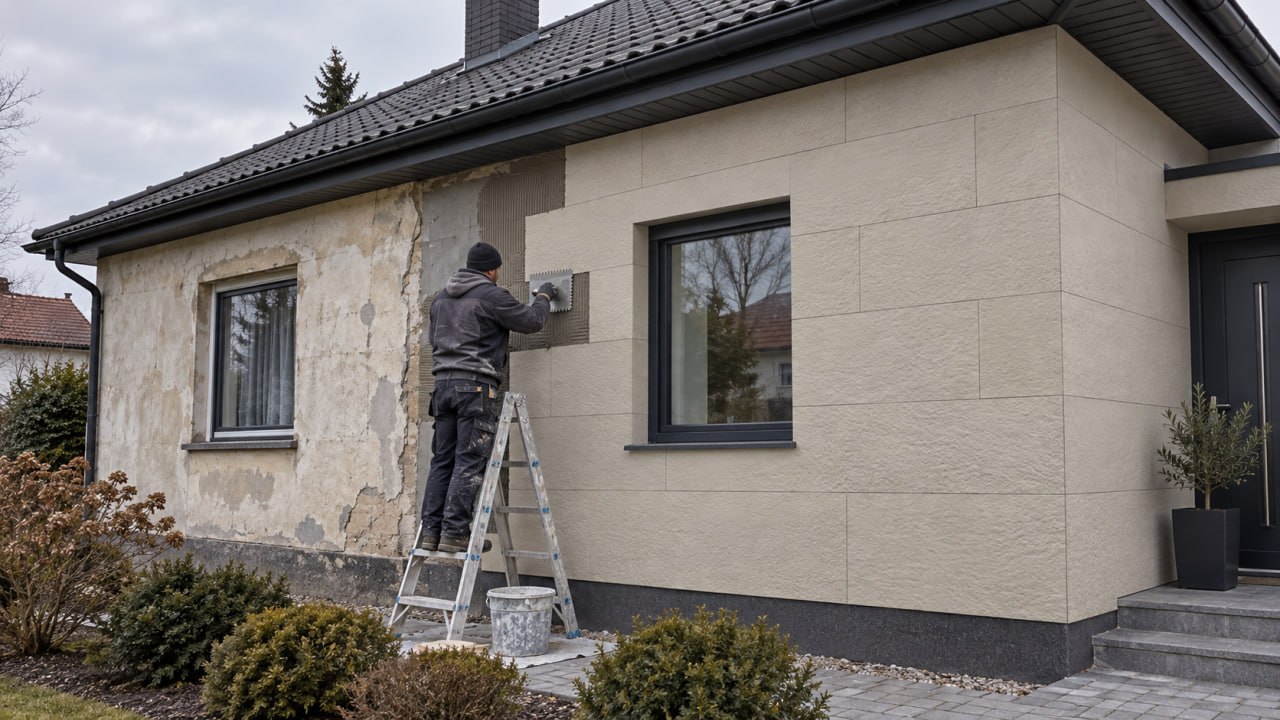
Can You Clad an Old Facade Without Full Demolition?
Renovating an old house does not always mean stripping all the finish. When the existing plaster can stay as the substrate, when demolition is unavoidable, what to do with local damage and moisture, how the scheme changes with insulation, and a ten-question mini checklist before cladding.
Read more
 News
07.10.2026
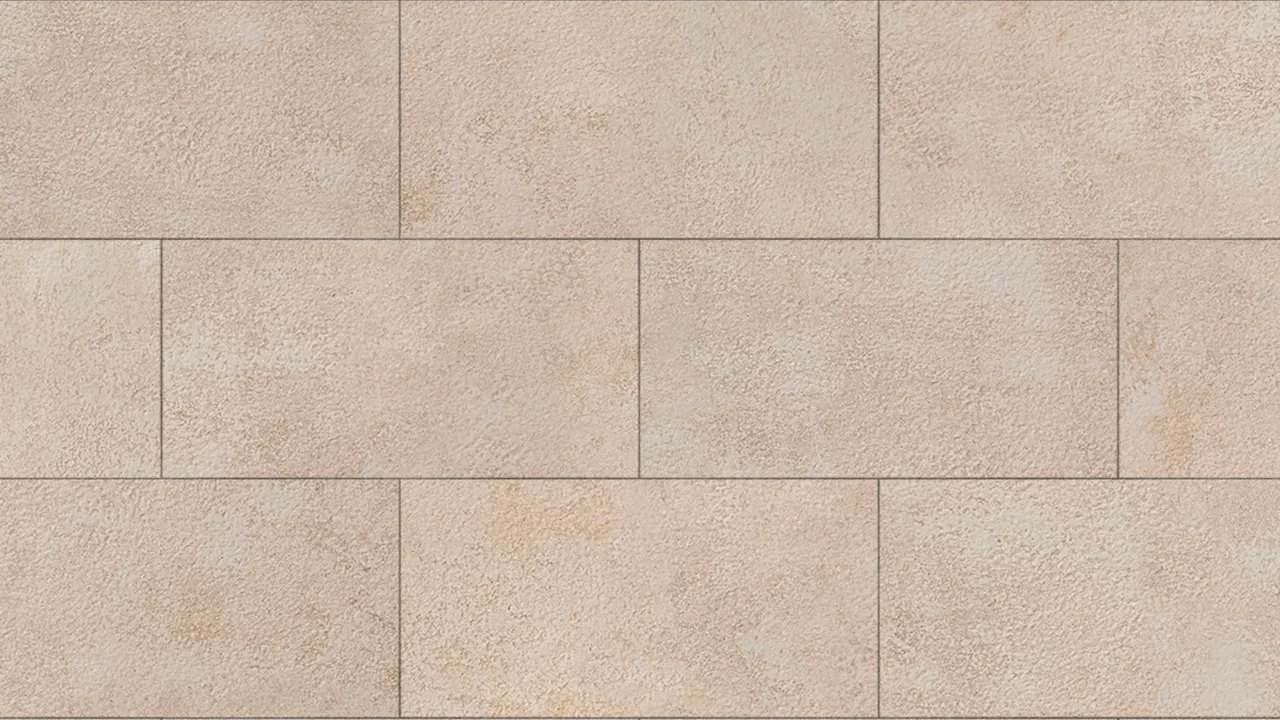
TB06 Latte Travertine: beige flexible travertine in latte shades
Some shades make a house feel welcoming before you reach the door. TB06 Latte Travertine combines latte, light sandstone and soft beige stone tones with a fine travertine texture that reveals itself up close. Why in-between shades are interesting, how to avoid monotony on a beige villa and what to pair latte with.
Read more
 News
07.10.2026
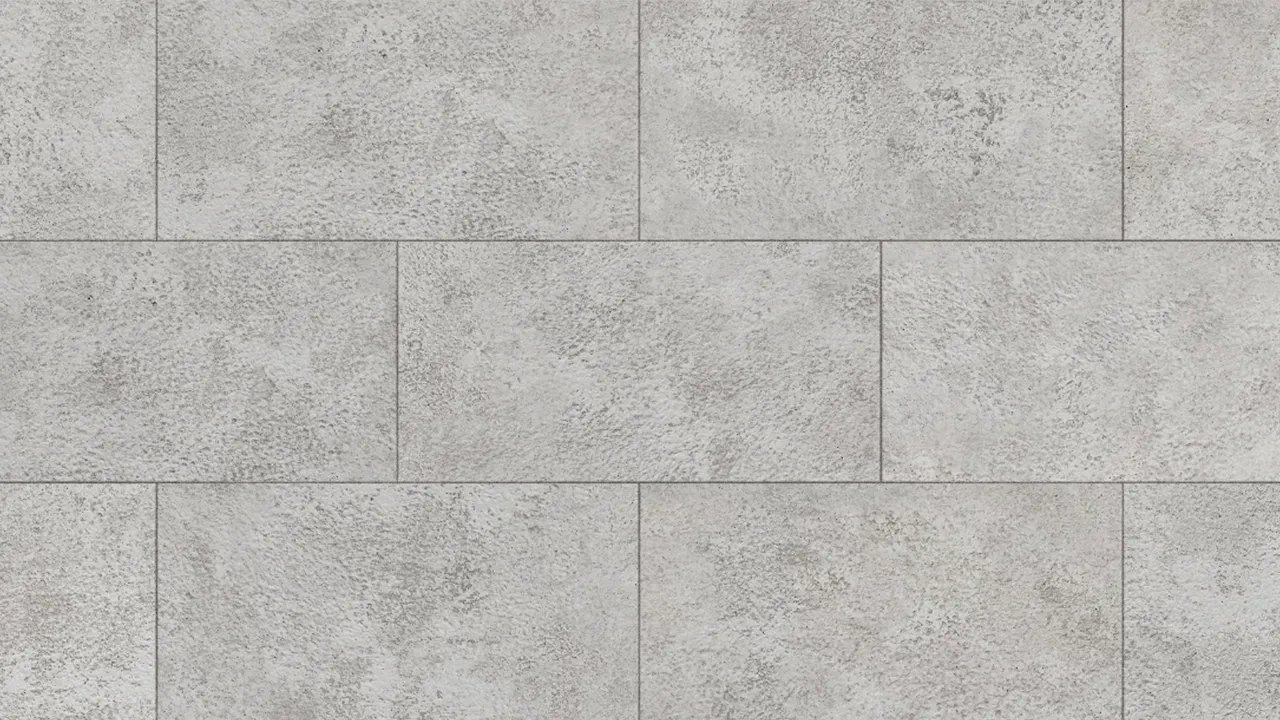
TB01 Milky Travertine: milky flexible travertine for modern architecture
Natural travertine has been used for centuries in palaces and Mediterranean villas. TB01 Milky Travertine reproduces the look of light travertine as a flexible tile: a milky-white palette, a fine mottled texture and the horizontal rhythm of elongated modules. Villa, hotel, entrance, joint colour and interior.
Read more
 News
07.10.2026
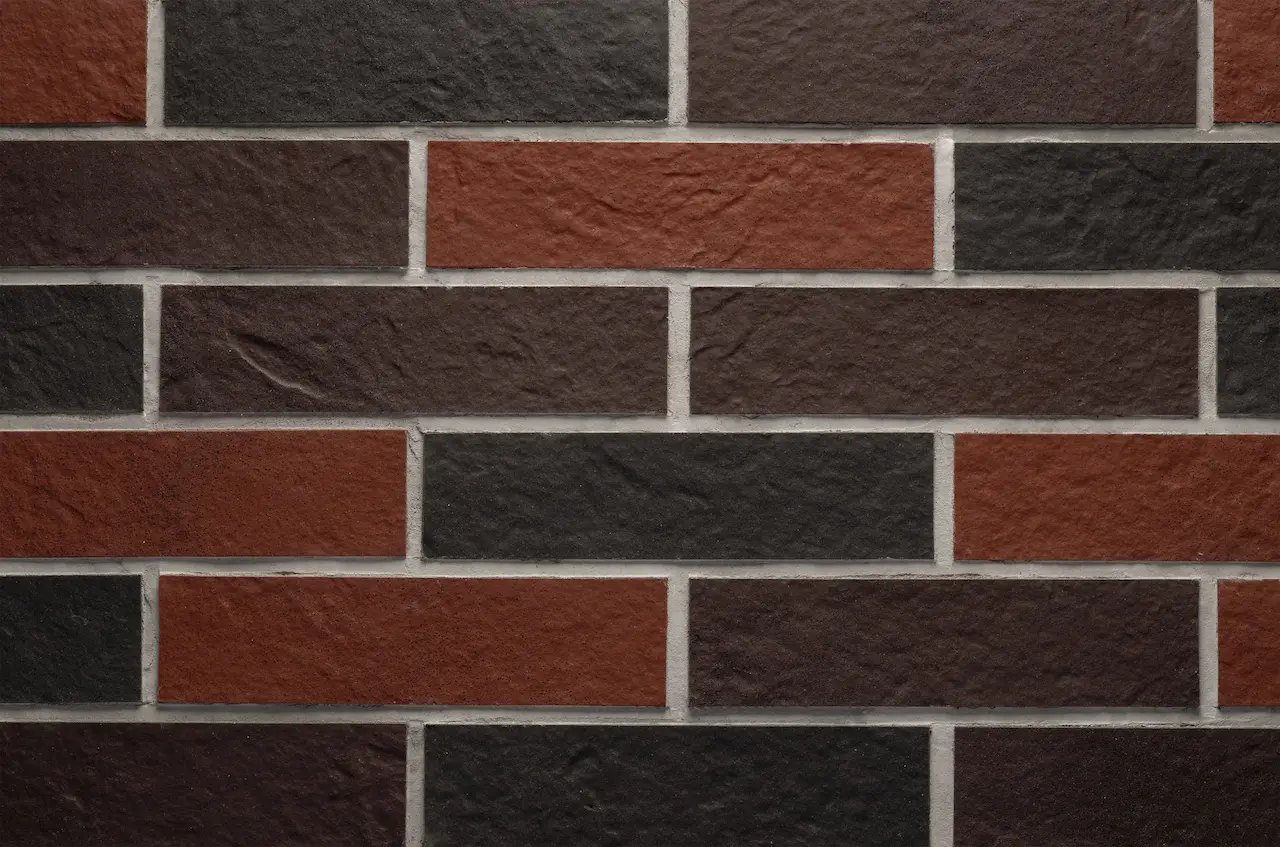
BRmix 07/09/10: three brick colours for a facade with an industrial character
Red-brown masonry, deep anthracite and chocolate shades recall old industrial buildings. BRmix 07/09/10 from the ROCK STONE BRICK collection combines Chocolate Rock, Volcanic Anthracite and Loft Red Clay in one masonry built on the contrast between a warm and a cool palette. How to distribute the colours without blotches, why the joint shade matters and where this masonry belongs.
Read more
 News
07.10.2026
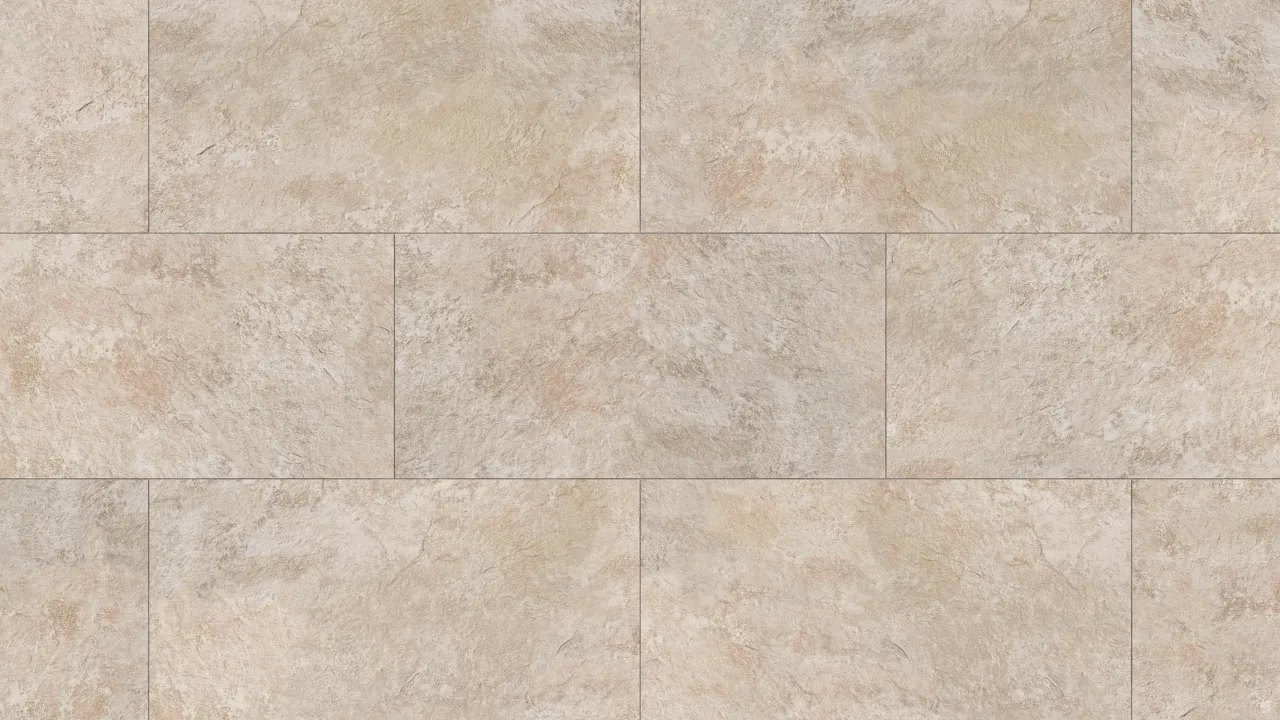
TR06 Dune Stone Travertine: sand-coloured flexible tile with the character of desert dunes
How do you create a facade that still looks natural years later and does not depend on trends? TR06 Dune Stone Travertine reproduces sand-coloured travertine: cream-beige areas alternate with richer sand and light-brown patches. Landscape-inspired architecture, a modern villa, terraces and courtyards, interiors and an insulated facade.
Read more