


Why House Facades Crack and How KORDEKO Flexible Tile Helps Reduce Cracking
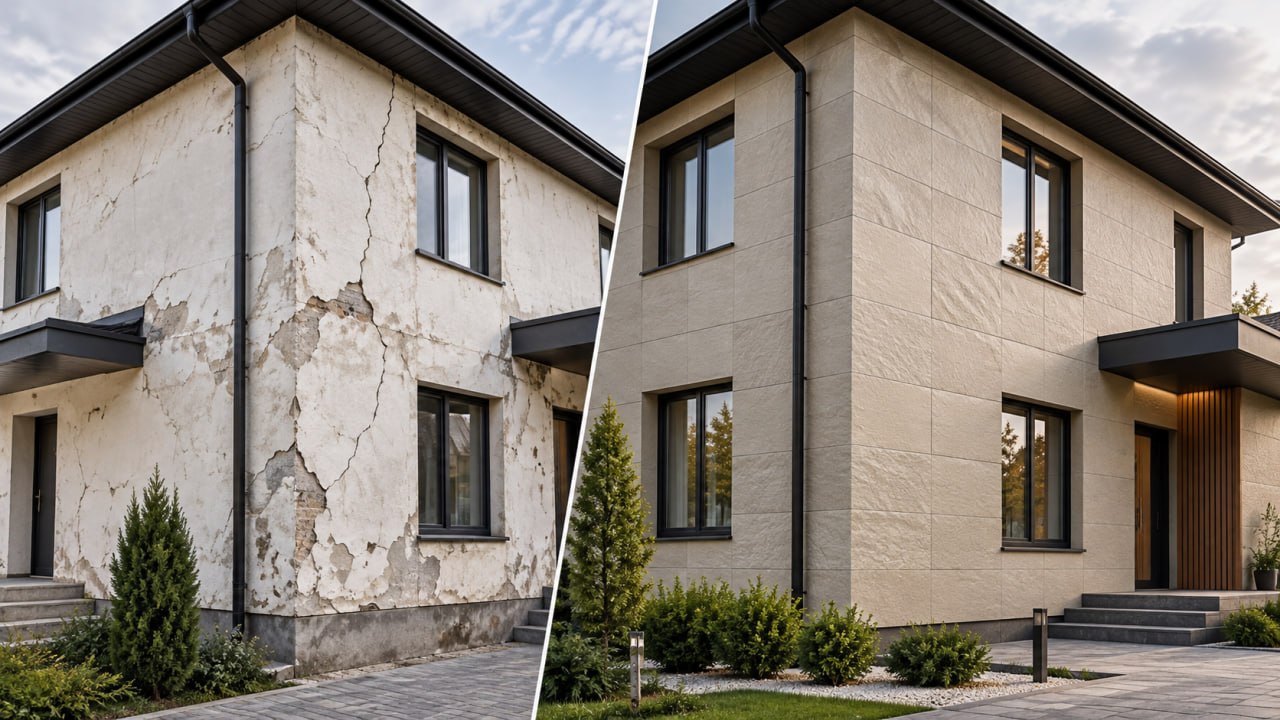
Cracks can appear on a facade even several years after renovation. At first, they may look like small lines around windows, at building corners, or where different materials meet. Over time, the damage can become more noticeable, and moisture may begin to penetrate the finishing layers through these openings.
The cause is not always the quality of the cladding itself. Facade performance is affected by temperature fluctuations, substrate movement, moisture, and installation mistakes. That is why, when choosing a finishing material, it is important to consider not only its appearance, but also its ability to accommodate small deformations.
Main Causes of Facade Cracks
A facade is exposed to the environment every day. Materials heat up, cool down, expand, and contract. If the finish cannot absorb the resulting stresses, cracks may appear.
The most common causes include:
- Building settlement. Small movements in the building structure can create stress in the finishing layer.
- Temperature fluctuations. Repeated expansion and contraction of materials can damage rigid cladding.
- Reinforcement mistakes. Incorrect placement of fiberglass mesh or insufficient reinforcement around windows increases the risk of cracking.
- Poorly prepared substrate. Weak plaster, dust, and loose areas reduce adhesion between the cladding and the wall.
- Moisture exposure. Water that penetrates the finish can freeze and contribute to further deterioration.
Even a high-quality finishing material cannot compensate for serious violations of construction or installation technology.
How Flexible Tile Helps Reduce the Risk of Cracking
Traditional ceramic tile and natural stone are highly rigid materials. If the substrate moves or deforms, these finishes may crack or become damaged at joints.
KORDEKO Flexible Tile (PletaFlex) has a different structure. It is produced on a mineral-polymer base using acrylic dispersion and a reinforcing non-woven membrane.
The acrylic binder gives the material flexibility, while the reinforcing layer strengthens the tile and helps it maintain its integrity.
Thanks to this structure, the cladding can bend without damaging its decorative surface and can better adapt to small changes in the shape of the substrate.
This is especially useful when finishing columns, arches, rounded corners, and other architectural elements where rigid materials require more complex cutting and fitting.
However, the flexibility of the tile does not mean that it can stop cracks developing in the wall itself.
Why Proper Facade Insulation Matters
Cracks can also appear on facades with external thermal insulation if the installation technology has not been followed correctly.
The general requirements for external thermal insulation composite systems (ETICS) are set out in the European assessment documents published by EOTA.
Facade Insulation involves several layers working together: insulation, fasteners, reinforcement mesh, adhesive compounds, and the final finish.
If the fiberglass mesh is positioned incorrectly, additional reinforcement around windows is missing, or gaps are left between insulation boards, the risk of damage increases.
KORDEKO Flexible Tile is compatible with facade insulation systems and can be used as a final finishing layer. Its low weight and flexibility make it possible to clad the facade without adding excessive load to the structure.
At the same time, the tile does not replace proper reinforcement and cannot correct defects in the insulation system.
How to Avoid Cracks When Installing Flexible Tile
For reliable cladding, several conditions should be met:
- Inspect the substrate, remove weak areas, and prepare the surface.
- Clean the wall and use a suitable primer.
- Choose a compatible adhesive. For exterior use, a frost-resistant adhesive is required.
- Apply the adhesive evenly and press the tile firmly into place, removing trapped air.
- Follow the required installation temperatures and the adhesive manufacturer’s recommendations.
If the facade already has visible cracks, the cause should be identified before cladding begins. Existing damage should not simply be covered with a new finishing layer without checking the substrate.
See also: a facade without cracks: how flexible cladding works; cornices without cracks at the joints; facade insulation step by step.
Conclusion
The main causes of facade cracking are substrate deformation, temperature changes, moisture, and installation errors.
KORDEKO Flexible Tile helps reduce the risk of cracking in the decorative finish thanks to its flexibility and reinforced structure. It can accommodate small changes in the surface shape while maintaining the integrity of the cladding.
However, the reliability of the facade depends on the entire system. A properly prepared substrate, correct reinforcement, and compliance with installation technology remain essential for a durable finish.
Frequently asked questions
Why does a facade crack even after a quality renovation?
Can flexible tile stop cracks in the wall?
What should be checked before cladding to avoid cracks?
Need advice on your facade?
- Get a free consultation for your project
- Find out which material suits your facade
- We'll answer all your questions and help you choose