


Blog: facade advice and flexible stone
Practical articles on cladding facades with flexible stone: choosing a texture, installation, insulation, cost and common mistakes.
 News
12.11.2026
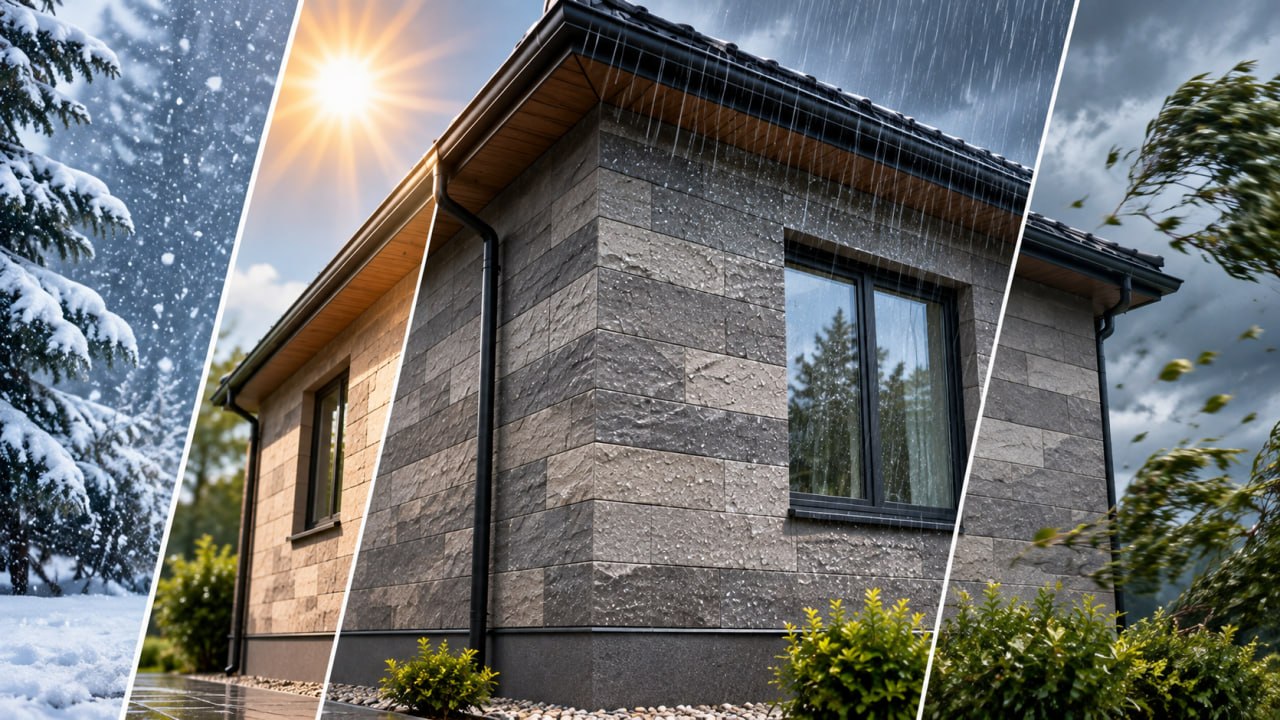
Frost, Heat, Rain, or Wind: What Is Most Dangerous for a Fresh Facade?
The facade looks finished, but the adhesive and reinforcement compounds are still gaining strength, and the weather in those days decides whether the cladding will hold. We explain how frost disrupts curing, why heat and wind dry adhesive too fast, what rain does right after installation, what the KORDEKO instructions expressly forbid, and how to plan the work for the whole curing period.
Read more
 News
12.11.2026
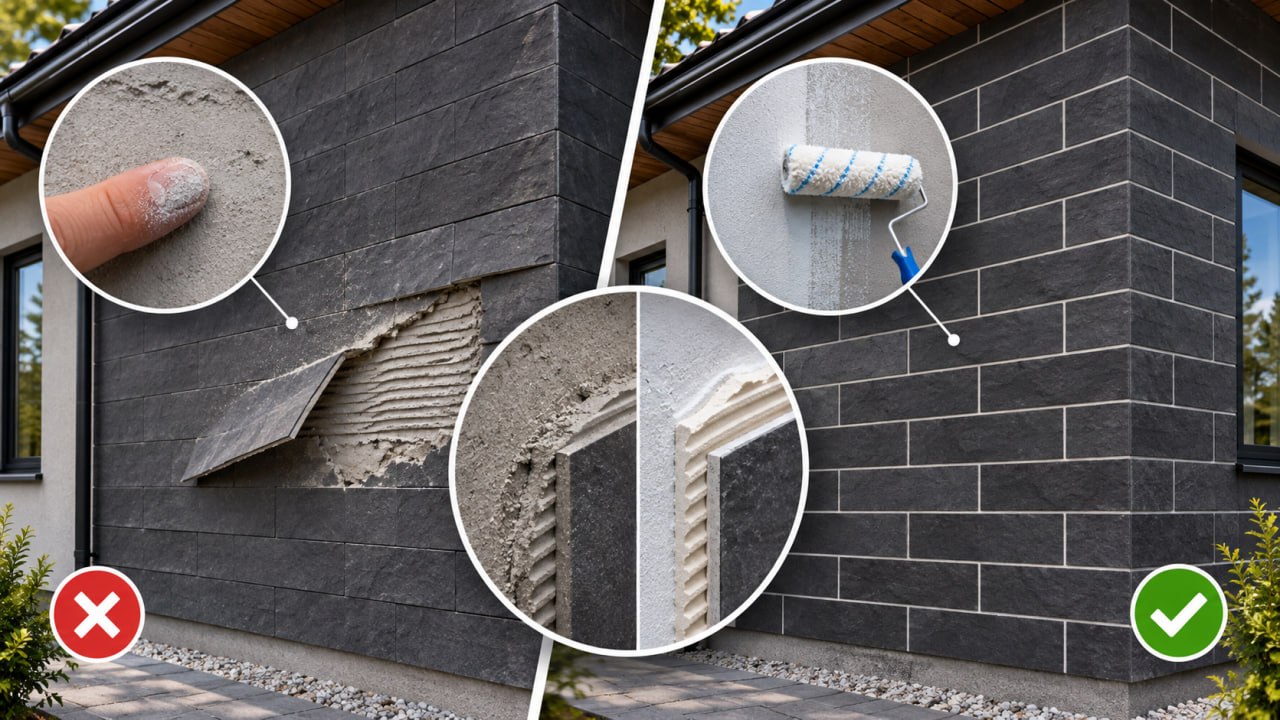
Why You Shouldn’t Install Facade Tile on a Dusty Wall, Even If the Adhesive Seems Strong
After sanding and levelling, an almost invisible dust stays on the wall. Tile holds on it at first and comes away a season or two later: the adhesive bonded not to the wall but to a loose layer. We explain the mechanism, why primer does not replace cleaning, give the four preparation steps from the KORDEKO instructions, and look separately at walls over insulation.
Read more
 News
12.11.2026
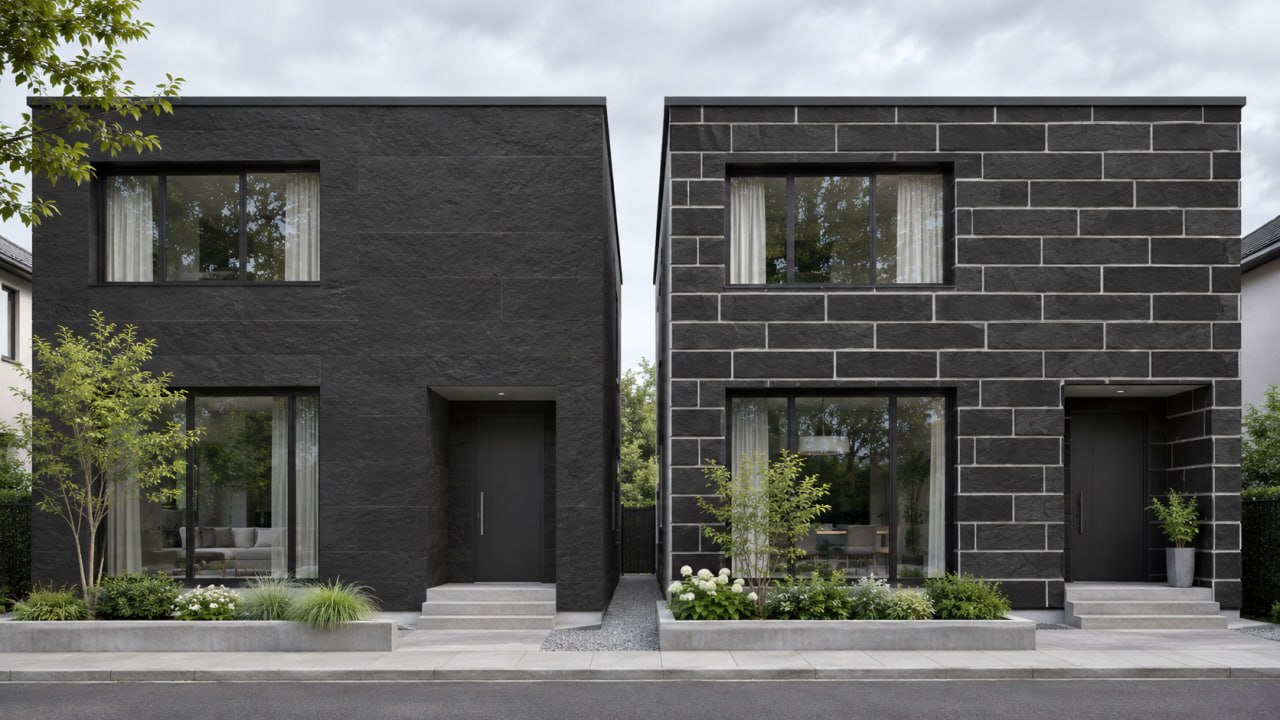
Seamless Facade or Visible Tile Layout: Which Is More Practical and Attractive?
A smooth wall without joints or masonry with pronounced joints? We compare how joints change the proportions of a house, what is easier to repair — render or a single tile, how format and joint width affect the workload, and how to choose a KORDEKO flexible tile layout to suit the architecture, colour and an insulated facade.
Read more
 News
12.11.2026
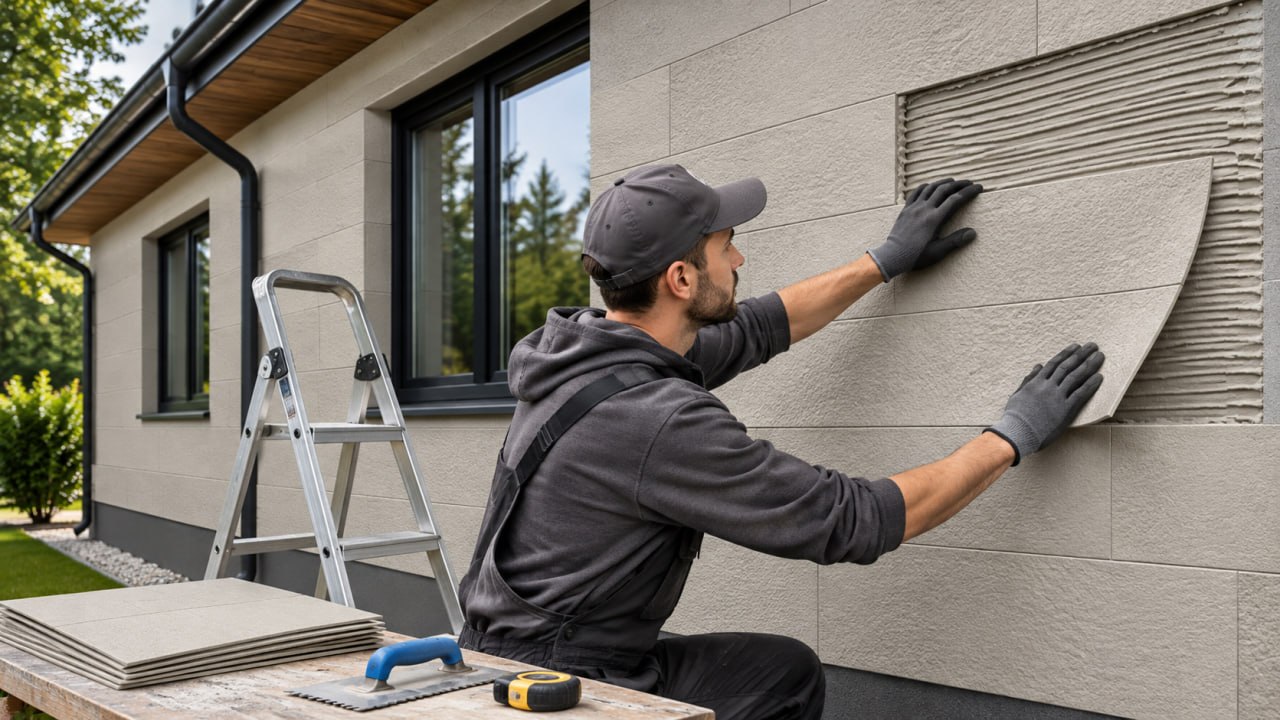
Can One Installer Clad an Entire House? Facade Installation Possibilities and Limitations
Cladding a house usually means a crew. But KORDEKO flexible tile at about 4 kg/m² is cut with a knife and laid with ordinary tools, so one qualified installer can do a large part of the work alone. We run the 200 m² ÷ 25 m² a day sum, name the conditions where it makes sense, and the limit — height, safety, adhesive working time — beyond which a second person is needed.
Read more
 News
12.11.2026
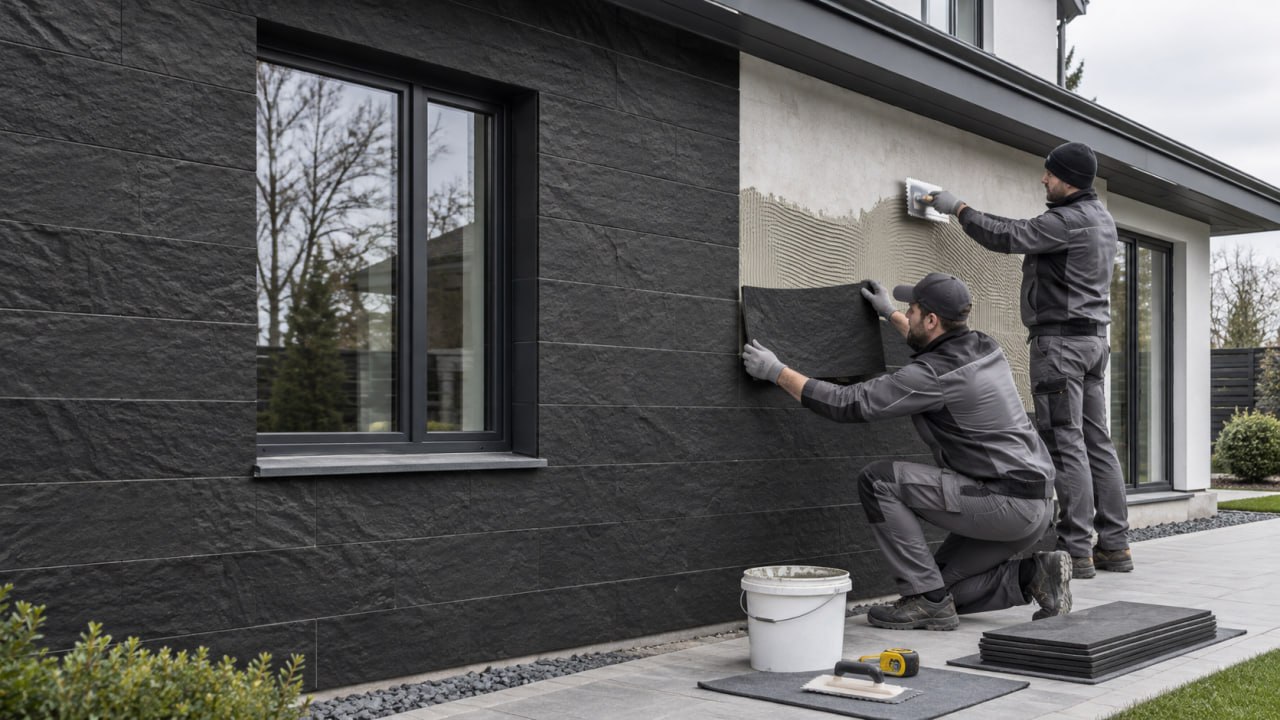
Fast Facade Installation Without Compromising Quality: How Modern Materials Reduce Work Time
If one crew takes weeks and another finishes faster, are the builders cutting corners? We look at where time goes with heavy cladding, how KORDEKO flexible tile at about 4 kg/m² speeds things up — weight, knife cutting, complex shapes, up to 25 m² a day per installer — and which stages must never be rushed.
Read more
 News
04.11.2026
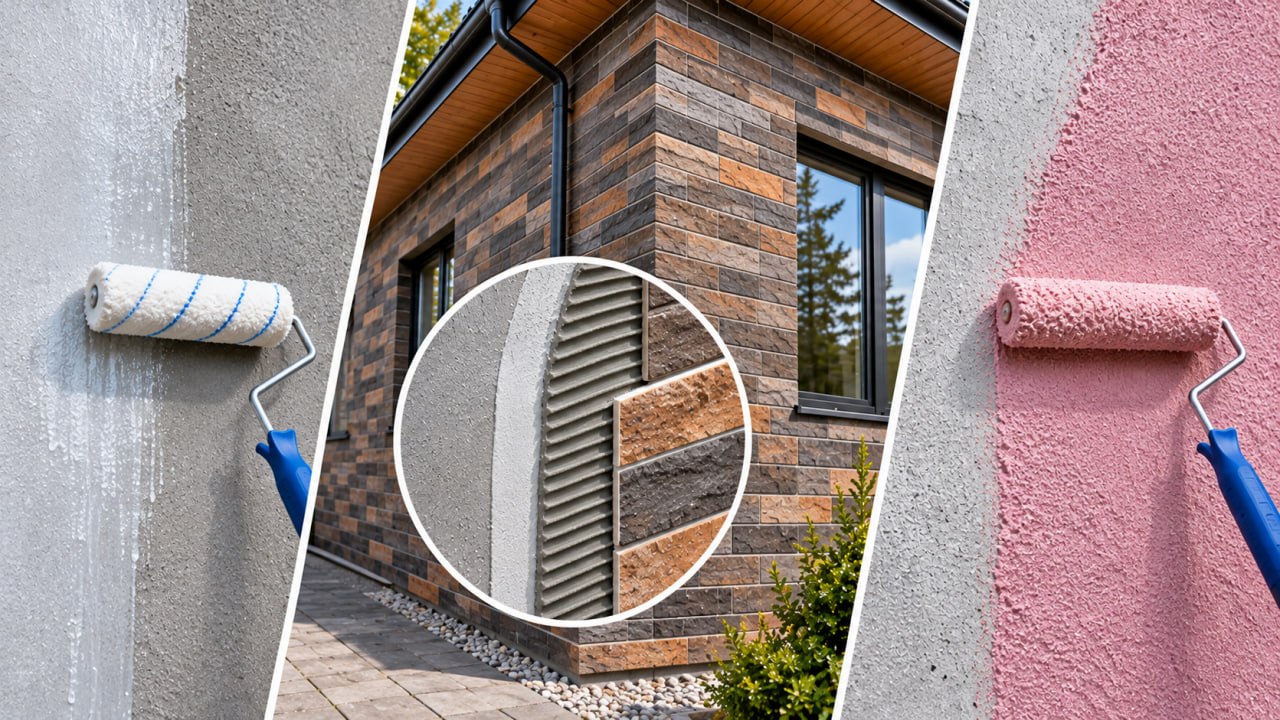
Deep-Penetrating Primer or Concrete Contact Primer: Which Should You Choose for Wall Preparation?
Both products improve adhesion, but they work differently: a deep-penetrating primer is for absorbent substrates, a quartz-filled concrete contact primer for dense, smooth ones. We compare them in a table, show which primer the KORDEKO instructions call for on different walls, explain why OSB and sandwich panels need both, and list five priming mistakes.
Read more
 News
04.11.2026
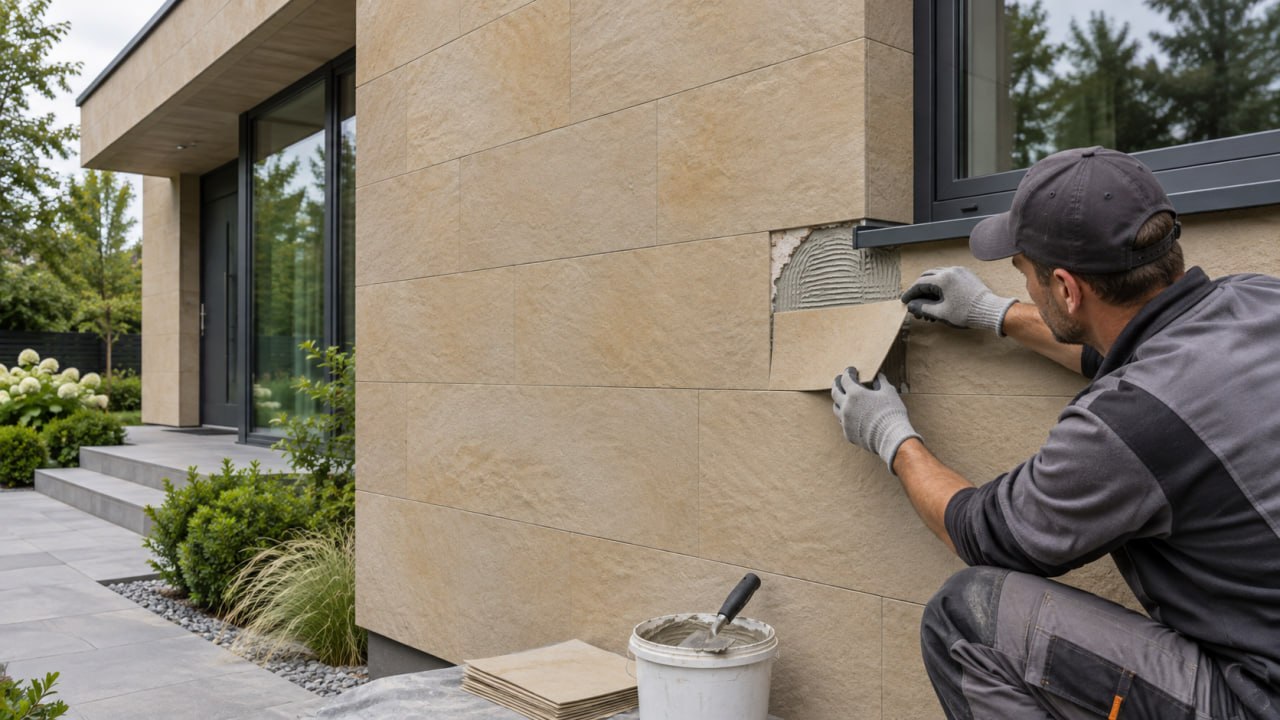
Local Facade Repair: When Can a Damaged Area Be Replaced Without Redoing the Entire Facade?
A crack, a chip or one detached tile does not mean the whole facade has to be redone. We explain when local repair is enough, why simply gluing a new tile over the problem is a mistake, how to replace a damaged KORDEKO flexible tile in four steps, and when a more serious repair is unavoidable.
Read more
 News
02.11.2026
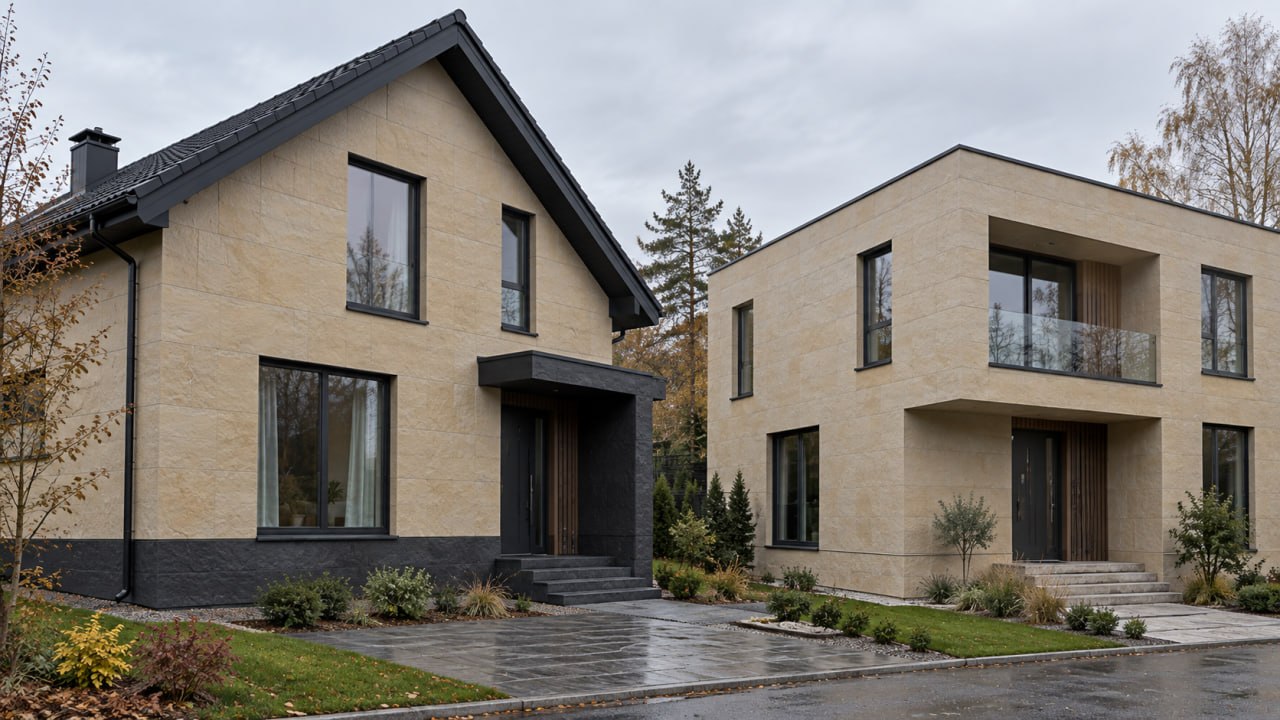
Light or Dark Plinth: Should It Be Darker Than the Main Facade?
A dark plinth under light walls is a familiar choice, but not a rule. We look at why the lower part of a house is often darker, how plinth colour changes the proportions of a building, which KORDEKO flexible tile textures suit the plinth zone, and why durability depends on the build-up and installation rather than the shade.
Read more
 News
28.10.2026
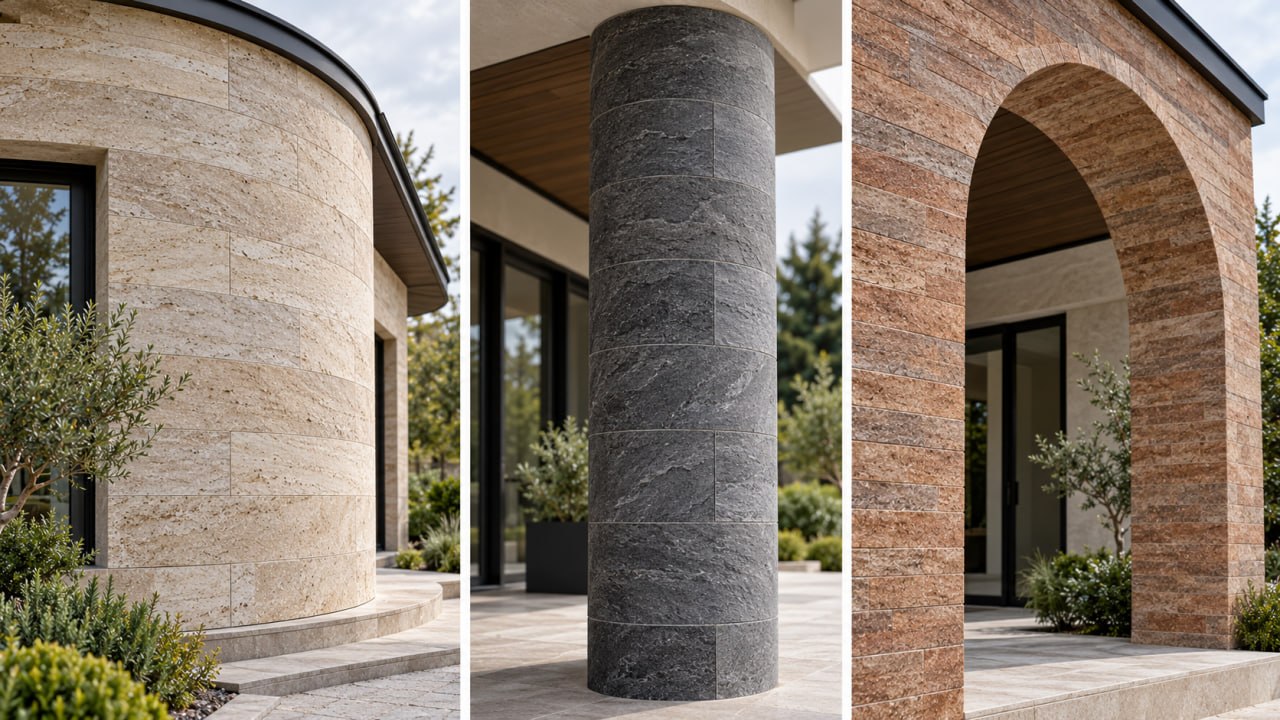
Columns, Arches and Curved Walls: How to Clad Complex Surfaces with Stone-Look Tile
On a round column or inside an arch, rigid tile turns into dozens of cuts and extra joints. We explain how KORDEKO flexible tile follows the shape of a prepared substrate, how to clad a round column and a rounded corner, why a flat substrate matters more than the flexibility of the material, and how complex geometry affects the cost of the work.
Read more
 News
28.10.2026
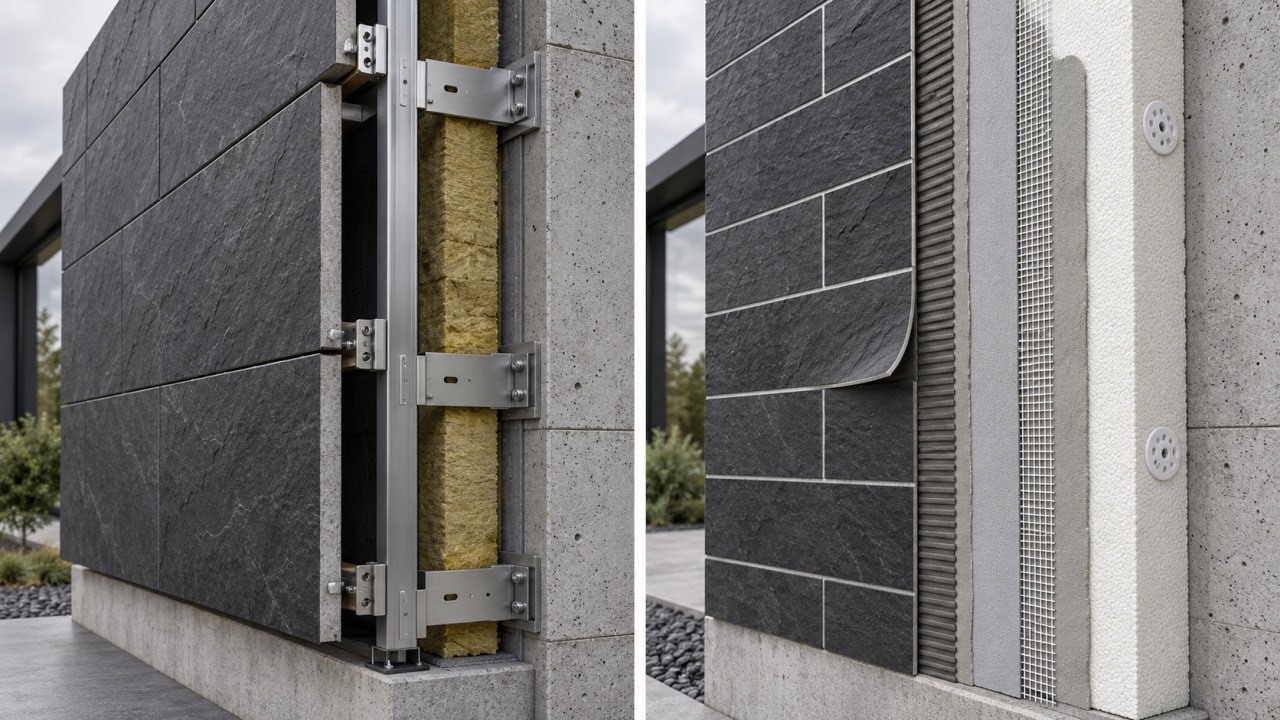
Heavy Facade Cladding: Which Buildings It Does Not Suit and What Can Replace It
Natural stone and porcelain tile are beautiful and durable, but on a 200 m² facade the stone alone weighs 4–7 tonnes. We look at where heavy cladding causes problems — old houses, frame buildings on OSB and sandwich panels, insulated facades — how it complicates installation, and when light flexible tile of about 4 kg/m² becomes a sensible replacement.
Read more
 News
28.10.2026
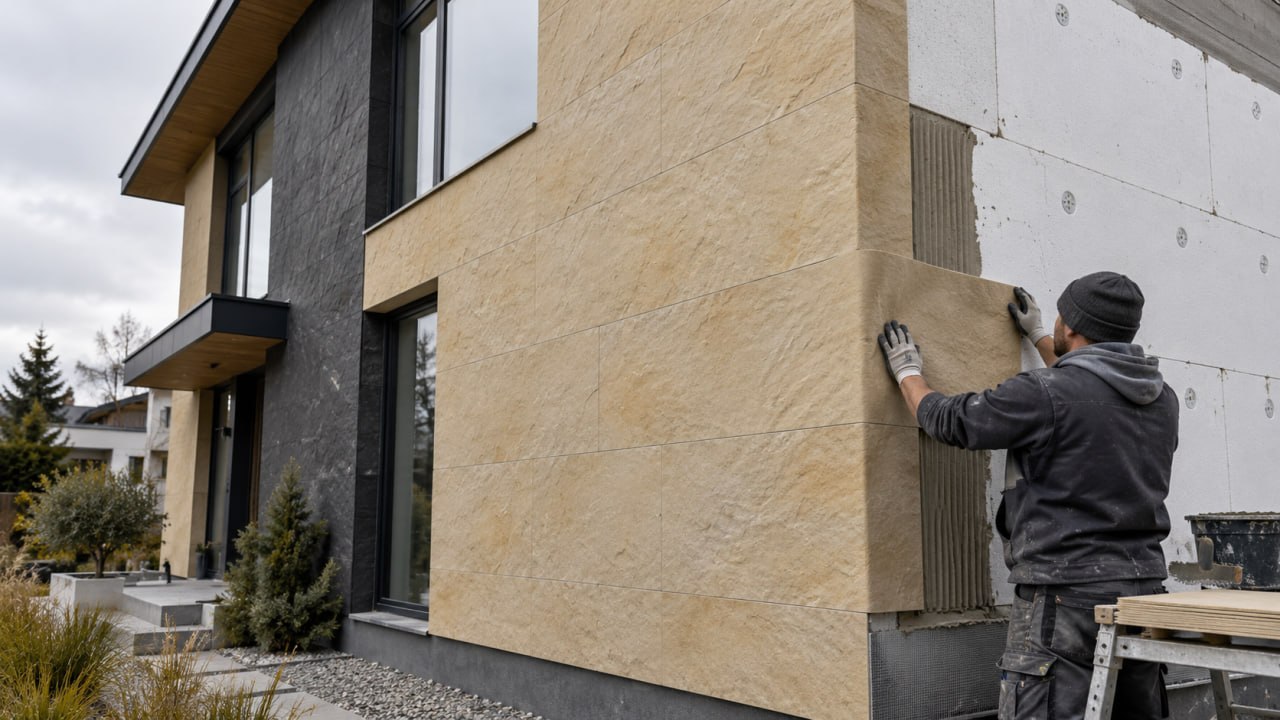
A Stone-Look Facade Over Insulation Without a Heavy Substructure: How It Works
Natural stone weighs 20–35 kg/m², and over insulation only a separate frame can hold it. We explain how to get a stone texture on an insulated facade without a metal substructure: the layers of an external insulation system, the choice between EPS and mineral wool, bonding flexible tile of about 4 kg/m² with frost-resistant adhesive, and the cases where a frame is still required.
Read more
 News
22.10.2026
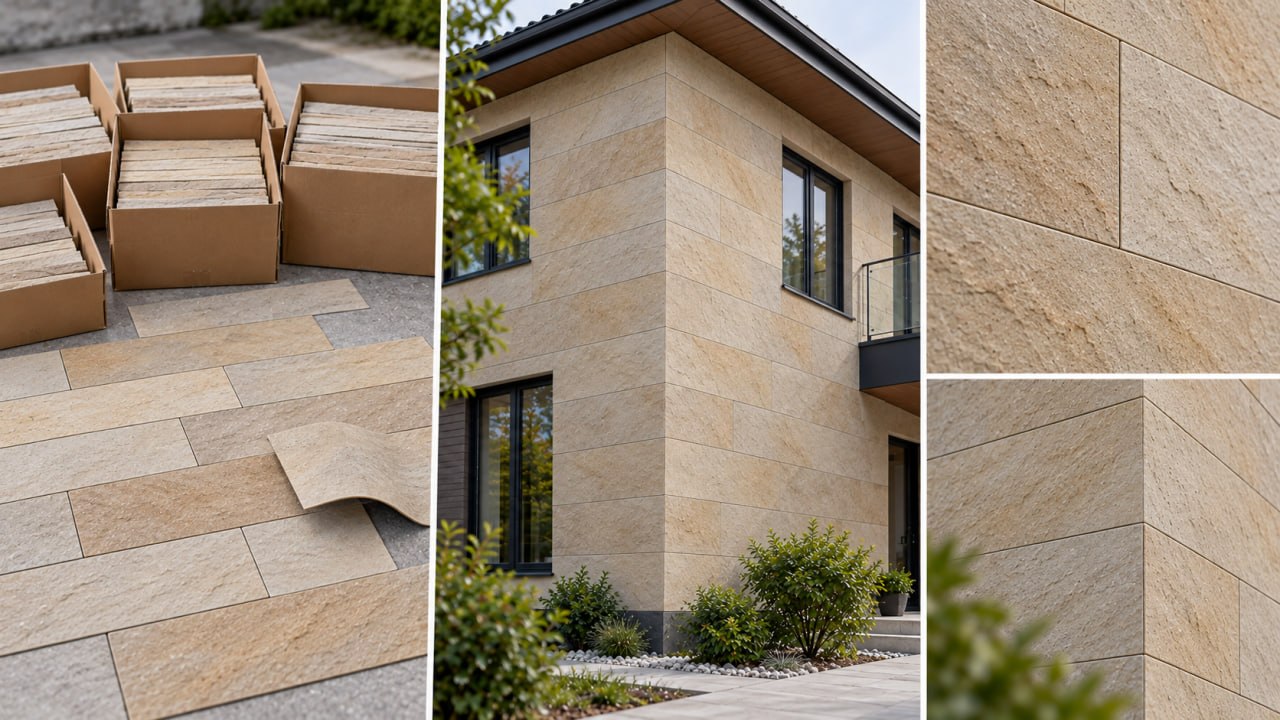
Mixing Tiles from Different Packages: Why It Matters and How to Do It
You bought flexible tile in one colour and lighter and darker patches appeared on the wall. It is not a defect: a material that imitates natural stone allows slight shade variation. We explain why tiles of one model differ, what happens when you install box after box, and give four mixing steps that produce a natural pattern without bands or patches.
Read more
 News
22.10.2026
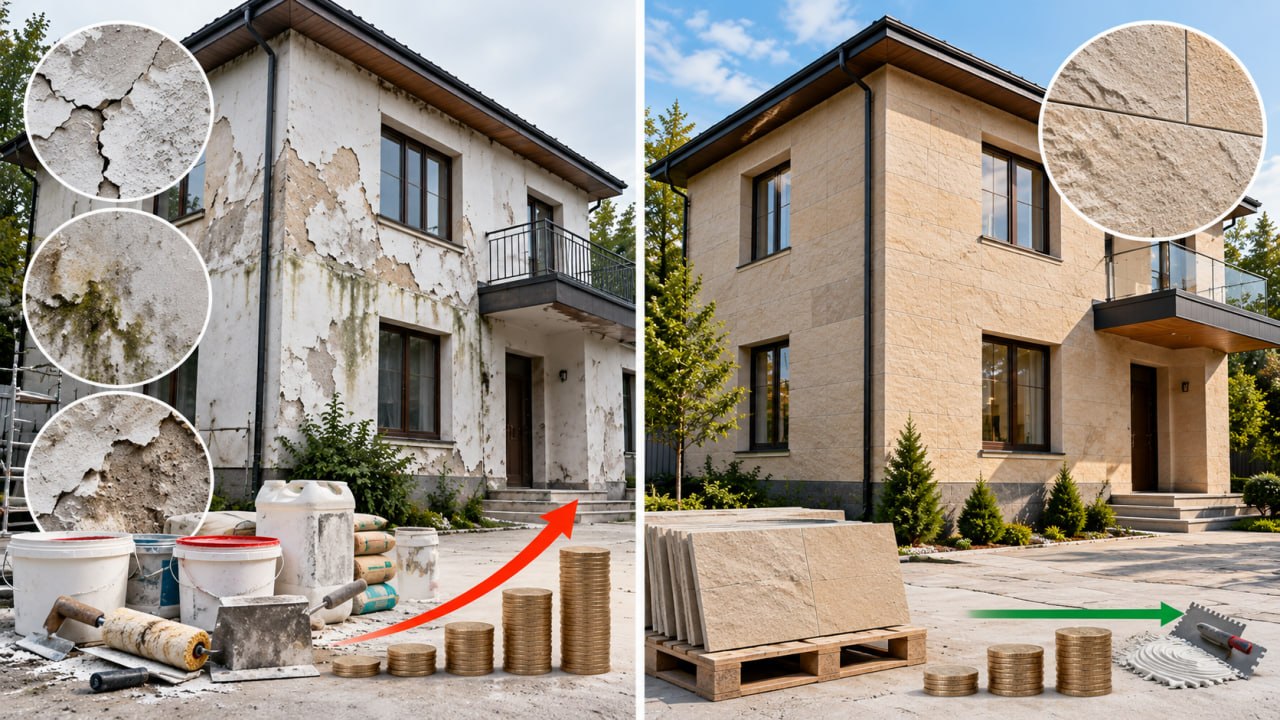
Facade Cost: Why the Price per m² of Material Tells You Little
Two materials can cost the same per square metre and the finished facade can come out at very different prices. We break down what the real cost is made of: wall preparation, adhesive and mesh, installation and its speed, scaffolding and delivery, insulation and maintenance after handover, and give the formula for the full cost with a worked example for 200 m².
Read more