


Why Rain Streaks Appear on Facades and How KORDEKO Flexible Tile Helps Keep Walls Cleaner
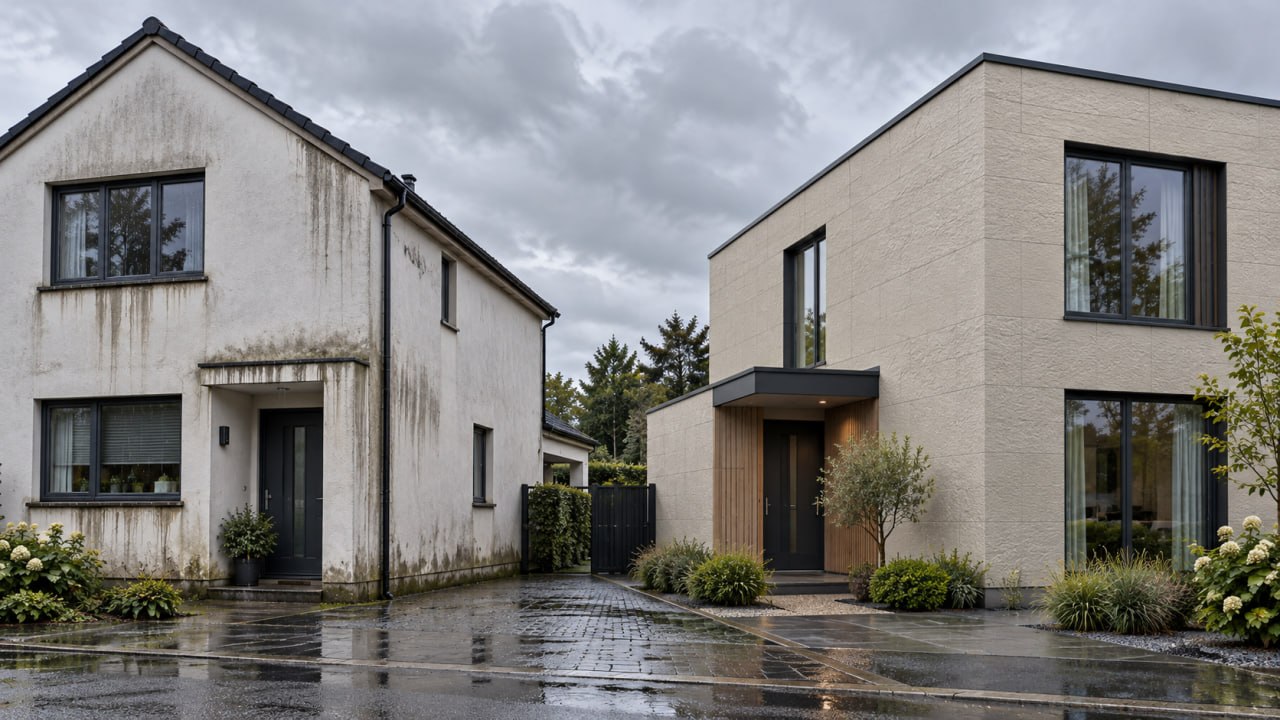
After heavy rain, dark streaks may appear beneath windows, dirty marks can form near downpipes, and stains may remain on decorative facade finishes. These marks are especially noticeable on light-colored walls.
The cause is usually related to the way rainwater flows across the building surface. As it collects dust and dirt, the water leaves visible marks that gradually affect the appearance of the facade. To keep walls cleaner for longer, it is important to consider not only the properties of the cladding material, but also the design of the building itself.
Why Rain Leaves Dirty Streaks on Facades
During rainfall, water does not move evenly across the walls. It collects on projections, window sills, and other architectural elements and then flows downward, carrying dirt with it.
The most common causes of streaking include:
- Incorrect flashings and window sills. If water is not directed away from the wall, it flows directly over the cladding.
- Surface contamination. Dust and other particles mix with rainwater and create visible streaks.
- Facade damage. Cracks and defects in the finish allow moisture to penetrate the coating.
- Incorrect junction details. Poorly executed connections around roofs, balconies, and decorative elements may direct water onto the walls.
- Constant moisture exposure. Areas that remain wet for long periods accumulate dirt faster and may also develop biological growth.
That is why even new cladding can quickly lose its neat appearance if water repeatedly runs over the same areas.
How Facade Material Affects Wall Contamination
Different finishes vary in texture, moisture resistance, and maintenance requirements.
For example, dirt can become trapped in the recessed areas of rough decorative render. If the surface is damaged, cleaning can become more difficult, while repeated moisture exposure may accelerate deterioration of the finishing layer.
KORDEKO Flexible Tile (PletaFlex) is produced on a mineral-polymer base using an acrylic binder that provides moisture resistance.
According to the manufacturer’s technical description, flexible tile is resistant to rain, temperature fluctuations, and atmospheric exposure. Its surface does not require regular repainting or the repeated application of special protective treatments.
However, moisture resistance does not mean that the material completely repels dirt or cleans itself during rainfall. Dirt can appear on any exterior cladding, especially when water drainage is poorly designed.
How to Keep a Facade Cleaner for Longer
To reduce the appearance of streaks, the first priority is to ensure that rainwater is directed away from the facade correctly.
Several building elements require particular attention.
Window sills and flashings. They should direct water beyond the facade surface. Properly designed drip edges help prevent water from running directly down the wall.
Drainage system. Gutters and downpipes should be checked regularly, with blockages and leaks corrected promptly.
Roof and balcony junctions. Connections should be properly sealed so that water does not penetrate beneath the cladding or flow over areas that were not designed to receive it.
Building plinth. The lower part of the facade is more exposed to dirty splashes. It is practical to choose cladding and colors for this area with these conditions in mind.
When installing external thermal insulation, Facade Insulation should also include proper moisture protection. Correct detailing of the plinth, reveals, and junctions helps prevent the insulation from becoming wet and protects the finishing layers from damage.
The general requirements for external thermal insulation composite systems (ETICS) are set out in the European assessment documents published by EOTA.
How to Maintain KORDEKO Flexible Tile
KORDEKO Flexible Tile does not require regular repainting to maintain a neat appearance.
The KORDEKO technical description allows for periodic cleaning of the surface with water. A soft sponge or brush can be used for ordinary dirt.
For facade maintenance, it is recommended to:
- Periodically inspect areas beneath windows and near downpipes.
- Remove dirt before it develops into persistent deposits.
- Check the condition of joints and connection details.
- Repair damage promptly where water could penetrate.
If dirty streaks repeatedly appear in the same place, cleaning alone will not solve the problem. The cause of the incorrect water flow should be identified and corrected.
See also: junctions, sills and drains without leaks; protecting a facade from moisture and efflorescence; mold and fungi on facades: causes and protection.
Conclusion
Dirty streaks after rain are mainly caused by the movement of water across the facade, accumulated dust, and poorly designed drainage details.
Thanks to its moisture resistance, resistance to atmospheric exposure, and simple maintenance, KORDEKO Flexible Tile is suitable for exterior cladding of residential buildings. However, keeping walls clean depends on more than the selected finish alone.
Proper flashings, functioning drainage systems, sealed junctions, and periodic cleaning help preserve a neat facade appearance for longer without the need for frequent repairs.
Frequently asked questions
Why are there dirty streaks on the facade after rain?
Does flexible tile repel dirt by itself?
How do you maintain a flexible tile facade?
Need advice on your facade?
- Get a free consultation for your project
- Find out which material suits your facade
- We'll answer all your questions and help you choose