


TR06 Dune Stone Travertine: sand-colored flexible tile KORDEKO — natural stone effect with the character of desert dunes
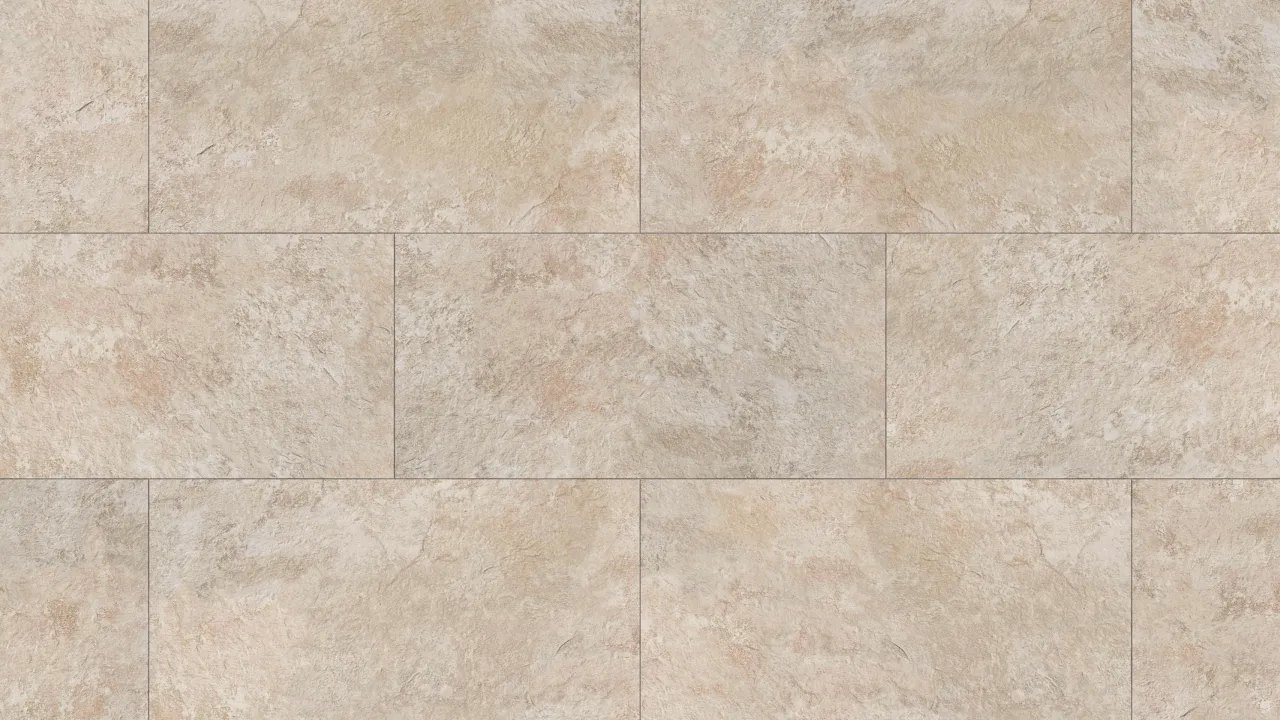
How can you create a facade that looks natural even many years later and does not depend on short-lived architectural trends? One approach is to use a texture reminiscent of natural stone, with soft color transitions and an irregular surface.
TR06 Dune Stone Travertine from KORDEKO reproduces the aesthetics of sand-colored travertine. In the presented sample, cream-beige areas alternate with richer sandy and light brown shades. The irregular mineral surface and elongated module geometry create the impression of stone masonry in which each element has its own pattern.
This model is suitable for projects inspired by natural landscapes, Mediterranean architecture, and modern minimalism.
Why a sandy texture looks different from a conventional beige facade
The main feature of Dune Stone Travertine is not the color itself, but the variety of shades within a single surface.
Individual modules show light cream areas, soft beige transitions, and richer sandy patches. Small depressions and roughness further emphasize the natural character of the texture.
As a result, the facade does not look like a perfectly painted plane.
Up close, the variation of each module can be seen, while from a distance the individual shades merge into a calm stone composition.
This surface is especially expressive in diffused daylight, when the color transitions remain soft but clearly distinguishable.
Desert landscape architecture: inspiration from natural shades
Contemporary architecture increasingly uses solutions inspired by natural landscapes. Sand dunes, limestone cliffs, and light stone plateaus become sources of color combinations for residential and public buildings.
TR06 fits this aesthetic well.
Imagine a single-story house with a flat roof, wide terraces, and large glazed openings. Sand-colored cladding visually connects the building with the surrounding site, especially when the landscape includes gravel, ornamental grasses, and light stone paving.
At the same time, Dune Stone Travertine does not require the use of traditional architectural elements.
Even simple rectangular geometry combined with this texture can create an expressive contemporary image.
How to avoid monotony on a large sand-colored facade
When beige cladding is used over a large area, it is important to preserve variety without turning the surface into a chaotic pattern.
TR06 addresses this through the natural variation of the texture itself.
However, the arrangement of individual modules still matters.
If several of the richest sandy elements are placed next to one another, a pronounced color patch may appear on the facade. Conversely, an excessive concentration of light modules can disrupt the natural distribution of shades.
Therefore, before installation, it is advisable to assess the pattern from several packages and distribute the elements so that the transitions look balanced.
On long walls, it is especially important to periodically inspect the completed masonry from a distance.
A modern villa with a sand-colored travertine facade
Dune Stone Travertine looks especially interesting on buildings whose architecture is based on a combination of several natural materials.
For example, the main volume of the house can be clad with TR06, while the entrance area is finished with a dark wood texture. Panoramic glazing and graphite window frames will add a contemporary character to the composition.
Another option is to combine sand-colored travertine with light plaster and individual concrete elements.
How to choose cladding that will not look dated in a few years is covered in the article a facade that won’t date in 5–10 years.
It is advisable to determine in advance which material will be dominant. If too many similar shades and different textures are used at the same time, the architecture may lose its visual unity.
TR06 is expressive enough to cover a significant part of the facade without additional decorative inserts.
Terraces and courtyards: extending stone architecture
One interesting use of sand-colored cladding is the design of outdoor spaces connected to the home.
For example, if the facade and courtyard walls are clad with the same material, the boundary between the main building and the recreation area becomes visually less noticeable.
Dune Stone Travertine combines well with light stone paving, wooden furniture, and greenery.
In hotel complexes, this approach can be used for open terraces, courtyards, and exterior walls near recreation areas.
For horizontal surfaces, however, appropriate flooring materials must be selected: flexible facade tile is intended primarily for cladding walls and architectural elements.
TR06 in interiors: natural texture for a calm space
Indoors, Dune Stone Travertine makes it possible to create interiors with a pronounced natural aesthetic.
It can be used for accent walls in living rooms, stair halls, hotel rooms, restaurants, and reception areas.
The sandy texture combines especially well with natural wood, linen textiles, light furniture, and matte metal details.
In a spacious living room, cladding the entire wall emphasizes the horizontal geometry of the modules. In a smaller room, a single architectural fragment, such as a wall near the staircase, is sufficient.
Thanks to its soft palette, TR06 can serve as an expressive textured surface without creating excessive color contrast.
Flexible travertine instead of massive stone slabs
The use of natural travertine involves specific requirements for the substrate, fastening method, and structural load.
KORDEKO Flexible Tile (PletaFlex) is a thin mineral-polymer cladding material with a reinforcing membrane.
It makes it possible to reproduce the appearance of natural stone without the need to use massive travertine blocks or heavy cladding.
When installing light sand-colored tile, it is necessary to select the adhesive correctly, ensure uniform contact of the material, and promptly remove adhesive residue from the face.
For TR06, it is especially important to agree on the joint shade: light joints create a more unified surface, while darker ones emphasize the masonry geometry.
Sand-colored travertine in a facade insulation system
The natural aesthetics of TR06 can be combined with a modern thermal insulation system.
Properly designed Facade Insulation provides the required thermal protection for exterior walls, while Dune Stone Travertine can be used as decorative cladding in a compatible facade system.
The general requirements for external thermal insulation composite systems (ETICS) are set out in the European assessment documents published by EOTA.
This makes it possible to create buildings with the appearance of traditional stone masonry without an additional massive wall of natural travertine.
At the same time, facade durability depends on the compatibility of all components, the quality of the reinforcing layer, correct installation, and protection of architectural junctions from atmospheric moisture.
Dune Stone Travertine: architecture inspired by the natural landscape
TR06 combines several natural shades, an irregular mineral texture, and a horizontal stone masonry pattern.
This model makes it possible to create architecture in which expressiveness is achieved not through bright colors or complex decoration, but through the variety of the surface itself.
Dune Stone Travertine is especially suitable for country houses, villas, hotels, and public spaces where the goal is to emphasize the connection between the building and its natural surroundings.
Frequently asked questions
How does the sand texture differ from a plain beige facade?
How do you avoid monotony on a large sand-coloured facade?
Is TR06 suitable for terraces and courtyards?
Need advice on your facade?
- Get a free consultation for your project
- Find out which material suits your facade
- We'll answer all your questions and help you choose