


Damp Wall Under Cladding: Why You Shouldn’t “Cover Up” the Problem with a New Facade
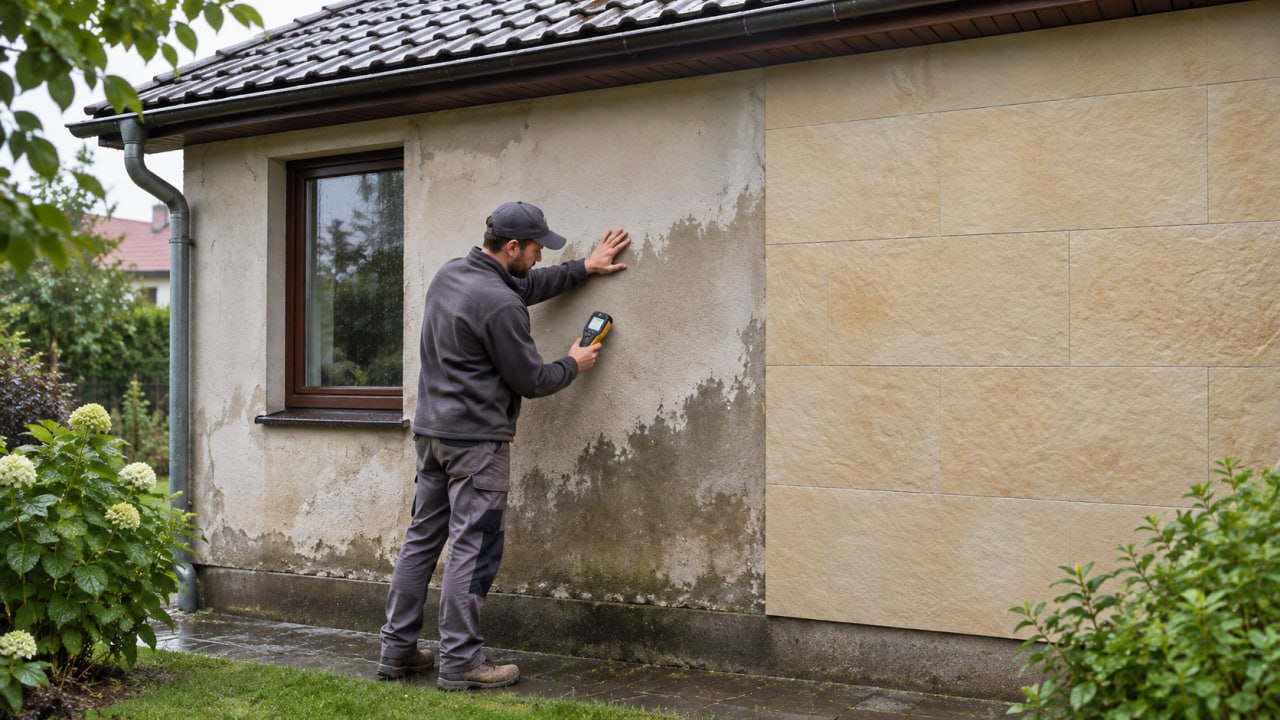
New facade cladding can completely transform the appearance of a house, but it cannot eliminate the underlying causes of damp walls. Moisture trapped behind finishing materials can lead to mold growth, deterioration of plaster, and cladding delamination. Here is where facade moisture comes from and how the wall should be prepared before cladding.
When renovating an older house, damp patches, discoloration, and efflorescence are sometimes treated as purely cosmetic defects. It may seem enough to cover the affected areas with new cladding to restore the appearance of the facade.
However, once the new finish is installed, the source of moisture does not disappear. In fact, damage developing behind the new cladding can become more difficult to detect, and future repairs may require partial or complete removal of the finish.
Where Does Moisture in Walls Come From?
Before beginning facade finishing, it is necessary to identify the source of the moisture. The most common causes include:
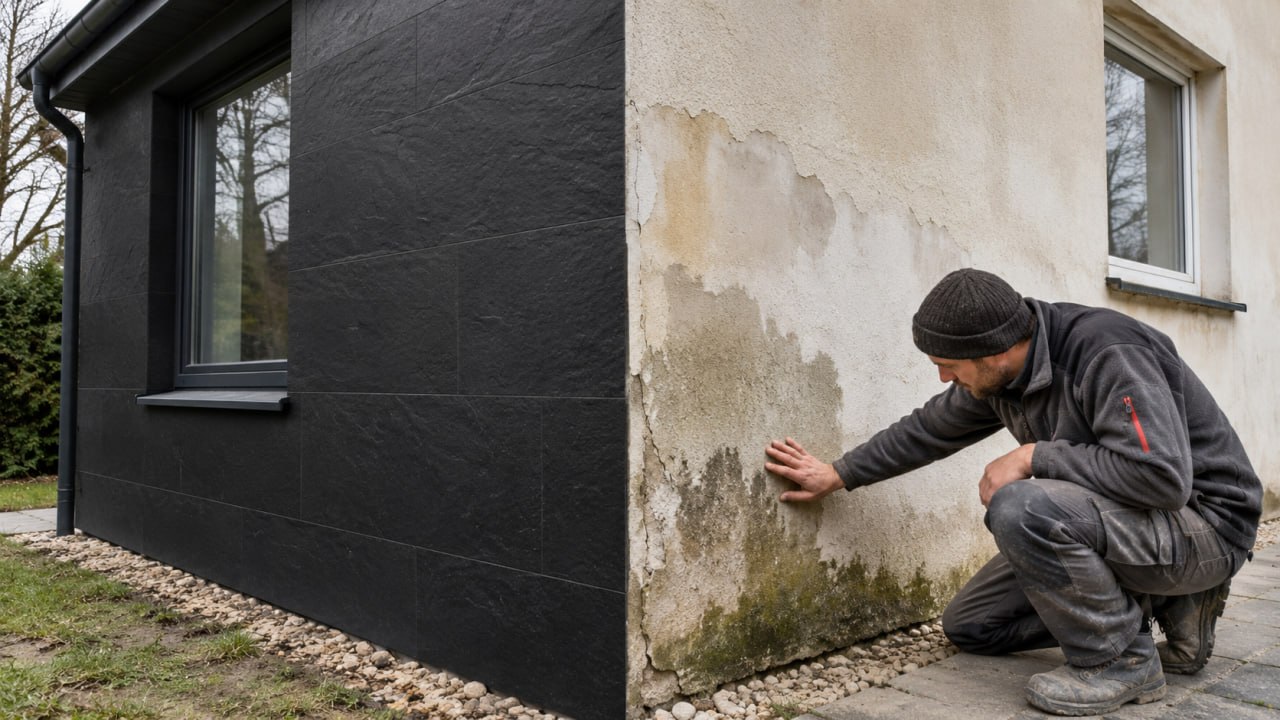
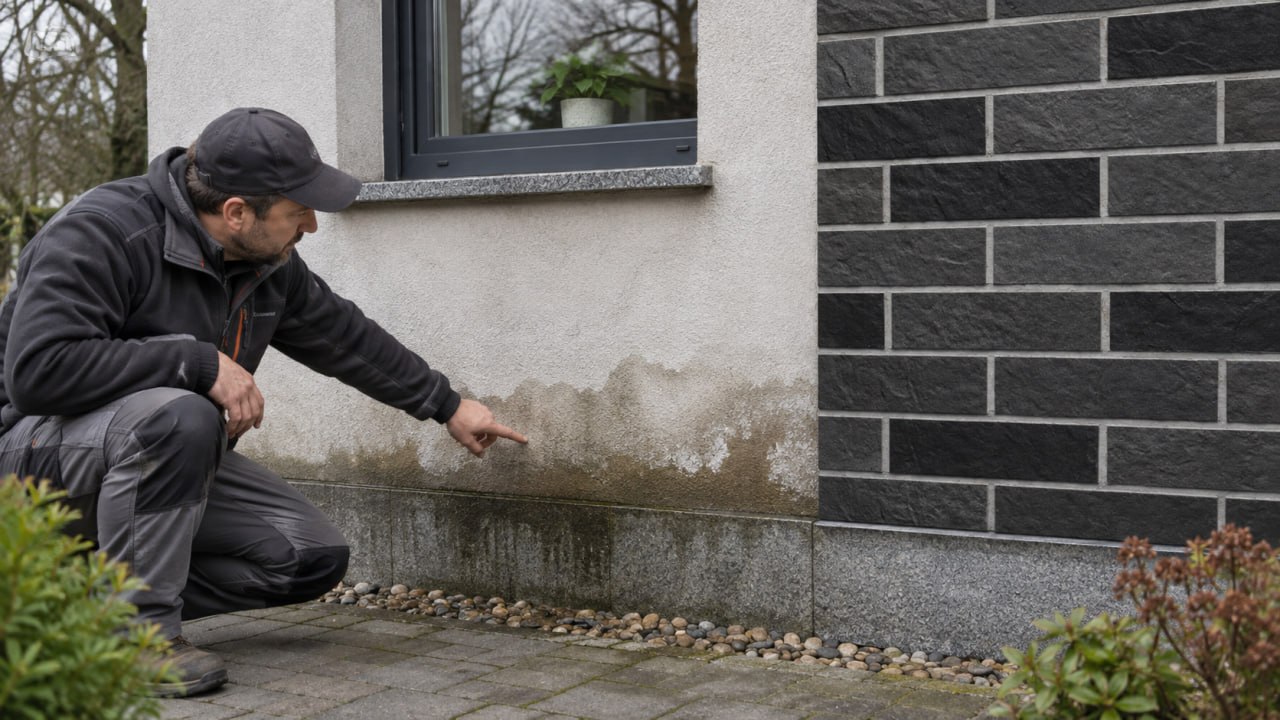
- Capillary rise of moisture from the ground through the foundation.
- Damaged waterproofing in the plinth area.
- Roof leaks and faulty drainage systems.
- Rainwater penetration through cracks and window junctions.
- Condensation caused by temperature differences and insufficient ventilation.
- Residual construction moisture after plastering or wall construction.
Each of these problems requires a separate solution. Replacing the decorative finish alone does not eliminate any of these causes.
What Happens to Moisture Behind New Cladding?
If water continues to enter the wall while its ability to dry is limited, moisture can accumulate within the construction.
At sub-zero temperatures, water freezing inside pores can contribute to gradual deterioration of the substrate. Salts dissolved in the moisture may crystallize, causing efflorescence and damaging surface layers.
Prolonged dampness can also reduce the thermal performance of some insulation materials, weaken the adhesive bond to the substrate, and create conditions for mold growth inside the building.
How Can You Identify the Cause of Facade Dampness?
The location of damp areas can provide an initial indication of the source of the problem.
| Signs of Moisture | Possible Cause |
|---|---|
| Dampness at the bottom of the wall | Capillary rise, damaged waterproofing |
| Damp patches around windows | Leaking junctions or flashings |
| Dark areas below the roof | Roof leaks or faulty gutters |
| Mold in interior corners | Condensation or thermal bridges |
| Wet areas after rain | Cracks or defects in the exterior finish |
For more accurate diagnosis, a moisture meter can be used. If dampness is persistent, a professional assessment of the building structure is recommended.
Can Vapor-Permeable Cladding Solve the Problem?
Vapor permeability is important because it allows water vapor to move through the building envelope.
KORDEKO PletaFlex Flexible Tile combines moisture resistance with vapor permeability, making it suitable for properly prepared facades.
However, even vapor-permeable cladding cannot stop continuous water penetration from the ground, roof leaks, or damaged structural junctions.
In addition, the ability of a wall to release moisture depends not only on the decorative cladding, but also on the properties of the adhesive, plaster, insulation, and other layers of the facade system.
How Should a Damp Wall Be Prepared Before Cladding?
Before installation, the following steps should be completed:
- Identify the source of moisture.
- Repair leaks and restore waterproofing where necessary.
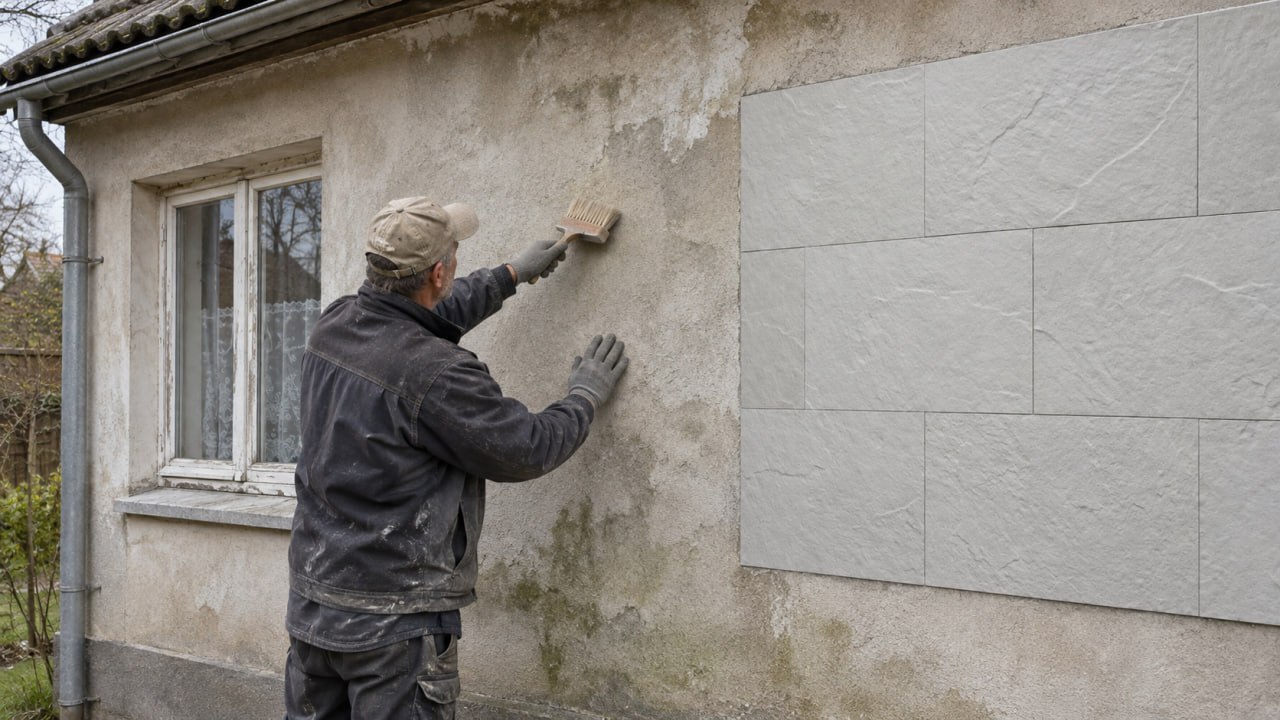
- Remove mold, efflorescence, and deteriorated plaster.
- Allow the wall to dry sufficiently.
- Check the strength and residual moisture of the substrate.
- Repair damaged areas and apply a suitable primer.
Flexible tile should only be installed after the source of dampness has been eliminated and the substrate has reached an acceptable moisture level according to the requirements of the materials being used.
The same applies to insulated walls: Facade Insulation is installed only on a dry, prepared substrate, and the requirements for ETICS systems are set out in the European assessment documents published by EOTA.
See also: mould and fungus on a facade; streaks on a facade after rain; how to check the strength of old plaster.
Conclusion
A new facade should protect the building, not hide existing problems. Cladding a damp wall without proper diagnosis can lead to premature failure even when high-quality finishing materials are used.
Eliminating the source of moisture and preparing the substrate correctly are essential conditions for reliable and durable facade finishing.
Frequently asked questions
Can flexible tile be installed on a damp wall?
Can exterior insulation eliminate dampness?
Can mold develop behind vapor-permeable cladding?
Need advice on your facade?
- Get a free consultation for your project
- Find out which material suits your facade
- We'll answer all your questions and help you choose