


How to Tell Whether Old Plaster Is Strong Enough for New Cladding
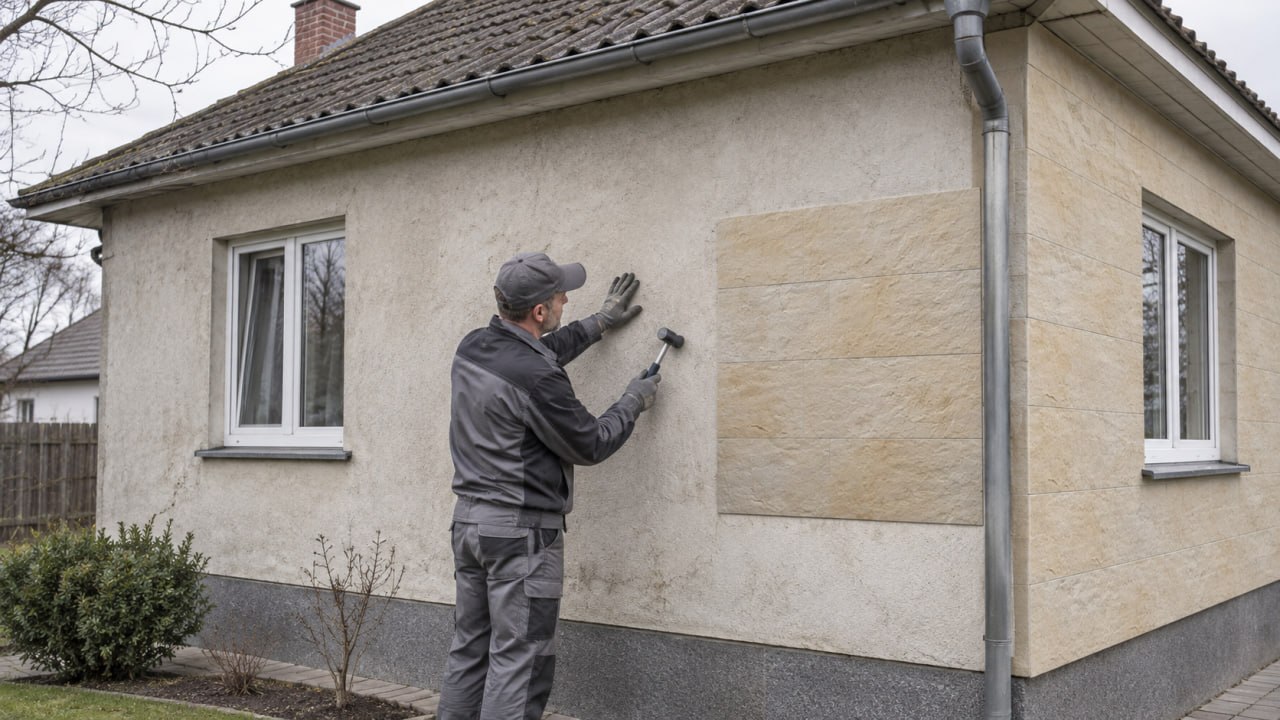
When renovating a facade, it is not always necessary to remove all of the old plaster. However, even a surface that looks solid may contain hidden defects, voids, and areas of delamination. Here is how to assess the substrate, when local repair may be enough, and when removal of the old finish becomes necessary.
When renovating an older facade, homeowners often try to keep the existing plaster in order to reduce costs, construction waste, and the overall duration of the work.
This approach is perfectly reasonable if the substrate has retained sufficient strength. But if the old plaster is poorly bonded to the wall, new cladding may detach together with it, regardless of the quality of the adhesive.
Which Signs Indicate a Weak Substrate?
Before cladding begins, the entire facade should be inspected carefully. The following signs may indicate that the plaster is in poor condition:
- Bulging and visible delamination.
- Crumbling edges and damaged areas.
- Deep or expanding cracks.
- Signs of persistent moisture and efflorescence.
- Sand and fine particles coming loose when touched.
- Voids beneath the plaster layer.
The absence of visible damage does not necessarily mean that the substrate is suitable for new cladding.
4 Ways to Check the Strength of Old Plaster
1. Tap the Surface
Gently tap the wall with a small hammer. A hollow sound that differs noticeably from surrounding areas may indicate that the plaster has detached from the wall. Such areas should be checked more carefully.
2. Scratch Test
Run a metal trowel or screwdriver across the surface. If the plaster breaks down easily, crumbles, or flakes away, its strength may be insufficient.
3. Hand Check
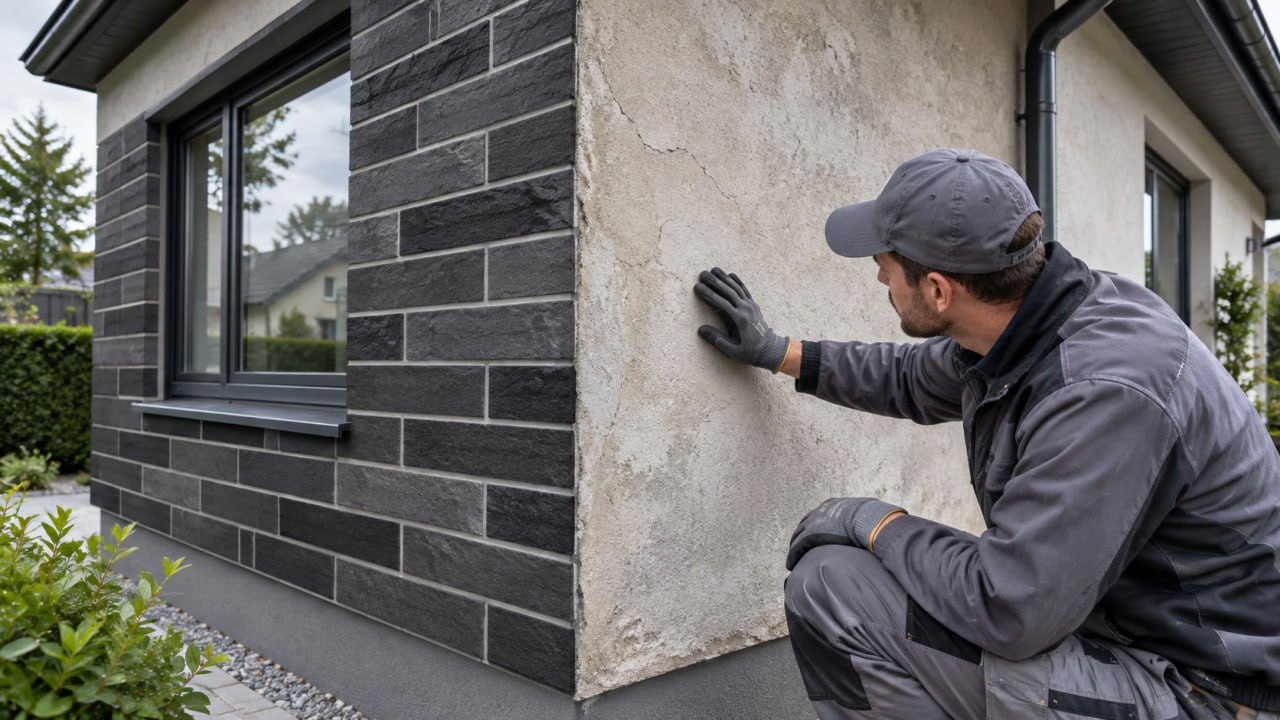
Run your hand over a cleaned section of the wall. If the surface continues to shed significant amounts of sand or fine particles, the depth of deterioration should be assessed.
4. Pull-Off Test
The most objective method is an instrumental pull-off adhesion test. It helps determine the bond strength between layers and shows how the substrate fails. The results should be evaluated according to the requirements of the selected cladding system.
The first three methods are useful for preliminary assessment, but they do not replace professional testing.
When Is Local Repair Enough, and When Is Removal Necessary?
| Condition of the Plaster | Recommended Solution |
|---|---|
| Strong, even, no delamination | Cleaning and priming |
| Minor surface defects | Local repair |
| Individual hollow areas | Remove damaged sections and restore |
| Widespread delamination and crumbling | Remove the unstable layer |
| Persistent moisture | Eliminate the source of moisture |
| Active cracks | Diagnose and correct the cause |
Complete removal of the old plaster is not always necessary. If defects are local and the rest of the surface remains strong, proper repair of the damaged areas may be sufficient.
Can Old Plaster Be Strengthened with Primer?
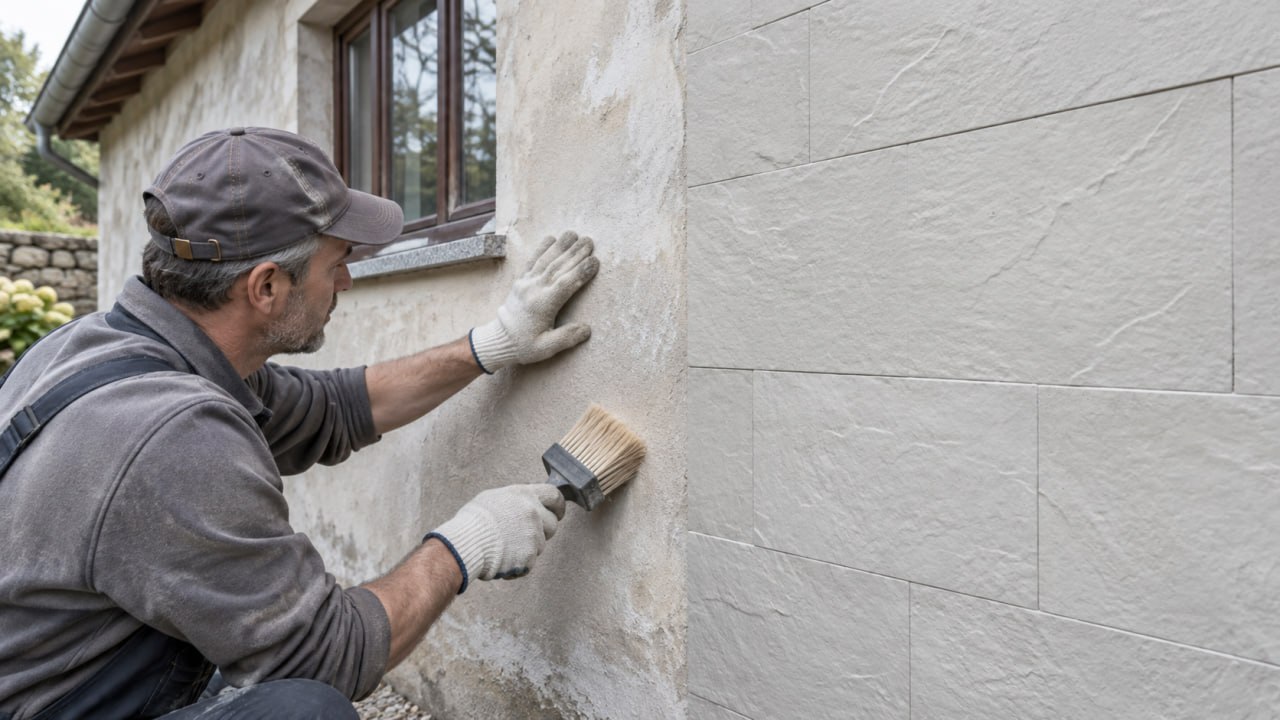
Deep-penetrating primer is used to prepare absorbent mineral substrates and improve bonding conditions for the adhesive.
However, it cannot restore plaster that has lost strength throughout its thickness or has already detached from the wall.
Likewise, reinforcement mesh does not solve the problem of an unstable existing substrate. All weak layers must be removed before further work begins.
Can KORDEKO Flexible Tile Be Installed Over Old Plaster?
Thanks to its low weight and flexibility, KORDEKO PletaFlex Flexible Tile can be used to renovate facades without automatically removing all of the existing finish, provided that the substrate meets the installation requirements.
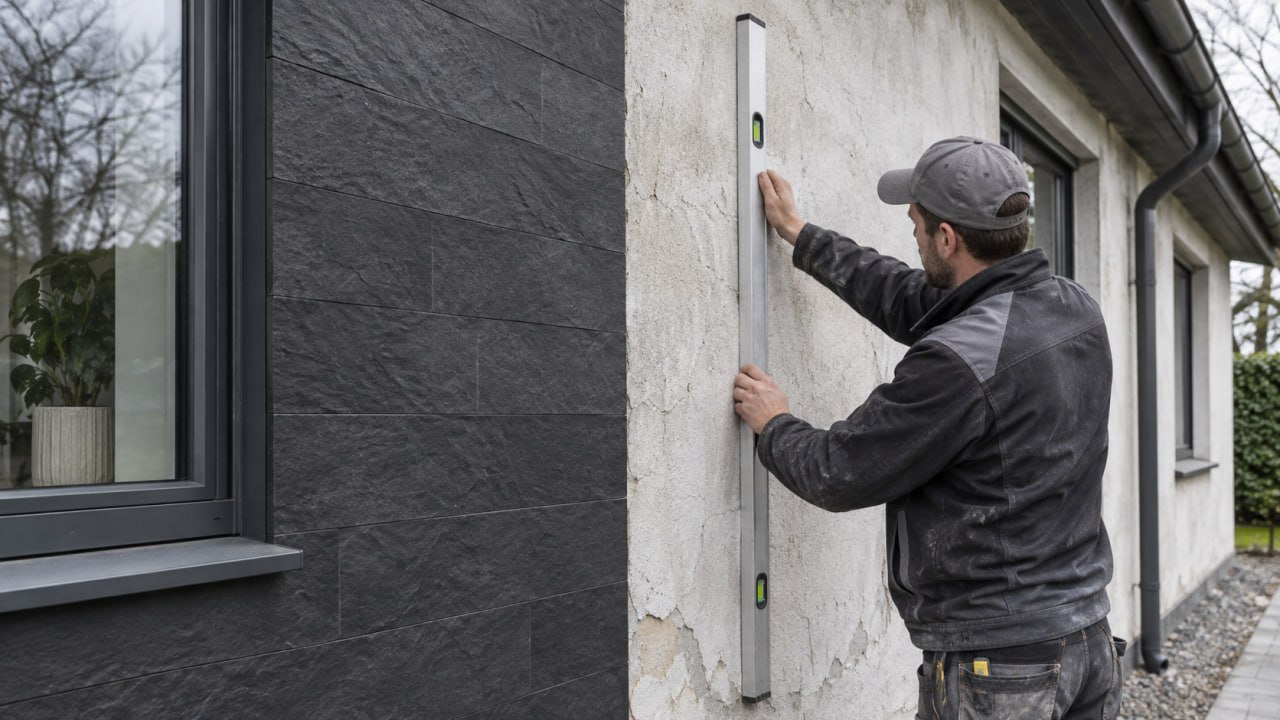
Before installation, the surface should be checked for cracks, voids, and irregularities. Dirt and weak areas must be removed, damaged sections repaired, and a suitable primer applied. A frost-resistant tile adhesive is used for exterior cladding.
This approach makes it possible to preserve suitable areas of the old plaster, reduce demolition work, and lower renovation costs.
If Facade Insulation is planned together with the cladding, the old plaster is checked the same way: insulation boards are fixed to a sound substrate, and the requirements for ETICS systems are set out in the European assessment documents published by EOTA.
See also: why tile must not go on a dusty wall; an old facade without demolition; local facade repair without redoing the whole facade.
Conclusion
The age of the plaster alone is not a reason to remove it. Its actual strength, adhesion to the wall, and the absence of hidden defects are much more important.
Proper substrate assessment before cladding helps avoid both unnecessary demolition costs and premature failure of the renovated facade.
Frequently asked questions
Can flexible tile be installed over plaster that is more than 20 years old?
Does old paint need to be removed from plaster?
Can plaster with small cracks be clad?
Need advice on your facade?
- Get a free consultation for your project
- Find out which material suits your facade
- We'll answer all your questions and help you choose