


White or Gray Adhesive for Flexible Tile: When Adhesive Color Really Matters
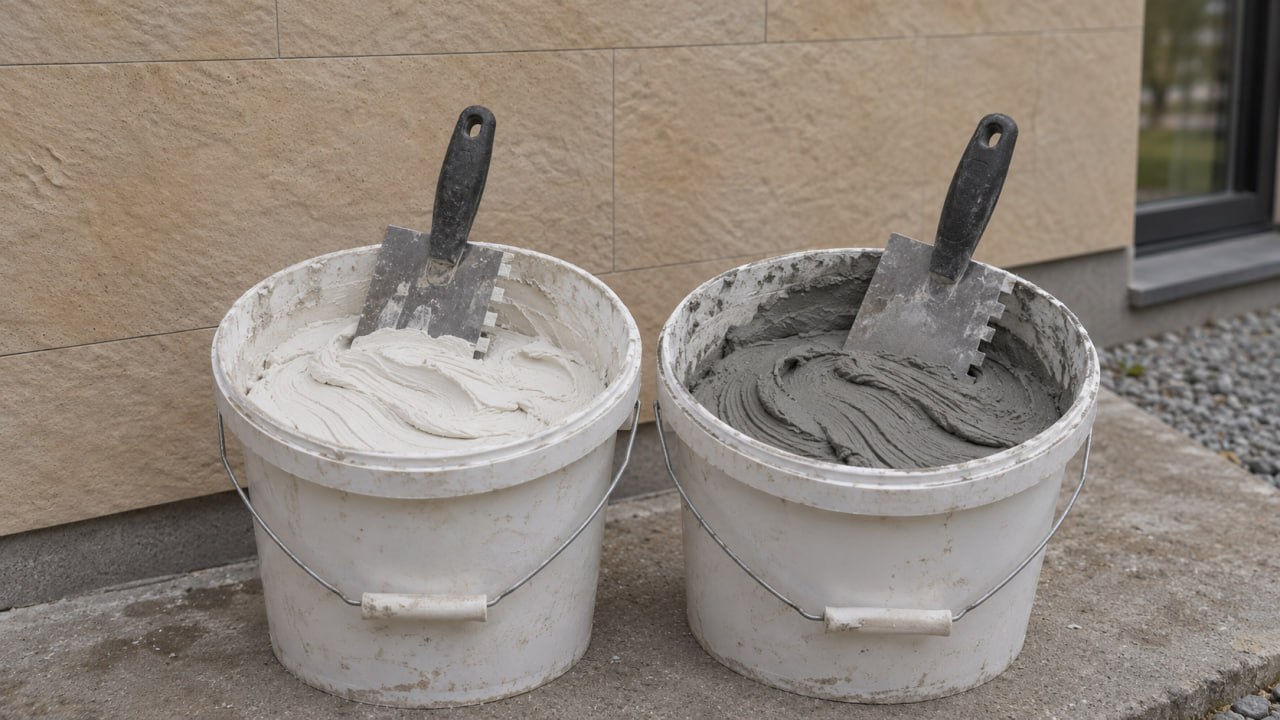
White and gray tile adhesives differ not only in color but also in their binder. For flexible tile, the choice often comes down to the shade of the cladding: white cement for light tones, gray for dark ones. Here is where adhesive color affects the result and where frost resistance and substrate preparation matter more.
The owner chooses a light tile, and the installer brings the usual gray adhesive: “it won’t be visible under the tile anyway.” Sometimes that is true. In other cases the adhesive color shows up in the most noticeable places — on edges, in joints and on the face of the tile if excess adhesive is not removed right away.
The question is usually reduced to one choice: white or gray. But color alone does not affect bond reliability. That depends on the adhesive composition, the substrate and compliance with the installation technology. Let us look at what color actually changes.
How White Adhesive Differs from Gray
Adhesive color comes from its binder: white adhesive is made with white cement, gray adhesive with gray cement. Color alone says nothing about strength or suitability for facades.
That is why the choice should follow the intended use stated by the manufacturer: exterior work and your type of substrate. White adhesive is not “better” and gray is not “worse” — they simply look different where they become visible.
Where Adhesive Color Is Actually Visible
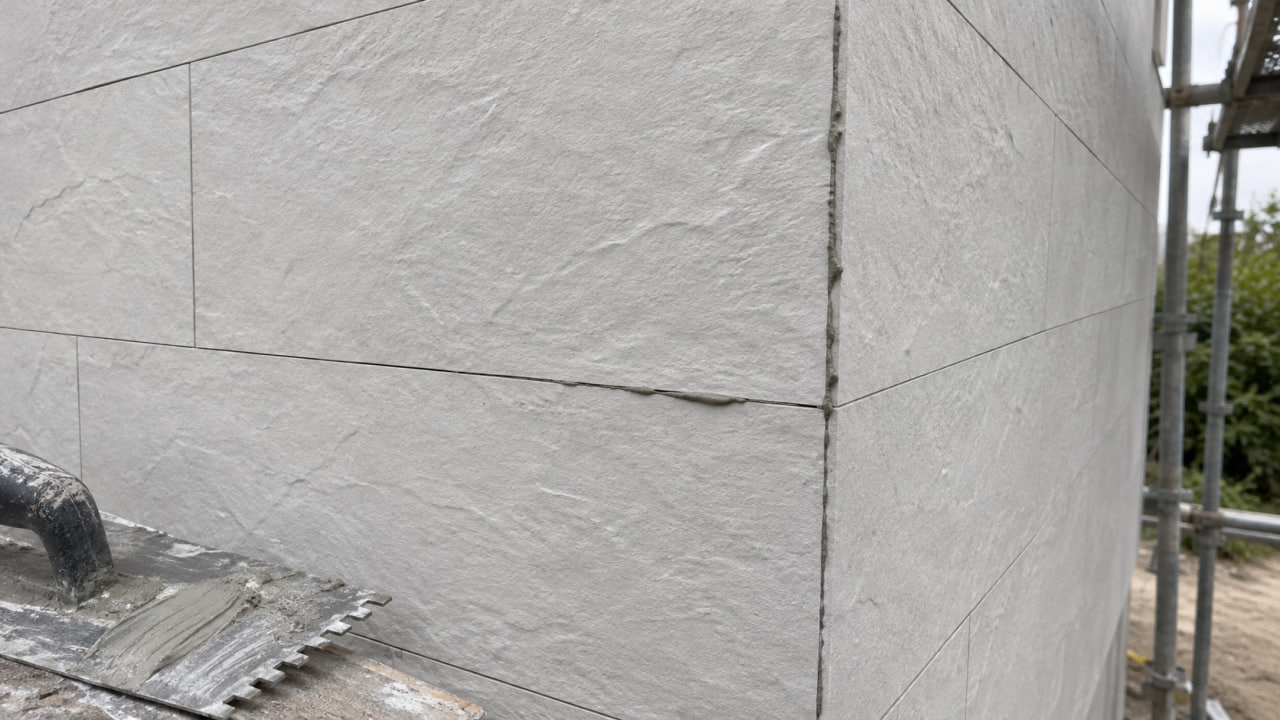
Under a continuous layer of tile the adhesive is not visible, so across most of the facade its color changes nothing. It can become noticeable in a few places:
- Edges and cuts. Tile edges at corners, window reveals and junctions, where the material is trimmed.
- Joints between tiles. If tiles are laid loosely or the adhesive layer is too thick, adhesive can squeeze into the gap.
- Tile face. Excess adhesive that is not removed in time leaves stains.
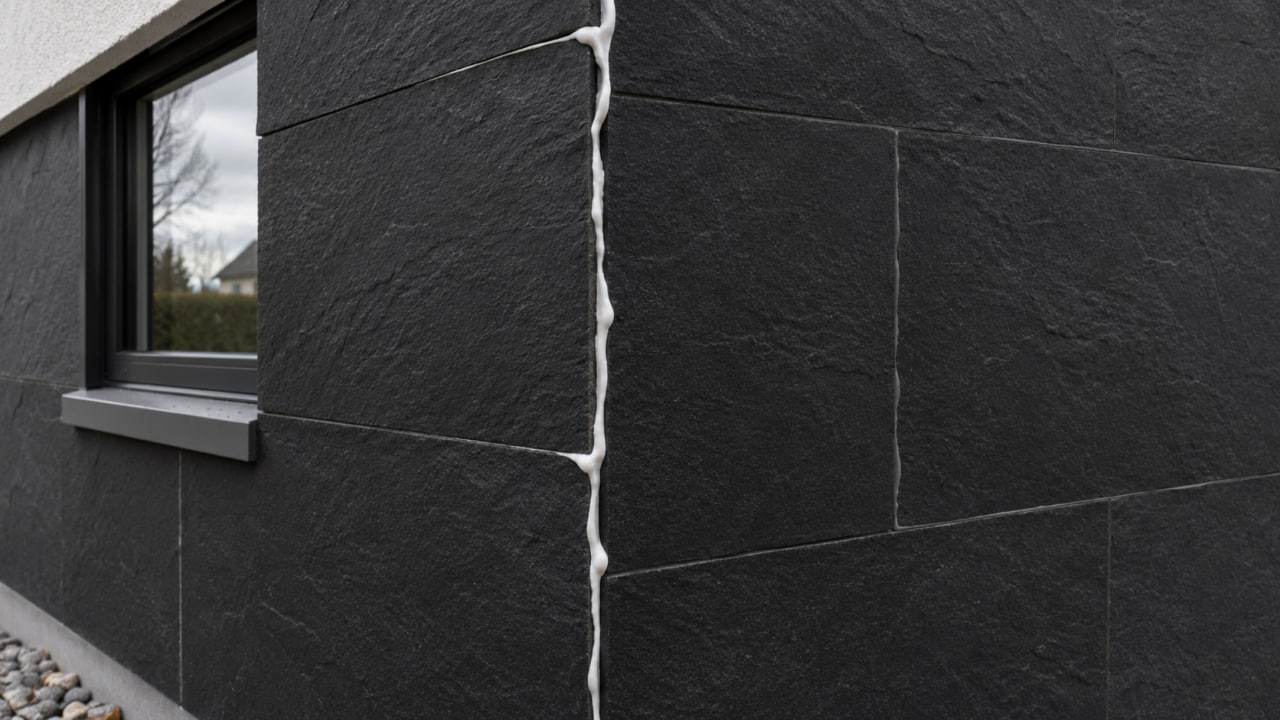
- Light shades. Gray adhesive contrasts with white, beige or sand-colored tile, while white adhesive contrasts with black or anthracite.
On dark shades, gray adhesive is usually less noticeable.
How to Match Adhesive Color to the Tile Shade
The rule of thumb is simple: the adhesive should be close in tone to the tile.
- Light shades (white, beige, sand) — adhesive based on white cement.
- Dark shades (gray, brown, anthracite, black) — adhesive based on gray cement.
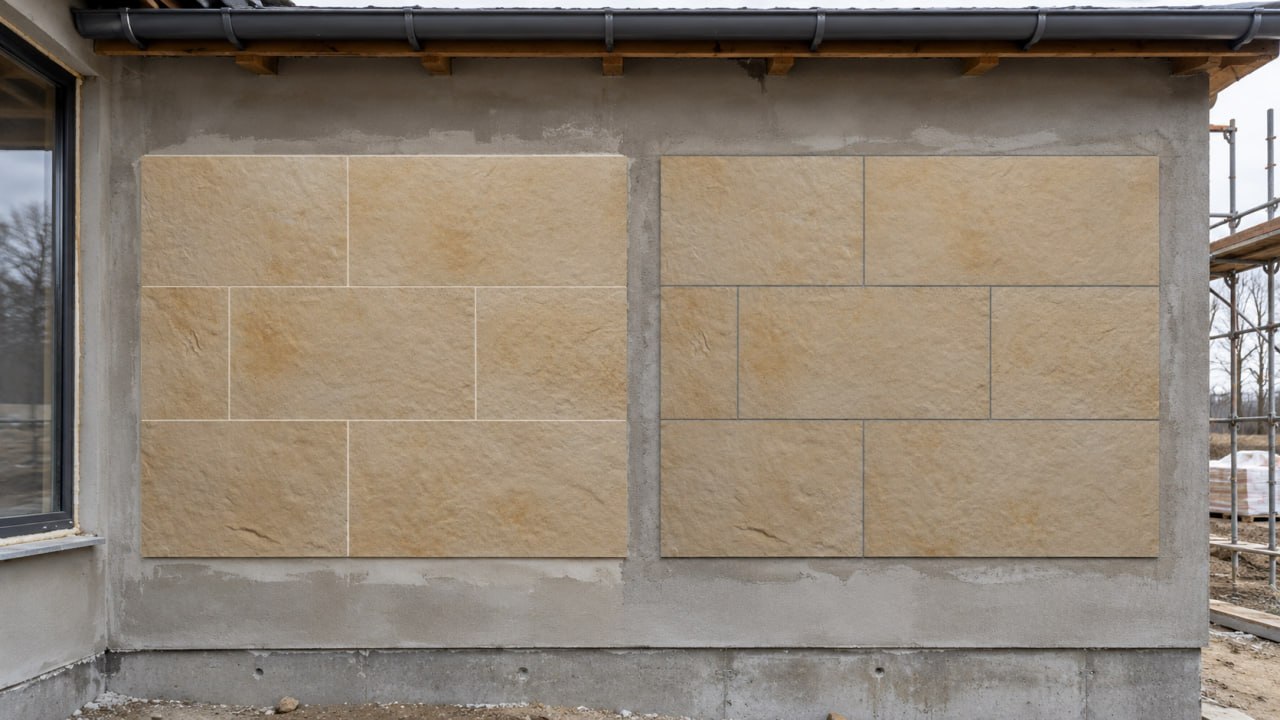
- Mixed layouts. If a layout combines light and dark tiles, follow the dominant tone and check your choice on a trial area.
- Tinting. Adhesive can be lightly tinted to match the tile; it is best to fix the pigment and proportion and keep them identical across the whole project.
Before the main work, fix several tiles in an inconspicuous area, let the adhesive dry and assess how the edges and cuts look in daylight.
What Matters More Than Adhesive Color
Color affects only appearance. The reliability of the cladding depends on other factors:
- Frost resistance: facades require frost-resistant adhesive.
- Substrate: strong, clean, dry and properly primed — absorbent surfaces are treated with a deep-penetration primer, poorly absorbent ones (such as concrete) with a concrete-contact primer.
- Consistency and application: adhesive for flexible tile is mixed slightly more fluid than standard tile adhesive and applied with a notched trowel.
- Adhesive manufacturer’s recommendations: conditions of use and temperature range.
Choosing adhesive “by color alone” is risky: it does not guarantee that the product is suitable for a facade and for your substrate.
Using It with KORDEKO PletaFlex Flexible Tile
KORDEKO flexible tile, 2.5–5 mm thick, is installed on prepared substrates: cement and lime plaster, concrete, aerated concrete and skim coat. The installation recommendations specify white-cement-based adhesive for light shades and gray-cement-based adhesive for dark ones; in both cases it can be lightly tinted. For facades, frost-resistant adhesive is used.
Adhesive is applied with a notched trowel: 4 mm for smooth tiles and 6 mm for textured ones. The tile is pressed firmly with a float to remove air, and excess adhesive is wiped off immediately with a sponge — this matters for a clean tile face.
The result depends on substrate preparation, the choice of adhesive and compliance with the installation technology. Adhesive color does not replace any of them.
If the tile goes over an external insulation system, the adhesive is chosen by the same rules: Facade Insulation follows the ETICS requirements in the European assessment documents published by EOTA, and the adhesive color is matched to the tile shade in exactly the same way.
See also: a 4 mm or 6 mm notched trowel for flexible tile; deep-penetrating primer or concrete contact primer; a facade without joints or with visible joints.
Conclusion
Adhesive color matters where the adhesive can be seen: on edges, cuts and in joints, especially with light tile. In KORDEKO installation recommendations, white adhesive is specified for light shades and gray for dark ones, tinted if necessary.
Color does not affect bond strength. Choose adhesive by its intended use (frost-resistant for a facade), the type of substrate and the manufacturer’s recommendations, and settle the shade on a trial area.
Frequently asked questions
Can gray adhesive be used under white tile?
What does it mean to tint adhesive?
Is a special adhesive needed for a facade?
Need advice on your facade?
- Get a free consultation for your project
- Find out which material suits your facade
- We'll answer all your questions and help you choose