


Facade Frost Resistance: What Is More Dangerous — Severe Frost or Freeze-Thaw Cycles?
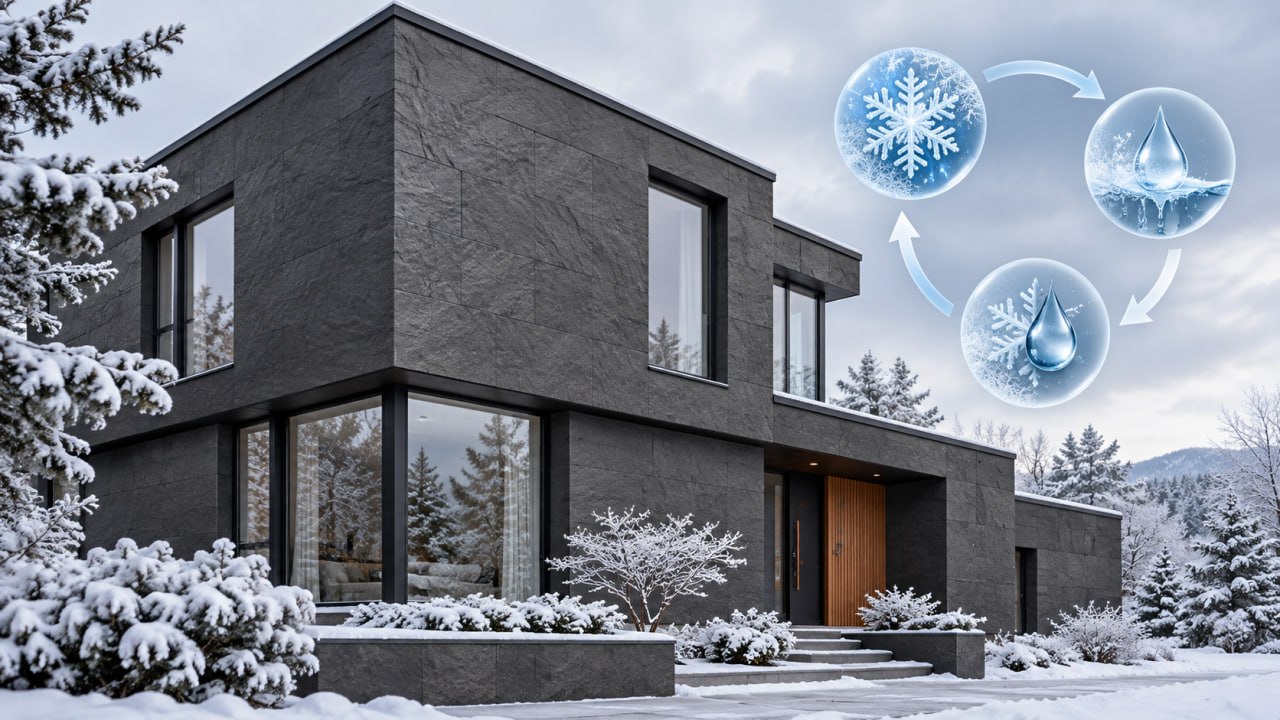
In winter, a facade is exposed not only to low temperatures, but also to constant changes in weather conditions. During the day, snow can melt and water can enter pores and cracks in the cladding. At night, that water freezes again. Over time, these processes can gradually damage even strong finishing materials.
That is why facade frost resistance is determined not only by the ability to withstand severe cold, but also by resistance to repeated freezing and thawing.
Why Freeze-Thaw Cycles Can Be More Dangerous Than Constant Frost
Severe frost by itself does not always damage facade cladding. A more serious situation occurs when the material becomes saturated with moisture and the temperature repeatedly crosses the 0 °C point.
When water freezes, it expands. If it is trapped inside pores, microcracks, or damaged joints, the resulting pressure can gradually weaken the structure of the finish.
Repeated cycles are especially dangerous:
- Wetting. Rain or melting snow penetrates vulnerable areas of the facade.
- Freezing. Water turns into ice and creates internal pressure.
- Thawing. The temperature rises, the ice melts, and moisture may penetrate deeper.
- Freezing again. The load is repeated, gradually increasing existing damage.
That is why a climate with frequent temperature changes around freezing can create more demanding conditions for wet cladding than a long period of stable frost.
How KORDEKO Flexible Tile Performs in Freezing Conditions
KORDEKO Flexible Tile (PletaFlex) is produced on a mineral-polymer base using an acrylic binder and a reinforcing non-woven membrane.
According to the manufacturer’s technical description, the material is frost-resistant and designed for use in climates with sub-zero temperatures.
Its resistance to external conditions is related to several properties:
- Moisture resistance. The acrylic binder helps protect the material from moisture penetration.
- Flexibility. The tile can accommodate small deformations without damaging the decorative layer.
- Weather resistance. The material is designed for exterior cladding and can withstand repeated freeze-thaw exposure.
However, the technical description being used does not specify an exact number of freeze-thaw cycles or a minimum operating temperature. For this reason, suitability for a specific climate should be evaluated using the relevant technical documentation.
Why Even Frost-Resistant Cladding Can Fail
The frost resistance of the cladding itself does not guarantee the durability of the entire facade system.
For example, if water penetrates behind the tile through damaged junctions, freezing can create stress in the adhesive or reinforcement layer.
It is especially important to execute connections correctly around windows, roofs, balconies, and the plinth.
Facade Insulation must also include proper protection of the thermal insulation layer from moisture. Wet insulation and reinforcement mistakes can lead to damage regardless of how frost-resistant the decorative finish is.
The general requirements for external thermal insulation composite systems (ETICS) are set out in the European assessment documents published by EOTA.
KORDEKO Flexible Tile is used as the final cladding in compatible thermal insulation systems, but it does not replace waterproofing or correctly designed junctions.
How to Protect a Facade from Winter Damage
To reduce the risk of winter damage, several rules should be followed:
- Use a frost-resistant adhesive designed for exterior applications.
- Install the tile only on a strong, prepared, and primed substrate.
- Ensure proper drainage from window sills, roofs, and other projecting elements.
- Check the sealing of junctions and the condition of the plinth.
- Do not install the tile in freezing conditions, and follow the adhesive manufacturer’s temperature requirements.
If cracks or areas of delamination have already appeared, they should ideally be repaired before stable cold weather begins to limit water penetration into the facade structure.
See also: heat, frost and temperature swings on a facade; what happens to an insulated facade when water gets in; junctions, sills and drains without leaks.
Conclusion
For a damp facade, repeated freeze-thaw cycles are often more dangerous than prolonged severe frost. The main problem is water that penetrates the finish and expands when it freezes.
Thanks to its moisture resistance, flexibility, and frost resistance, KORDEKO Flexible Tile is suitable for exterior finishing in variable climates.
However, facade durability depends on the entire system. Proper installation, moisture protection, and timely repairs help preserve the cladding even under demanding winter conditions.
Frequently asked questions
What is more dangerous for a facade: severe frost or temperature swings?
How many freeze-thaw cycles does KORDEKO flexible tile withstand?
How do you protect a facade from winter damage?
Need advice on your facade?
- Get a free consultation for your project
- Find out which material suits your facade
- We'll answer all your questions and help you choose