


KORDEKO flexible facade: what happens to insulation if the facade lets water in
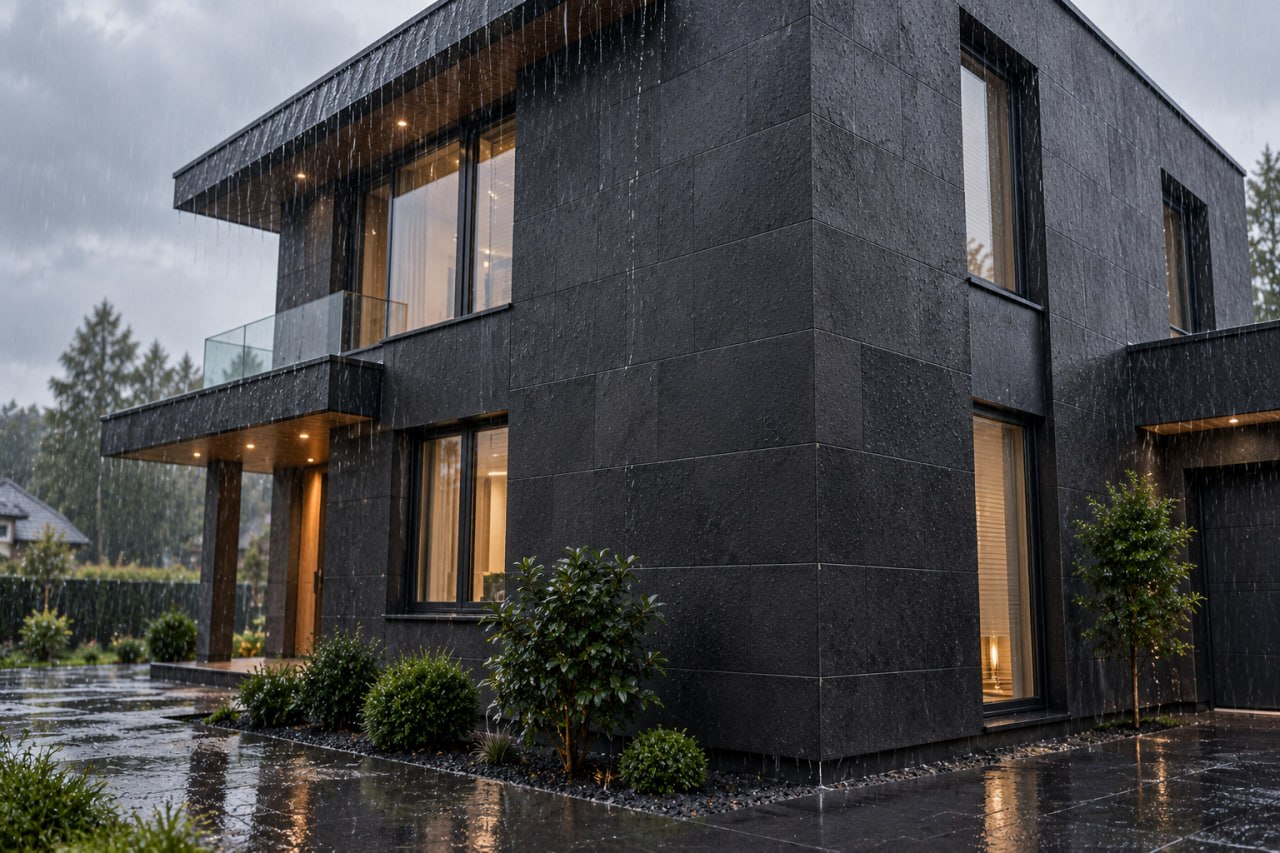
Facade insulation works effectively only when the entire system is properly protected from moisture. If water begins to penetrate through cracks, joints, connection points or damaged areas of the finish, the problem can gradually move from the facade surface to the underlying layers.
At first glance, a small leak may seem insignificant. But if water regularly gets inside the facade system, the consequences may not become noticeable immediately.
Where the water goes beyond the surface
Rain itself is not a problem for a properly installed facade. The main risk appears when water finds a path into the system. This can happen through:
- cracks;
- damaged areas of the finish;
- poorly executed joints;
- window connection points;
- areas around flashings;
- the plinth;
- areas under canopies;
- incorrectly installed drip edges;
- damaged layers of the insulated facade system.
If water regularly penetrates inside, it may become trapped between the layers.
What happens to the insulation
Everything depends on the type of insulation, the amount of water that enters and how quickly the system can dry. When insulation gets wet, its thermal properties may change: damp insulation performs its main function, retaining heat, less effectively.
As a result:
- heat loss increases;
- the wall surface becomes colder;
- the risk of cold spots increases;
- indoor comfort may decrease;
- heating costs may rise.
The situation is especially problematic when moisture repeatedly enters the same area.
Why the problem can stay hidden for a long time
From the outside, the facade may look almost completely normal. Water can enter in small amounts during every heavy rain and then gradually evaporate. However, if the system does not have enough time to dry between wetting cycles, moisture begins to accumulate.
The first signs may appear only after some time:
- a cold area on the wall;
- discoloration;
- damp spots;
- efflorescence;
- an unpleasant smell indoors;
- damage to the finish;
- localized freezing in winter.
Therefore, the absence of an obvious leak does not necessarily mean that the facade is fully protected from water. Where the white patches on cladding come from is explained in our article on protecting a facade from moisture and efflorescence.
Why joints and connection points are the most vulnerable
A large flat surface is usually not the main source of problems. Water more often finds its way through details. Special attention should be paid to:
- window reveals;
- window sills and flashings;
- corners;
- the transition between the facade and the plinth;
- cornices;
- canopies;
- balconies and terraces;
- fixing points;
- drainage systems.
If water constantly runs over the same area, even a small defect can eventually turn into a serious problem. How reveals, flashings and drip edges are done properly is shown in our piece on facade junctions.
Why the final finish matters
The finishing layer is one of the elements that protects the facade system. It is exposed to rain, snow, sunlight, wind and mechanical impact.
KORDEKO flexible tile (PletaFlex) is used as a decorative and protective facade cladding. Its purpose is not only to give the wall a natural stone appearance, but also to function as part of a properly prepared facade system. At the same time, the cladding itself cannot replace:
- high-quality reinforcement;
- proper priming;
- suitable adhesive;
- sealed connection points;
- flashings;
- drip edges;
- properly functioning drainage.
What happens in winter
If moisture has entered the facade system and the temperature drops below freezing, the situation becomes more complicated. Water expands when it freezes. Repeated freeze-thaw cycles create additional stress on damaged areas and weak joints.
That is why it is especially important to eliminate the source of water penetration before the cold season begins, rather than waiting for serious damage to appear.
How to protect the insulation
When Facade insulation is carried out, water protection must be considered at every stage. The general requirements for such systems are described by the European Association for ETICS (EAE). The following should be checked:
- The condition of the insulation and reinforcement layer.
- The quality of the final cladding.
- Window connection points.
- Flashings and window sills.
- Drip edges.
- The plinth.
- The drainage system.
- Connections around terraces, balconies and canopies.
- Areas around pipes and other elements.
The main objective is not simply to remove a visible stain, but to identify the path through which water enters the system.
What to do if the facade is already letting water in
You should not immediately cover the damaged area with a new finishing layer. First, it is necessary to determine:
- where the water is coming from;
- how deeply it has penetrated;
- whether the insulation has been damaged;
- whether the layers are drying properly;
- whether the substrate has deteriorated;
- whether the leak returns after rain.
If the problem is local, the damaged area can be restored after the source of moisture has been eliminated. If the insulated facade system has become seriously wet, a more thorough inspection may be required.
Conclusion
If a facade begins to let water in, the problem can gradually spread from the exterior finish to the insulation and other layers of the system. Moisture can reduce thermal insulation efficiency, increase heat loss and create conditions for further facade damage.
Water protection is therefore not only an aesthetic issue. Proper connection points, flashings, drip edges, the plinth, reinforcement and a high-quality final finish help preserve the performance of the entire facade system.
KORDEKO flexible tile can be used as the finishing layer of an insulated facade, but the durability of the entire structure depends on the correct installation of all its components.
Frequently asked questions
What happens to insulation if the facade lets water in?
How do I know water is getting behind the facade if there is no visible leak?
Can I just cover the damaged area with a new finishing layer?
Need advice on your facade?
- ·Get a free consultation for your project
- ·Find out which material suits your facade
- ·We'll answer all your questions and help you choose