


KORDEKO flexible tile: how to choose cladding that won’t make your house look outdated in 5–10 years
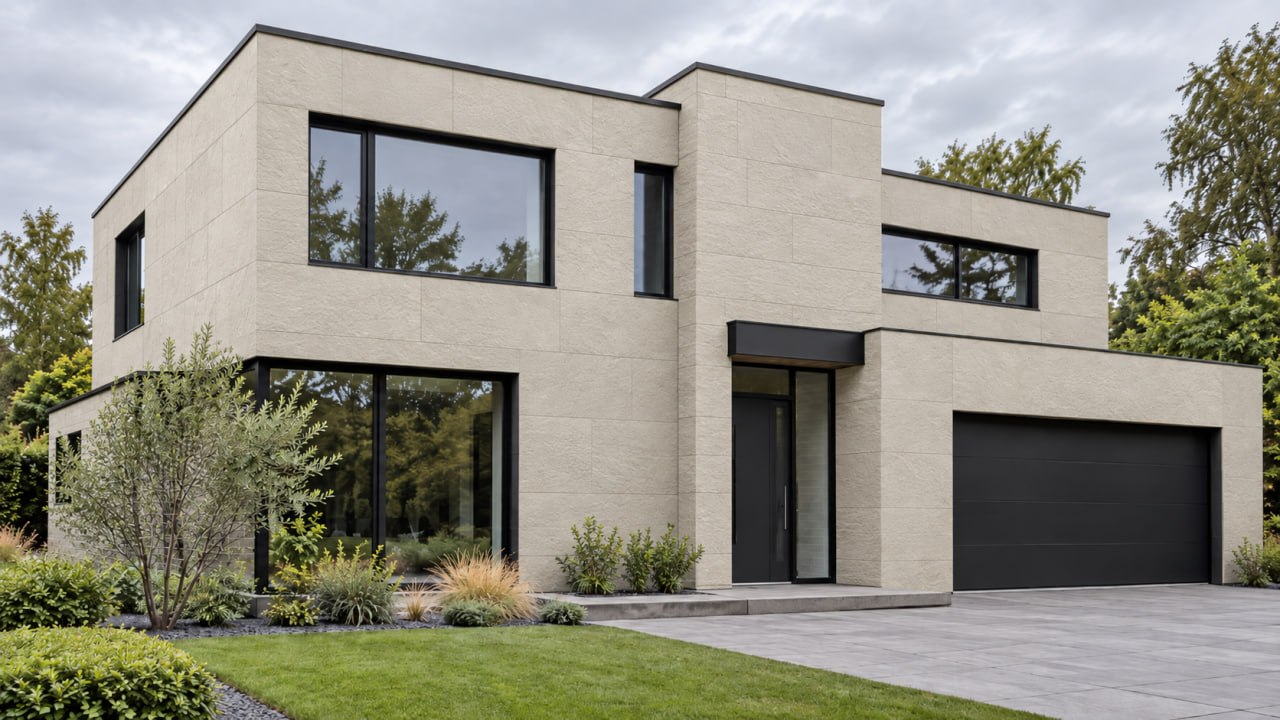
A facade is not designed for just one season. If you are choosing cladding today, it is important to imagine how the house will look in 5–10 years—when trends have changed, new architectural solutions have appeared, and today’s fashionable design techniques no longer feel contemporary.
The biggest mistake is trying to make a facade look “trendy.” Trends change quickly. A much more reliable approach is to choose an architectural style that remains relevant because of its proportions, materials, and balanced color palette rather than one popular design feature.
Don’t Chase Trends
What looks unusual today may become a visual symbol of a specific era in just a few years.
Design solutions that tend to age especially quickly include:
- too many contrasting colors;
- excessive decorative elements;
- several completely different textures;
- overly active geometric patterns;
- imitation of too many different materials;
- decorative elements that are not connected to the architecture of the house.
If the entire facade is built around a trend, changing it later can be difficult and expensive.
A Calm Base Ages Better
One of the safest approaches is to keep the main part of the facade visually calm and use more expressive materials only in selected areas.
For example:
- main facade area — neutral stone texture;
- plinth — darker shade;
- entrance area — accent material;
- wood — small warm inserts.
This approach is not tied to one specific trend. If preferences change in a few years, individual details can be updated without redesigning the entire facade.
Natural-Looking Materials Tend to Age More Gracefully
Natural stone, wood, and mineral-inspired shades are usually easier to integrate into residential architecture than very bright or artificial-looking colors.
Practical choices can include:
- gray;
- graphite;
- gray-beige;
- sand;
- brown-gray;
- natural wood tones;
- calm stone shades.
These colors are also easier to coordinate with windows, roofing, doors, fencing, and landscaping.
Don’t Use Too Many Materials
A facade can look modern without using four or five different types of cladding.
If stone, brick, slate, wood, plaster, and metal are all used at the same time, each material begins competing for attention.
It is better to establish a clear hierarchy:
main material → secondary texture → small accent.
This keeps the architecture visually clear even after specific design trends have changed.
Tile Format Also Affects How Quickly a Facade Looks Dated
Very small textures create a large number of lines and repeated details. An overly active pattern can quickly become associated with a particular design period.
Medium and large formats often create a calmer surface.
However, there is no universal rule. The format should be selected in relation to:
- the size of the house;
- number of floors;
- windows;
- width of wall sections;
- architectural details;
- viewing distance.
KORDEKO Flexible Tile (PletaFlex) is available in different textures and sizes, allowing the cladding to be matched to the scale of a specific building.
We looked at how format changes the perception of a house in the articles on large or small format flexible tile and on the facade of a small and a large house; you can compare formats on a facade in the KORDEKO 3D constructor.
It Is Better to Emphasize the Architecture Than Hide It
A good facade should not fight against the shape of the house.
If the building has interesting geometry, it can be emphasized through:
- a different shade;
- a change in layout direction;
- a separate texture;
- an accent area;
- an architectural band.
There is no need to cover the entire house with the same decorative pattern.
Sometimes highlighting just one volume, entrance area, or plinth is enough to make the facade look well considered.
Don’t Forget About Windows and the Roof
Cladding should not be chosen separately from the other elements of the house.
Over time, the facade will always be perceived together with:
- window frames;
- roofing;
- doors;
- gutters and downpipes;
- fencing;
- walkways;
- landscaping.
That is why it is better to create a limited color palette in advance.
For example:
main facade color + roof and window color + one accent shade.
How to match the facade colour to the roof, windows and fence is covered in the article how to choose a facade colour.
The more clearly the main elements are connected visually, the less likely the house is to look outdated.
An Overly “Expensive-Looking” Facade Can Also Age Quickly
Paradoxically, too many decorative elements can sometimes make a house look dated sooner.
Today, an abundance of cornices, complicated inserts, and contrasting materials may appear luxurious. In several years, the same composition may strongly reflect the style of a particular period.
A premium-looking facade is better created through:
- high-quality materials;
- good proportions;
- clean detailing;
- thoughtful layouts;
- harmonious colors;
- carefully executed finishing.
Not through the quantity of decoration.
Practicality Also Helps a Facade Stay Contemporary
Even the most attractive facade will quickly lose its appeal if it constantly requires repairs.
When choosing cladding, it is important to consider:
- resistance to sunlight;
- moisture resistance;
- temperature fluctuations;
- mechanical loads;
- dirt and pollution;
- possibility of local repairs;
- ease of maintenance.
KORDEKO Flexible Tile is designed for exterior use and makes it possible to create a stone texture without heavy cladding. This is especially convenient for plinths, corners, reveals, and entrance areas—zones that often show signs of wear first.
A Facade Should Look Good Outside a 3D Visualization Too
A 3D visualization is useful, but it does not always show how the material will actually be perceived in real life.
Before making a final choice, it is better to check:
The sample in natural daylight.
The material next to the windows and roof.
The texture from a distance.
Pattern repetition across a large surface.
The combination of several materials.
A real test area.
This helps avoid situations where an attractive sample becomes too visually active once installed across the entire house.
How to Choose a Facade You Won’t Get Tired of
A simple principle can be used:
1. Keep the Base Neutral
The main material should be calm enough to cover a large area.
2. Use One or Two Accents
Highlight the entrance, plinth, or a separate architectural volume.
3. Limit the Number of Colors
A few connected shades usually work better than many contrasting ones.
4. Every Texture Should Have a Purpose
Do not add a material simply because it makes the facade look “more interesting.”
5. Architecture Matters More Than Fashion
The cladding should emphasize the shape of the house, not replace it.
What About 10 Years from Now?
A well-designed facade should not require a complete redesign simply because trends have changed.
If the base is calm, individual elements can be updated over time:
- the entrance area;
- door color;
- lighting;
- terrace elements;
- fencing;
- individual decorative zones.
The main facade can continue to look relevant.
When carrying out Facade Insulation, it is especially important to plan the final cladding so that it is designed not only for today’s appearance, but also for long-term use.
The general requirements for external thermal insulation composite systems (ETICS) are set out in the European assessment documents published by EOTA.
Conclusion
To keep a house from looking outdated in 5–10 years, there is no need to predict future trends. It is much more reliable to create a calm architectural base, use a limited color palette, avoid overloading the facade with too many materials, and select textures that match the scale of the building.
KORDEKO flexible tile can be used as the main stone-textured finish or as an accent material, with different formats available for complex architectural areas.
A modern facade is not one that looks fashionable today. It is one that still looks appropriate, cohesive, and well designed years later.
Frequently asked questions
Which facades date the fastest?
How many materials and colours should a facade use?
What do you update after 10 years if the facade was designed well?
Need advice on your facade?
- Get a free consultation for your project
- Find out which material suits your facade
- We'll answer all your questions and help you choose