


KORDEKO flexible tile for the plinth: why this part of the facade ages the fastest
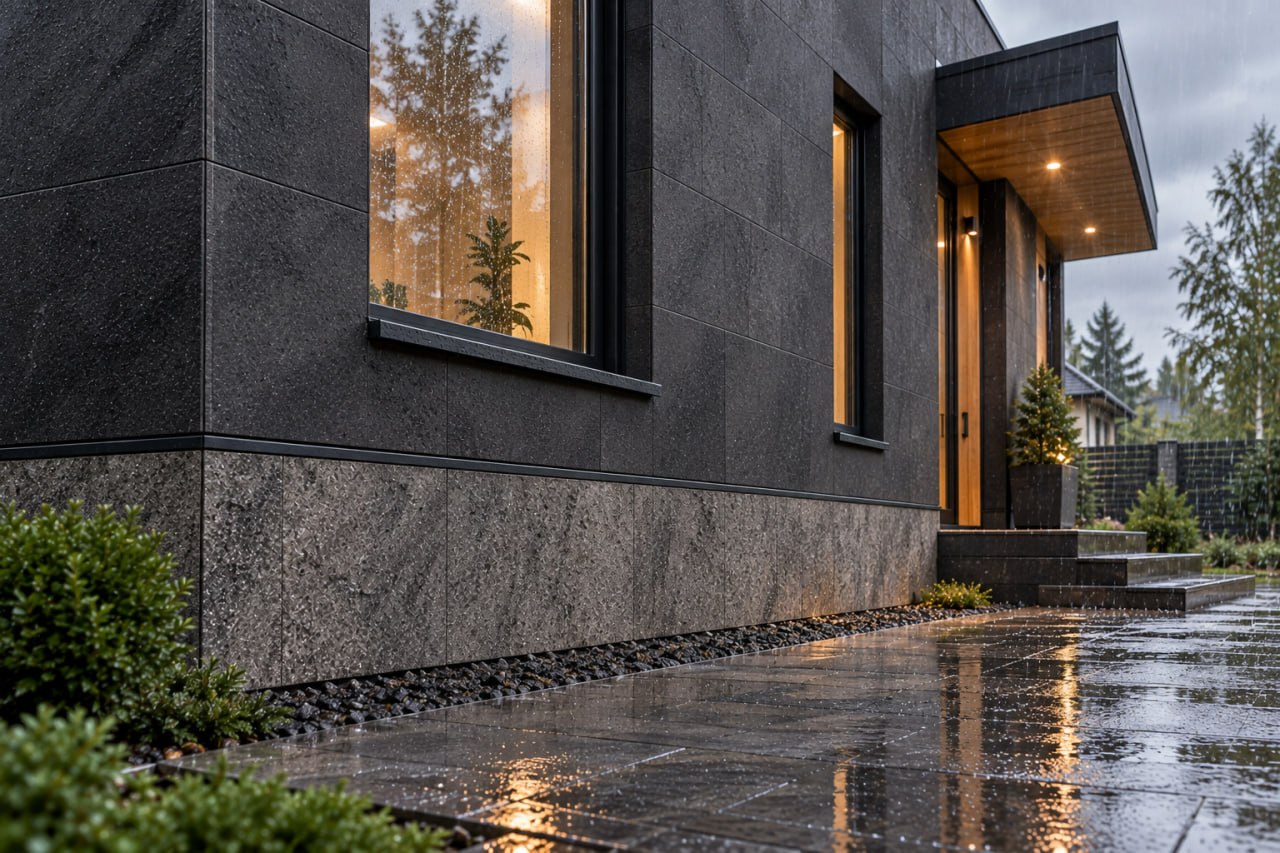
The plinth is the lowest part of the facade, and it is constantly exposed to several types of stress at the same time. Rain, snow, dirt, splashes from walkways, dust, temperature fluctuations and accidental impacts gradually leave marks on its surface.
That is why the plinth can lose its neat appearance much faster than the upper part of the walls. In this area it is especially important to use a material designed to withstand moisture, dirt and mechanical impact.
Why the plinth gets more water
During rain, water does not only fall from above. It splashes off the ground and walkways and hits the lower part of the wall again. The closer the facade is to the ground, the more it is exposed to:
- rain splashes;
- meltwater;
- wet snow;
- puddles;
- water from walkways;
- drops from the roof and drainage system.
If there is no proper drainage around the house, the load on the plinth becomes even greater.
Why dirt accumulates at the bottom
Dust and sand are concentrated closer to the ground. After rain, they turn into dirty splashes and settle on the plinth. The areas that get dirty fastest are:
- near the entrance;
- next to parking spaces;
- along walkways;
- around the terrace;
- under downpipes;
- next to lawns and exposed soil.
On a smooth, light-coloured surface, this type of dirt becomes noticeable immediately.
What happens to the plinth in winter
In winter, the lower part of the facade is exposed to snow, moisture and repeated temperature changes around the freezing point. During the day the surface may get wet and warm up, while at night the temperature drops below zero. These cycles create additional stress on finishing materials and on weak points within the facade system.
That is why plinth finishes should be designed not only for ordinary rain, but also for seasonal temperature fluctuations.
Where the mechanical damage comes from
The plinth sits at a height where it can easily be hit by accident. Possible sources of damage include:
- shoes;
- bicycles;
- children's balls;
- garden tools;
- shovels;
- snow shovels;
- stones thrown up by tyres;
- car doors near parking areas.
That is why an overly fragile finish in the lower part of the facade quickly shows signs of wear.
Why texture matters for the plinth
For the lower part of the facade, a textured finish is often more practical because it does not emphasise every speck of dust or water mark. A stone texture can visually conceal some everyday dirt while also making the plinth a distinctive architectural element.
KORDEKO flexible tile (PletaFlex) makes it possible to finish the plinth with the appearance of natural stone without heavy cladding. It can be combined with the main facade finish or used as a separate accent area.
How to choose the colour of the plinth
For the plinth, medium and natural shades are usually the practical choice:
- grey;
- grey-beige;
- sand;
- graphite;
- brown-grey;
- natural stone tones.
White surfaces show dirt and streaks quickly. Very dark surfaces, on the other hand, may emphasise dust and the light residue left after water dries. So the plinth colour should be chosen not only by taste but with the surroundings in mind, just like the colour of the whole facade.
Why the plinth and the insulation must be planned together
When Facade insulation is carried out, the plinth should not be treated as a separate decorative strip. The following should be planned in advance:
- insulation of the lower part of the wall;
- the transition between the facade and the plinth;
- reinforcement;
- water protection;
- flashings and drip edges;
- the connection to walkways;
- the final cladding.
Mistakes in this area lead not only to an untidy appearance, but also to moisture in the lower layers of the facade system. For the transition between facade and plinth there is a dedicated element, the plinth cornice. The general requirements for insulated facade systems, plinth zone included, are described by the European Association for ETICS (EAE).
How drainage affects the plinth
Areas below downpipes are particularly problematic. If water from the drainage system is discharged right next to the wall, the plinth is constantly exposed to extra moisture. It is worth checking:
- where the downpipe discharges;
- whether the joints leak;
- whether water splashes against the wall;
- whether water is directed away from the house;
- whether puddles form near the plinth.
Sometimes a problem with the finish does not begin with the material at all, but with badly organised drainage. How flashings, drip edges and junctions are done properly is covered in a separate article.
Why the plinth cannot simply be painted
Paint can quickly refresh the appearance, but the lower part of a house is exposed to too many stresses for a simple decorative solution. The plinth needs a finish that can withstand:
- moisture;
- dirt;
- temperature fluctuations;
- frequent cleaning;
- accidental impacts;
- constant exposure to the outdoor environment.
That is why a stone texture is often more practical than an ordinary smooth painted surface.
How to extend the service life of the plinth
A few simple measures significantly reduce the load:
- Provide proper drainage away from the house.
- Check the downpipes and flashings.
- Prevent constant wetting of the wall.
- Use a practical colour and texture.
- Prepare the substrate properly before installation.
- Execute the transition between facade and plinth correctly.
- Clean the surface regularly of dirt and salt deposits.
The plinth cannot be completely protected from everyday wear, but a properly designed system keeps it looking neat for much longer.
Conclusion
The plinth ages faster than the upper part of the facade because it is exposed to moisture, dirt, snow, temperature fluctuations and mechanical impact all at the same time. It is the most heavily stressed area of the house.
That is why a practical texture, a suitable colour, water protection and a durable final cladding matter especially here.
KORDEKO flexible tile makes it possible to finish the plinth with the appearance of natural stone, keep a consistent style with the rest of the facade, and get a lightweight cladding that is convenient to install and maintain.
Frequently asked questions
Why does the plinth of a house age faster than the walls?
What colour should a plinth be?
Can I just paint the plinth?
Need advice on your facade?
- ·Get a free consultation for your project
- ·Find out which material suits your facade
- ·We'll answer all your questions and help you choose