


Why Facades Fade in the Sun and How the UV Resistance of KORDEKO Flexible Tile Helps Preserve Color
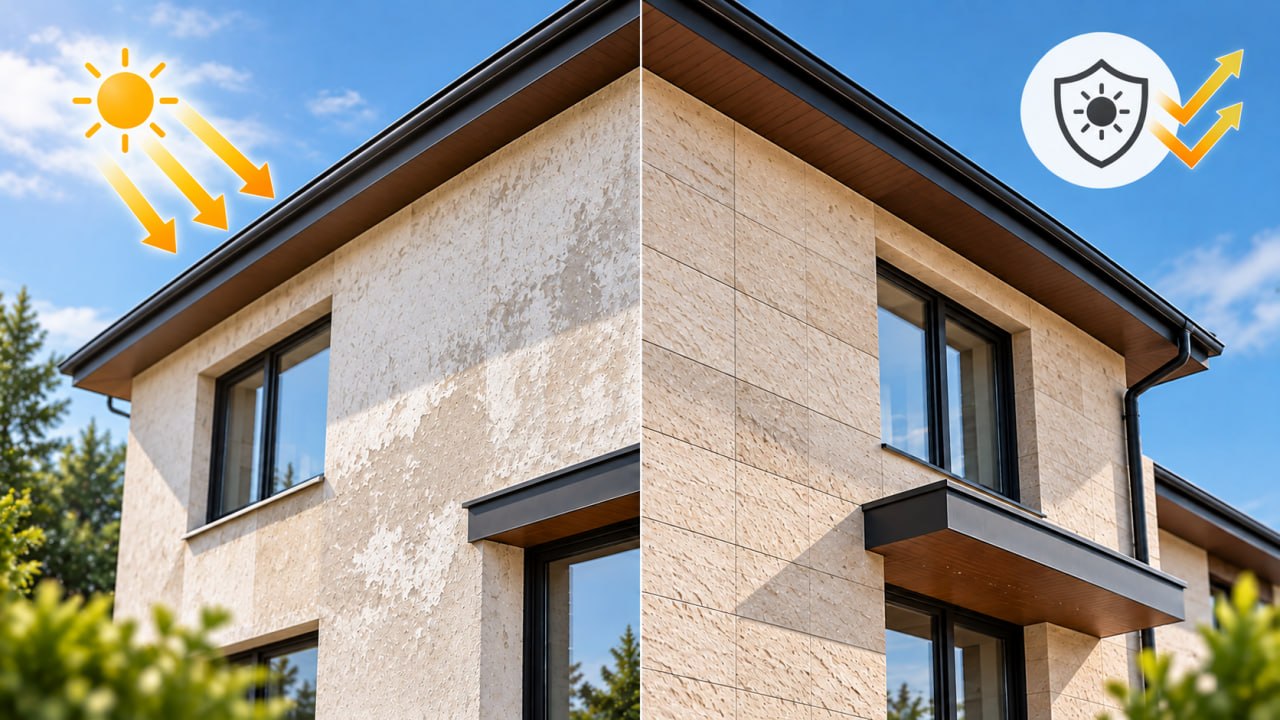
Over time, even an attractive facade can lose its original shade. Rich colors may become paler, some areas may look lighter than others, and the surface can develop an uneven appearance.
One of the reasons for these changes is prolonged exposure to sunlight. That is why, when choosing cladding, it is important to consider not only its initial color, but also its resistance to ultraviolet radiation.
Why Facade Materials Fade in the Sun
Sunlight contains ultraviolet radiation (UV), which can affect colored surfaces. With prolonged exposure, some pigments and binding components may gradually change, leading to a loss of color intensity.
Several factors influence how quickly the appearance of a facade changes:
- Pigment composition. Different colorants have different levels of resistance to ultraviolet radiation.
- Intensity of sunlight. Areas of the facade that are constantly exposed to direct sunlight experience stronger UV impact.
- Quality of the finish. Color stability depends on the components used and the manufacturing technology.
- Weather conditions. Rainfall, temperature fluctuations, and dirt can also affect the appearance of the surface.
Fading becomes especially noticeable when one side of a building receives direct sunlight for most of the day while another side remains largely shaded.
How UV Resistance Helps Preserve the Original Color
UV resistance is the ability of a material to withstand ultraviolet radiation while maintaining its decorative properties.
Pigments play an important role in this process. When they are resistant to sunlight, the cladding retains its original color intensity for longer.
KORDEKO Flexible Tile (PletaFlex) is produced on a mineral-polymer base using inorganic oxide pigments.
According to the manufacturer’s technical description, these pigments offer high resistance to ultraviolet radiation and atmospheric exposure.
Unlike a surface-applied paint layer, KORDEKO’s color is formed directly within the mineral mixture during production. This creates a decorative finish with a more stable color structure.
KORDEKO documentation states that the material can retain its original appearance for 10–30 years. However, the actual condition of the facade also depends on climate, installation quality, and operating conditions.
Why Sun Resistance Is Not the Only Important Factor
Color retention is only one aspect of facade durability. Even UV-resistant cladding can lose its neat appearance because of dirt, damage, or constant moisture exposure.
That is why the condition of the entire building envelope must be taken into account.
For example, incorrectly installed window sills and drainage systems can leave dirty streaks on the surface. Damaged junctions may allow moisture to penetrate behind the cladding.
Facade Insulation also requires a properly designed exterior protective layer. KORDEKO Flexible Tile can be installed over a prepared thermal insulation system, creating a decorative surface that is resistant to sunlight and weather exposure.
The general requirements for external thermal insulation composite systems (ETICS) are set out in the European assessment documents published by EOTA.
The main thermal protection is provided by the insulation, while the flexible tile serves as the exterior cladding.
How to Preserve Facade Color for Many Years
Even when UV-resistant pigments are used, proper facade maintenance remains important.
To preserve the appearance of the facade, it is recommended to:
- Choose cladding with confirmed UV resistance.
- Follow the correct installation technology and use compatible adhesives.
- Keep gutters, flashings, and junctions in good condition.
- Periodically remove dust and dirt from the surface.
KORDEKO Flexible Tile does not require regular repainting. According to the manufacturer’s instructions, the surface can be cleaned with water using a soft sponge or brush.
See also: the colour that stays on the facade; a dark facade in the sun: heating, fading, installation; rain streaks on facades.
Conclusion
Facade fading is mainly caused by the effect of ultraviolet radiation on pigments and the components of the decorative finish.
The use of UV-resistant pigments helps reduce color changes and preserve the original appearance of the building for longer.
KORDEKO Flexible Tile contains inorganic oxide pigments designed for prolonged exposure to sunlight. Combined with proper installation and periodic maintenance, this helps preserve the decorative properties of the cladding without the need for regular repainting.
Frequently asked questions
Why do facades fade in the sun?
Does KORDEKO flexible tile fade?
How do you keep facade colour for a long time?
Need advice on your facade?
- Get a free consultation for your project
- Find out which material suits your facade
- We'll answer all your questions and help you choose