


The house is insulated but the walls are still cold: 8 places where heat escapes
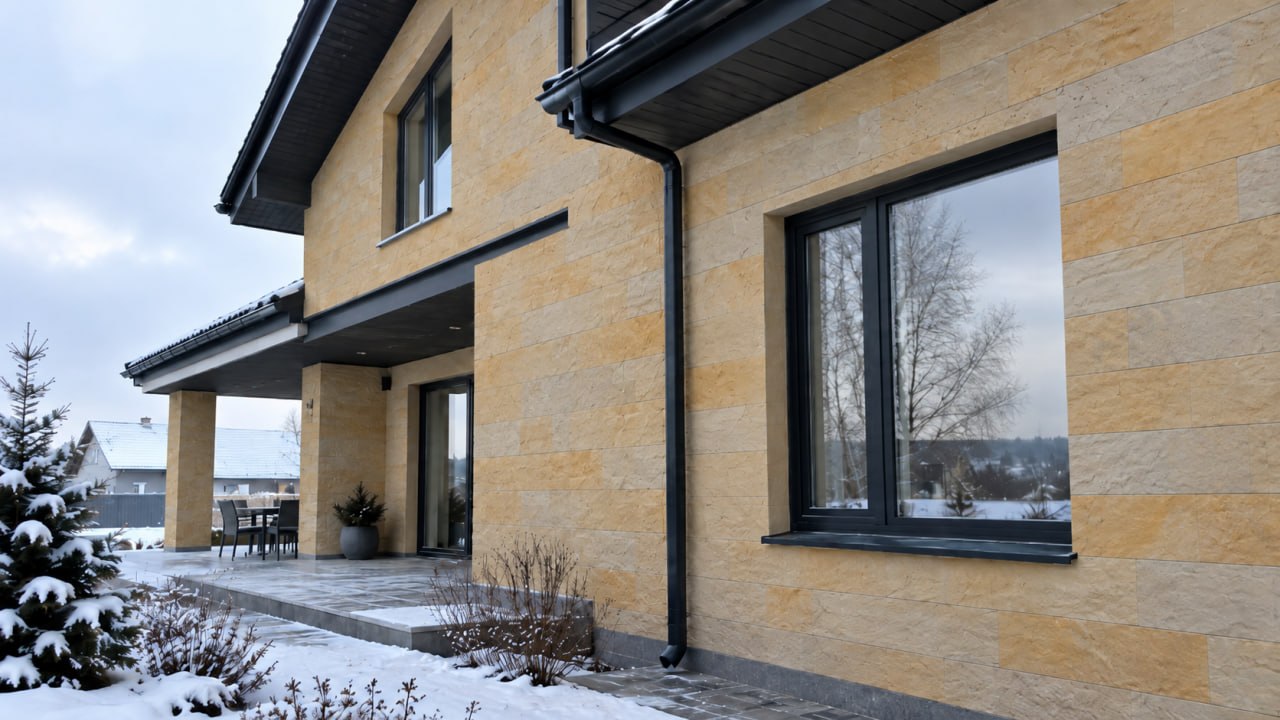
Sometimes the owner has already insulated the house, yet it still feels cold inside: corners freeze, there is a draught by the windows, the walls stay unpleasantly cold to the touch, and the heating bills barely change. In that situation the problem is usually not the idea of insulating, but the details: somewhere the system is broken, there are thermal bridges, weak junctions, or the insulation thickness was chosen wrongly.
An insulated facade has to work as a single system: wall, insulation, reinforcement, adhesive, mesh, reveals, plinth, drip flashings and the final finish. If even one important area is done incorrectly, the heat keeps leaving.
1. Thermal bridges: the most common cause
A thermal bridge is an area through which heat escapes faster than through the rest of the wall. Even if most of the facade is insulated, one weak spot can spoil the whole result.
Thermal bridges appear most often:
- at the corners of the house;
- around windows and doors;
- at lintels;
- next to the balcony;
- at fixing points;
- at the joints of the insulation;
- around the plinth;
- under the roof and the cornices.
That is why, after insulating, it is sometimes cold not along the whole wall but in spots: in the corners, by the reveals or near the floor.
2. Window reveals not insulated, or done wrongly
Windows are one of the most sensitive zones. If only the large walls were insulated and the reveals were left without a proper solution, a draught can be felt around the windows.
Problems appear when:
- the insulation is not carried into the reveal;
- there are gaps next to the frame;
- the junctions are poorly sealed;
- the drip flashing is fitted wrongly;
- the installation foam is not protected from moisture and sun.
The result: the wall is insulated, yet a cold contour remains around the window. Sills, drip flashings and correct sealing are covered in detail in our article on facade junctions without infiltration.
3. The plinth was ignored
The plinth is often left "for later", yet a lot of heat leaves through the lower part of the house. If the walls are insulated but the plinth is cold, it can feel cold at floor level inside, especially on the ground floor.
The plinth has to be treated as part of the whole system. It receives not only cold but also moisture, snow, splashes, dirt and mechanical loads. So both insulation and the correct final protection matter here.
KORDEKO flexible tile (PletaFlex) suits such zones well: it closes the plinth, the entrance area, the corners and the lower parts of the facade with a practical cladding that looks like stone.
4. Insulation joints with gaps
If the insulation boards are not laid tightly, gaps remain between them. Heat escapes through those gaps, and cold stripes can appear on the inside of the wall.
Common mistakes:
- large gaps between boards;
- an uneven substrate;
- poor cutting around windows;
- joints not staggered;
- voids behind the insulation;
- no reinforcement in difficult places.
From outside this may not be visible, but inside the house still feels cold.
5. The insulation thickness was chosen wrongly
Sometimes the insulation was done, but the layer is too thin for that particular house. The thickness depends on the wall material, the condition of the building, the climate, the heat losses and the goal of the project.
One house can be insulated minimally, another needs a more serious system. Choosing a thickness "like the neighbour's", without assessing the walls, can fall short of expectations. The principles by which these systems are designed and installed are described by the European Association for ETICS.
6. Moisture reduces the efficiency of the system
A wet wall and damp layers perform worse thermally. If the facade regularly gets wet because of poor drip flashings, rainwater drainage, drip edges or weak junctions, the insulation can lose efficiency and a feeling of cold and damp appears inside.
Particularly dangerous:
- constant run-off down the wall;
- water at the plinth;
- wet reveals;
- leaks under the sills;
- cracks and weak joints;
- poorly protected edges.
That is why Facade insulation must always be tied to water drainage and correct junctions, not treated as just a layer of insulation. Where white stains and damp walls come from — and how to stop them — is explained in our article on protecting the facade from moisture.
7. The final finish does not protect the system
The final layer shields the insulation from sun, moisture, mechanical loads and daily use. If the finish is weak, cracks, detaches or lets water into vulnerable places, the system starts to lose stability faster.
A good finish has to:
- protect the reinforcing layer;
- keep its appearance;
- not crack on the facade;
- withstand moisture and temperature swings;
- close the difficult zones neatly;
- be practical to maintain.
That is why the final cladding should be chosen not only by colour, but by its ability to work within the system.
8. A balcony, terrace or extension creates a cold zone
Balconies, terraces, canopies, stairs and extensions often become areas of heat loss. If they are joined to the wall without a correct junction, cold can be transferred into the building.
Check particularly carefully:
- the balcony slab;
- the junction of the terrace with the house;
- the entrance area;
- the stairs by the facade;
- walls next to unheated rooms;
- a garage attached to the house.
Such areas cannot simply be covered over with a finish. You need to understand where the cold is coming from.
How to find out exactly where the heat is lost
The house is best checked as a whole:
- Inspect the corners and reveals.
- Check the plinth and the lower part of the walls.
- Look for run-off marks and damp patches.
- Check whether the zones around windows and doors are insulated.
- Assess the insulation thickness.
- Check the joints, junctions and cornices.
- If necessary, carry out a thermal-imaging survey.
A thermal camera shows the cold zones clearly: thermal bridges, weak reveals, freezing corners and areas where the insulation was done wrongly.
Mini-checklist: why it is still cold after insulating
The cause may be one or several of these:
- reveals not insulated;
- a cold plinth;
- gaps between insulation boards;
- weak corners;
- insulation too thin;
- a damp facade system;
- poor drip flashings and downpipes;
- mistakes at balconies and terraces;
- a final finish that does not protect the junctions;
- installation done without a single system.
Conclusion
If the house is insulated but the walls are still cold, look not for one "main mistake" but for the weak points of the whole system. Most often heat is lost through corners, reveals, the plinth, gaps between insulation boards, wet zones and incorrect junctions.
The KORDEKO flexible facade helps complete the insulation with a practical, protective finish: it closes the plinth, corners, reveals and entrance area so the facade looks neat and works as a single system.
Frequently asked questions
Why is the house cold after the facade was insulated?
How do I find where the heat is escaping?
Does the facade finish help keep the heat in?
Need advice on your facade?
- ·Get a free consultation for your project
- ·Find out which material suits your facade
- ·We'll answer all your questions and help you choose