


TR01 White Stone Travertine: white flexible travertine KORDEKO — stone texture instead of conventional white plaster
A white facade can look completely different depending on the finish. One may resemble a smooth painted wall, while another evokes massive stone architecture in which every element has its own texture. The difference lies not so much in the color as in the character of the surface.
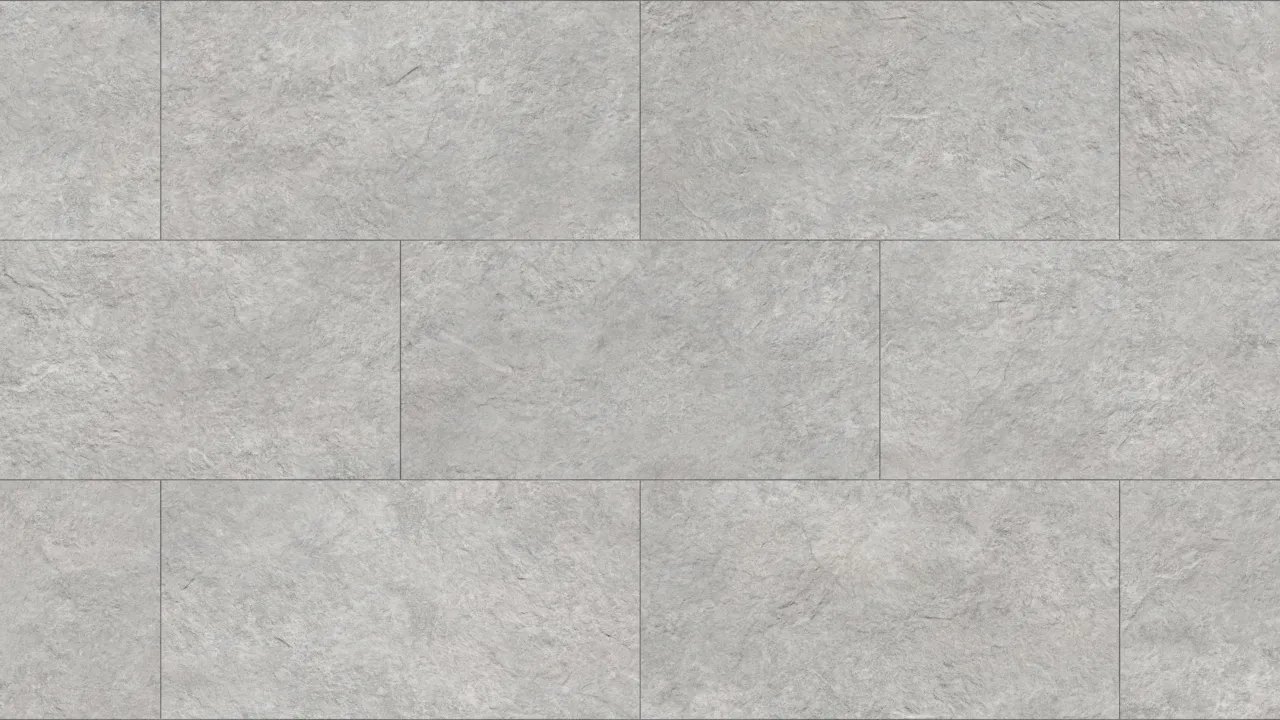
TR01 White Stone Travertine from KORDEKO reproduces the aesthetics of light natural travertine with soft grayish transitions, fine mineral variation, and delicate relief. Elongated rectangular modules arranged with an offset form calm horizontal masonry.
This model is especially interesting for architecture where the goal is to preserve a white color palette while giving the building the expressiveness of natural stone.
White travertine instead of plaster: what is the visual difference?
Smooth plaster creates an almost uniform surface. Its appearance depends mainly on the chosen color and the geometry of the building.
How to choose cladding that will not look dated in a few years is covered in the article a facade that won’t date in 5–10 years.
TR01 works differently.
The presented sample shows small grayish areas, soft mineral transitions, and an irregular stone structure. As a result, each module differs slightly from the one next to it, although the entire cladding remains within a unified light palette.
This pattern is especially interesting on large walls. From a distance, the facade is perceived as a continuous light surface, while up close the fine stone texture is revealed.
At the same time, the masonry geometry adds a horizontal rhythm that cannot be achieved with conventional continuous plaster.
White stone architecture: from minimalism to modern classic style
White Stone Travertine can be used in completely different architectural styles.
In a minimalist home, the material helps emphasize the geometry of large rectangular volumes. The light stone surface works well with panoramic windows, glass railings, and restrained metal details.
In modern classical architecture, TR01 can serve as a backdrop for cornices, pilasters, columns, and decorative surrounds.
This cladding looks especially interesting on buildings where white unifies several architectural elements, but a distinction between smooth and textured surfaces needs to be maintained.
For example, the main walls can be finished with White Stone Travertine, while cornices and window surrounds remain smooth. Even with the same color, the difference in textures will make the facade more expressive.
How to create an entirely white facade without a sense of monotony
Monochrome architecture requires careful attention to detail. When a building is almost entirely white, even small differences between materials become especially noticeable.
TR01 makes it possible to create these differences without introducing additional colors.
For example, travertine masonry can be combined with smooth white plaster, light architectural cornices, and large glass surfaces.
In this composition, each material performs its own function: travertine creates texture, plaster provides calm planes, and architectural elements emphasize the building’s proportions.
Particular attention should be paid to window reveals and corners. Neat transitions between materials help preserve the clean geometry of the light facade.
Why the layout matters for White Stone Travertine
The presented TR01 sample uses horizontal masonry with a consistent offset of the vertical joints.
This arrangement creates a calm rhythm and allows a large wall to be perceived as a single architectural surface.
At the same time, the width and shade of the joints have a significant effect on the final result.
If light gray joints are chosen, the geometry of individual modules will become more visible. White joints or joints close to the main shade will create a more uniform stone surface.
For an entirely light facade, it is especially important to agree on the joint color in advance, because even a small difference in shade can change the overall impression of the cladding.
Before the main installation, it is advisable to prepare a test area and evaluate it in natural daylight.
White stone masonry for entrance areas and public spaces
TR01 is suitable for more than just private homes.
The light travertine texture can be used in the architecture of hotels, office buildings, medical centers, restaurants, and modern residential complexes.
It is especially interesting for designing main entrances.
For example, cladding the walls around an entrance area with white travertine can create a sufficiently expressive architectural feature even without contrasting colors.
In hotel projects, TR01 can be used on exterior columns, terrace walls, and individual volumes on the ground floor.
For residential complexes, the model is suitable for entrance portals and common areas where a unified light architectural concept is required.
TR01 in interiors: a textured alternative to a white wall
Indoors, white travertine cladding makes it possible to create bright spaces without resorting to vivid decorative solutions.
TR01 looks especially interesting in living rooms, stair halls, offices, and hotel interiors.
For example, in a modern living room, stone masonry can be used on the wall behind the sofa while the other surfaces remain smooth.
In a spacious hall, White Stone Travertine can become the main finishing material, especially when complemented by glass, light wood, and restrained metal elements.
With side natural lighting, the small irregularities of the travertine surface become more visible, giving the wall depth.
Flexible stone for architecture with complex elements
Using traditional natural travertine requires an appropriate substrate, preparation of the stone slabs, and selection of a suitable fastening method.
KORDEKO Flexible Tile (PletaFlex) is a lighter mineral-polymer cladding material with a reinforcing membrane.
The material’s flexibility allows it to be used on prepared walls and individual architectural elements, including columns, corners, and surfaces with complex geometry.
For light-colored TR01, it is especially important to use a suitable white-cement-based installation compound and to remove any residue from the face of the material promptly.
Proper substrate preparation and compliance with the installation technology directly affect the appearance and durability of the finished cladding.
White Stone Travertine in a facade insulation system
White travertine architecture can be combined with a complete exterior thermal insulation system.
Properly designed Facade Insulation provides the required thermal protection for exterior walls, while TR01 can be used as the finish cladding of a compatible facade system.
The general requirements for external thermal insulation composite systems (ETICS) are set out in the European assessment documents published by EOTA.
This approach makes it possible to achieve a stone appearance without constructing an additional massive wall of natural travertine.
The design must take into account the compatibility of the insulation, reinforcing materials, adhesive, and decorative coating.
Particular attention should be paid to window junctions, the plinth, corners, and other areas that may be subject to increased temperature and moisture loads.
TR01 White Stone Travertine: expressing white through texture
The main feature of this model is the combination of an almost white palette, soft grayish variation, and an orderly horizontal pattern.
TR01 makes it possible to create light architecture without the feeling of an empty monochrome surface. The material can be combined both with contrasting dark elements and with other light finishing solutions.
White Stone Travertine is suitable for projects that aim to preserve the purity of a white facade while adding natural stone texture and the expressiveness of traditional masonry.
Frequently asked questions
What is the difference between white travertine and plaster?
How do you keep an all-white house from being monotonous?
Which adhesive does the white TR01 need?
Need advice on your facade?
- Get a free consultation for your project
- Find out which material suits your facade
- We'll answer all your questions and help you choose