


R10 Loft Red Clay: red-terracotta KORDEKO flexible stone, not brick but a different take on a red facade
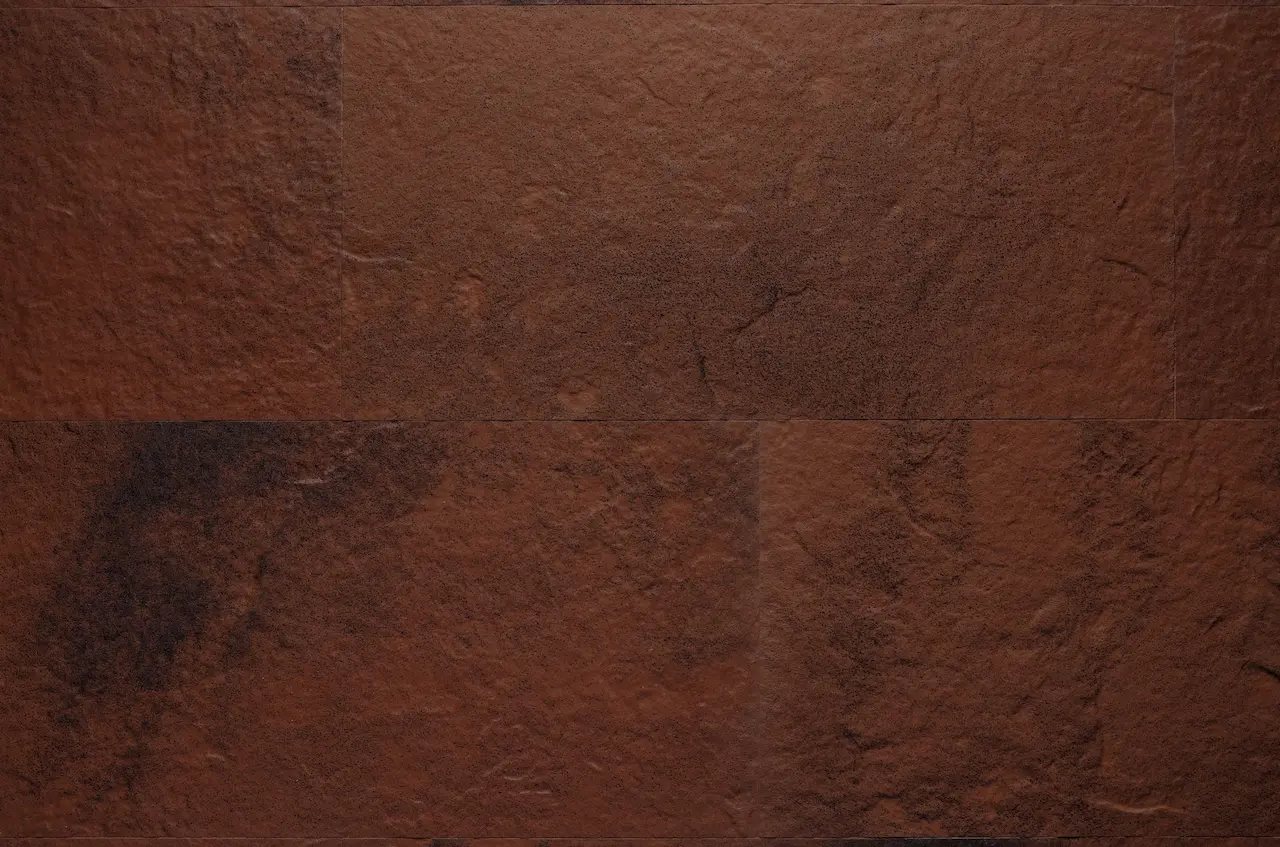
R10 Loft Red Clay immediately stands apart from most restrained grey, beige and white models. Here, colour itself becomes part of the architecture. The deep red-terracotta tone recalls fired clay, aged brick and natural stone at the same time, while the large textured surface makes it look far less conventional than classic brick cladding.
In the current KORDEKO collection, R10 Loft Red Clay belongs to the ROCK STONE series and is described as the red variant with black mineral flecks.
Not brick, but a different approach to a red facade
A red facade is often automatically associated with brick. R10 makes it possible to move away from that familiar scenario. There is no small-scale brick grid here. Instead, a large stone texture defines the surface, making it appear more monolithic. The colour remains warm and recognisable, while the architecture looks more contemporary.
It is a good option for those who like terracotta tones but do not want to create a house in a traditional "brick" style.
Where Loft Red Clay looks especially convincing
R10 works particularly well in architecture built around simple forms and expressive materials. It can look especially interesting on:
- modern private homes;
- renovated historic buildings;
- restaurants and cafes;
- wine and gastronomic spaces;
- small hotels;
- loft-style commercial buildings;
- country houses combining wood and metal.
The red-brown surface makes the building stand out while remaining within a natural colour palette.
A colour that thrives on contrast
Loft Red Clay works especially well next to materials that visually "cool down" its warm tone. One of the most expressive combinations is R10 with black or anthracite metal. Dark window frames, canopies, pergolas or railings make the red surface appear even deeper. R10 also combines effectively with:
- graphite metal;
- black window frames;
- natural wood;
- grey concrete;
- light-coloured plaster;
- glass.
Against a white background, Loft Red Clay becomes a bold architectural accent. Next to wood, it feels warmer and more inviting. Combined with anthracite, it takes on a more contemporary, industrial character. How to distribute several textures on one house without visual chaos is the subject of a separate article.
A facade that changes beautifully throughout the day
Warm red tones are especially sensitive to lighting. In the morning, R10 can appear calmer and more subdued. In bright sunlight, its red-clay tones become more pronounced. In evening light, the surface appears warmer and richer.
The relief also creates its own shadows, so the wall never looks uniformly coloured. This is especially important across large areas, where the surface retains depth and natural variation.
A strong accent instead of full cladding
R10 does not have to cover the entire house. Thanks to its rich colour, it also works very well as a targeted architectural accent. For example, Loft Red Clay can be used for:
- the entrance portal;
- the central volume of the building;
- a wall beside the terrace;
- the ground floor;
- columns;
- the garage facade;
- a courtyard wall;
- property fencing.
Sometimes a single red-stone surface is enough to completely transform the character of a light or grey building. Both options can be tried on a whole house in the 3D facade constructor.
R10 in interiors: a loft atmosphere without decorative brick
Indoors, this model reveals another side of its character. If a classic brick wall feels too predictable, R10 creates a similarly warm industrial mood but with a completely different texture. This material is an interesting choice for:
- a TV wall;
- a kitchen-dining area;
- a fireplace area;
- a restaurant;
- a coffee shop;
- a bar;
- a wine room;
- a loft-style office.
Warm directional light emphasises the red-brown tones, while side lighting makes the stone relief itself more visible.
An expressive surface without heavy stone
Behind R10's massive visual appearance is a relatively lightweight cladding system. According to KORDEKO's technical description, the material weighs approximately 4 kg/m² and is about 2.5–5 mm thick, depending on the series and texture.
KORDEKO flexible tile (PletaFlex), thanks to its structure, can be used not only on standard walls but also on columns, arches, corners and other architectural elements. This makes it possible to use the rich stone texture not only on flat surfaces but also to continue it across more complex building forms.
R10 in an insulated facade system
Loft Red Clay is also suitable for projects where the decorative finish is installed over a complete thermal insulation system. Properly designed facade insulation provides the required thermal performance, while R10 defines the building's exterior appearance. KORDEKO materials specify flexible tile as an exterior finishing option for insulated facade systems; the European assessment documents for such systems (EOTA) evaluate the insulation, reinforcement and finish as one whole.
This makes it possible to create an insulated facade with a distinctive red-stone character without being limited to standard plaster or paint.
Why Loft Red Clay is hard to confuse with other models
R10 does not try to be neutral. Its purpose is to give architecture a stronger personality. This model is intended for projects where colour should be noticeable while remaining natural. It suits both contemporary architecture and projects that seek a connection with old masonry, clay, brick and industrial aesthetics, without literally reproducing those materials.
Loft Red Clay makes a facade recognisable even before individual details come into focus.
Frequently asked questions
How does R10 Loft Red Clay differ from brick cladding?
What does a red-terracotta R10 facade pair with?
Where does R10 work indoors?
Need advice on your facade?
- ·Get a free consultation for your project
- ·Find out which material suits your facade
- ·We'll answer all your questions and help you choose