


Flexible panels indoors: living room, fireplace and TV zone
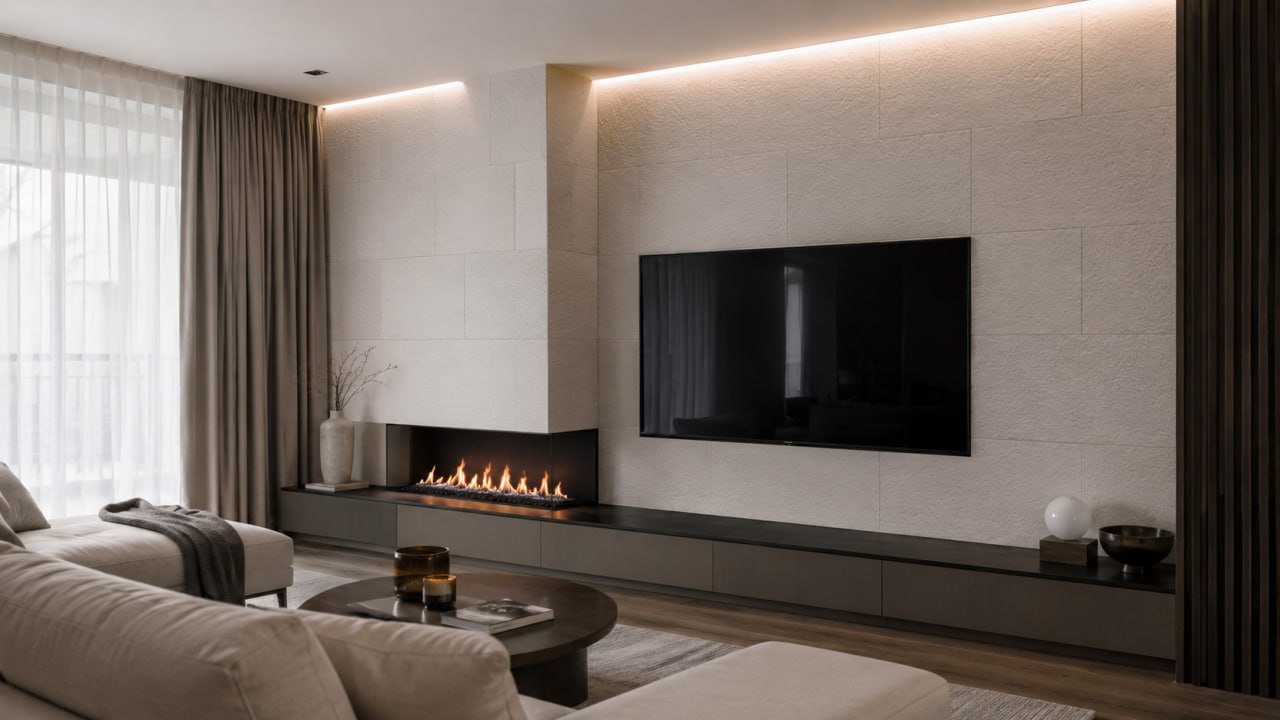
A single accent wall changes a living room more than a fully clad one. Which zone to choose, how to light it and how to match it with the furniture.
An interior becomes more expressive when it has a strong accent zone: the wall behind the TV, the fireplace, a niche, a column, or the part of the living room that calls for more texture and depth.
In zones like these, plain paint can look too flat, while natural stone or heavy cladding isn't always practical in terms of weight, installation and cost. KORDEKO flexible panels (PletaFlex) deliver the stone effect indoors without weighing the space down visually or structurally.
Why an interior needs texture
Modern interiors are often designed in a calm style: straight walls, neutral colours, minimalism, hidden lighting. It's a beautiful approach, but if every surface is too smooth, the room can feel cold and empty.
Texture solves this:
- it adds depth to the wall;
- it makes the interior feel warmer;
- it creates an accent without extra decor;
- it highlights the TV zone, the fireplace or a niche;
- it works beautifully with decorative lighting.
That's why decorative panels in a living room are often used not on every wall, but only at the points where the main visual accent belongs.
The TV zone: an expressive wall without overload
The wall behind the TV should be calm but not boring. If the texture is too active, it can distract from the screen. If it's left as plain paint, the zone can feel unfinished.
A stone texture in a neutral shade is a good solution:
- warm grey;
- beige stone;
- a sandy tone;
- a graphite accent;
- a delicate concrete shade.
An accent like this can look elegant and valuable without pulling all the attention to itself. The available shades can be seen in the Stone category.
The fireplace: why a stone texture looks natural
The fireplace is naturally associated with warmth, comfort and the heart of the home. That's why finishing it with a stone look feels especially organic and helps unify the interior visually.
Flexible panels can be used for the wall around the fireplace, the surround, the sides, decorative niches, the area above the fireplace or an adjacent accent wall.
It's important to account for the fireplace's specific temperature conditions from the design stage and to choose an installation solution suited to the base. The fire classification of construction materials is regulated at the European level through standards coordinated by CEN.
The living room: a single accent wall
A frequent mistake is using texture on too many surfaces. The interior then becomes visually heavy, especially if the room is small.
It's better to choose one main zone:
- the wall behind the sofa;
- the TV zone;
- the fireplace zone;
- the section between windows;
- a niche with lighting;
- a column or a projecting decorative element.
This gives the interior character while keeping it airy and balanced.
Lighting brings the texture to life
A textured panel looks especially good with side or top lighting. The light emphasizes the relief, casts shadows and gives the wall more volume.
- warm LED lighting;
- light directed down the wall from above;
- lit niches;
- a hidden light line behind the TV panel;
- wall fixtures with a soft glow.
Very cold light is best avoided: it can make a stone texture look too harsh and less comfortable. Warm or neutral colour temperatures suit a living room better.
Why flexible panels are practical indoors
Indoors, it's not just the look that matters but how easy the material is to work with. Flexible panels can finish straight walls, niches, corners, projecting elements, columns, decorative panels, fireplace surrounds and walls with decorative lighting.
They're lighter than many traditional claddings, so they can be used comfortably on accent surfaces without the feel of a massive stone block. The same principles apply in other rooms too — see the article on flexible panels in the bathroom and kitchen.
How to combine decorative stone with the furniture
- If the furniture is light, a slightly warmer or more contrasting texture can be chosen.
- If the furniture is dark, the wall shouldn't be very graphite, so the zone doesn't become too heavy.
- If the interior features wood, sandy, beige, grey-brown and natural tones work well.
- For modern styles, grey, concrete and graphite tones fit.
Where to avoid very active textures
Texture should complement the interior, not overload it. Very contrasting, busy solutions must be used with care:
- in small rooms;
- behind a large TV;
- next to very colourful furniture;
- in interiors with a lot of decor;
- on all the walls at once.
The safest option is a calm stone texture on a single accent surface.
The link between the interior and the facade
In a private house it looks great when the exterior and interior finishes are visually connected. If the facade carries a stone texture, it can be subtly echoed in the living room, the fireplace zone or the entrance.
If the house is getting facade insulation and the exterior finish is done in the KORDEKO style, the interior accent wall can continue the same architectural idea. The result is a unified image: the facade, the entrance zone and the living room complement each other. Examples can be seen in the completed projects.
Mini-checklist before choosing
- Which will be the main zone — the TV, the fireplace or the wall behind the sofa?
- Is decorative lighting needed?
- What shades are the furniture and the floor?
- Will the texture be repeated on the facade or in the hallway?
- Isn't the pattern too active for the room's size?
- Is the base suitable for installation?
- Do corners, niches or projecting elements need finishing?
Frequently asked questions
Can the wall around a fireplace be clad with flexible panels?
Yes — flexible panels can be used for the wall around the fireplace, the surround, the sides, the area above it or an adjacent accent wall. The temperature conditions of the specific fireplace must be considered from the design stage, and the installation solution chosen to suit the base.
How many living-room walls are worth cladding?
Usually just one. Texture on too many surfaces makes the interior visually heavy, especially in a small room. A single accent zone — the TV zone, the fireplace or the wall behind the sofa — gives character without overloading the room.
What kind of lighting shows the texture best?
Side or top lighting in warm or neutral tones. Very cold light makes a stone texture look harsh and less comfortable in a living room.
Conclusion
Flexible panels indoors are a way to give the living room, the fireplace or the TV zone texture, warmth and style without heavy cladding. They help create an accent wall, highlight the room's architecture and give the space a more valuable look.
The key is to use texture in moderation, choose the colour well and plan the lighting in advance. Then the decorative stone indoors won't feel like a random addition, but a natural part of the home's design.
Need advice on your facade?
- Get a free consultation for your project
- Find out which material suits your facade
- We'll answer all your questions and help you choose