


BR10 Loft Red Clay: terracotta flexible brick-look tile — how to combine historic masonry with modern architecture
Red brick is one of the most recognizable building materials. It is associated with old European streets, industrial buildings, country houses, and architecture that retains its character for decades. Today, however, traditional brick aesthetics are increasingly appearing in completely new projects — from minimalist cottages to modern restaurants and urban residential complexes.
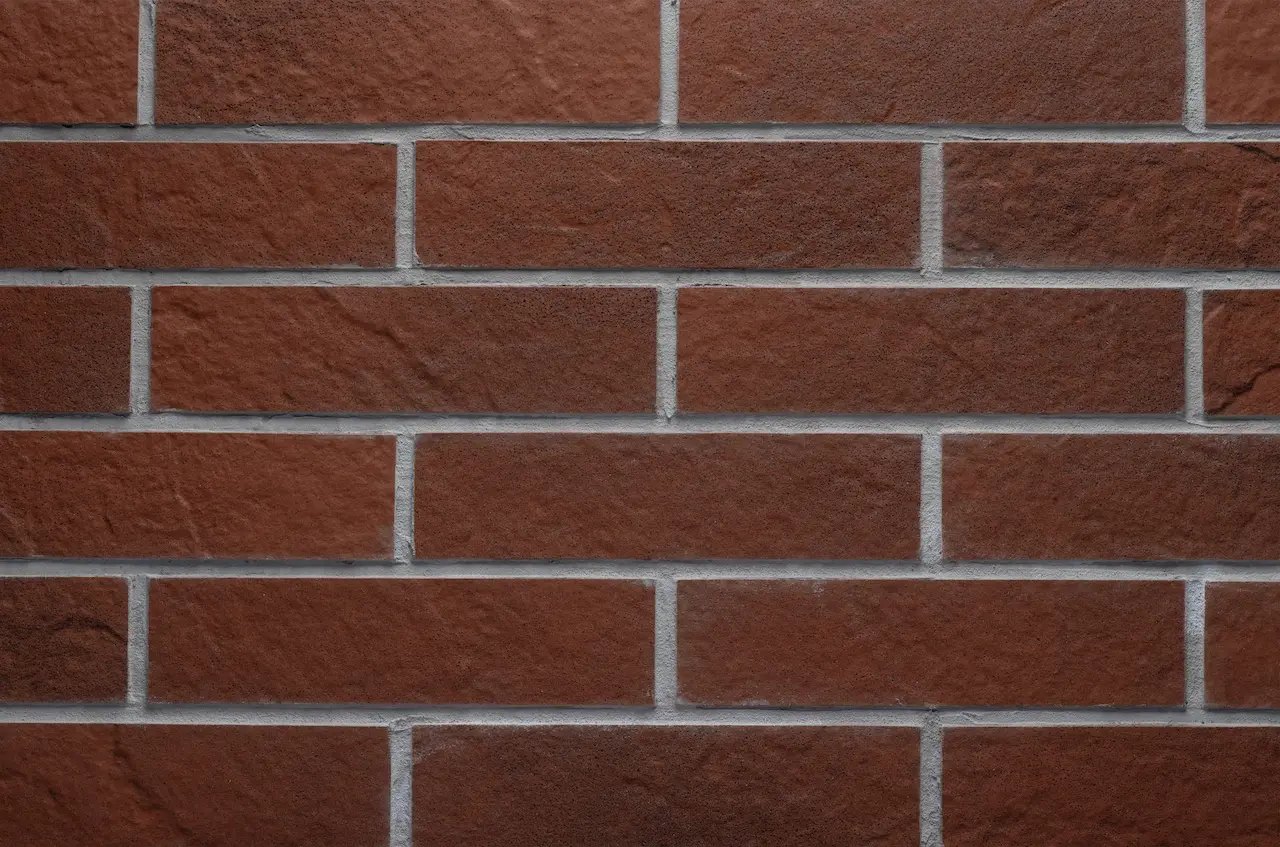
BR10 Loft Red Clay by KORDEKO makes it possible to reproduce this character in a flexible cladding format. A rich red-terracotta shade, black mineral inclusions, and an irregular stone surface create an expressive brick pattern. Light gray joints emphasize the boundaries of the modules and make the masonry clearly legible.
Why red brick is reappearing in modern architecture
Red brick masonry has long ceased to be an exclusively traditional solution. Modern architects use it in projects with large windows, flat roofs, metal structures, and restrained geometry.
The secret lies in combining different materials.
The terracotta surface introduces natural color, while glass and metal make the composition modern. As a result, the building retains a recognizable brick character without looking like a stylization of an old structure.
BR10 is especially interesting on facades where the architecture is built around simple rectangular volumes. Here, the color and masonry pattern can become the main decorative elements.
Loft Red Clay: terracotta with a pronounced stone texture
The distinctive feature of BR10 lies in the character of its face surface.
The presented sample shows a rich red-brown shade with small dark areas. Individual modules have roughness, recesses, and natural irregularities reminiscent of fired clay and natural stone.
At the same time, the light gray joints create a contrasting geometric grid.
This combination preserves the traditional brick pattern while making the surface more textured and non-uniform.
On large facades, this effect is particularly noticeable: numerous small irregularities form a unified texture, while the horizontal masonry lines emphasize the shape of the building.
From industrial buildings to modern residential complexes
Historic industrial architecture often used red brick because of its availability and performance characteristics. Today, a similar aesthetic can be found in converted factories, offices, restaurants, and modern residential buildings.
BR10 is suitable for projects inspired by this type of architecture.
For example, on a small office building, terracotta masonry can be combined with tall windows in black metal frames. For a restaurant, an interesting solution is to combine red brick with large glazed openings and a wooden entrance area.
We covered combining stone, brick, slate and wood on one facade in the article how to combine textures on a facade.
In a modern residential complex, BR10 can be used to finish individual floors, entrance portals, or architectural projections.
There is no need to clad the entire building with one material. Red masonry works well in combination with neutral facade surfaces.
Which materials work with terracotta brick
The red-brown BR10 palette makes it possible to create both contrasting and fairly calm architectural compositions.
Combinations with graphite metal, natural wood, gray concrete, and light plaster are especially interesting.
For example, a terracotta brick surface can be used on the ground floor, while the upper floors are finished in a light gray palette. This composition visually divides the building and emphasizes its proportions.
Another option is an almost entirely brick facade with large black windows and a minimal number of decorative elements.
For warmer architecture, BR10 can be complemented with wood textures and light stone details.
It is important to remember that the rich terracotta color is already quite expressive on its own. Therefore, too many additional bright shades can overload the facade.
Light gray joints: how geometry changes the appearance of masonry
In the presented BR10 model, the light joints play an important architectural role.
They separate the individual red-terracotta modules from one another and create a recognizable brick pattern.
On facades with long horizontal walls, such masonry helps emphasize the width of the building. On compact volumes, it creates a more detailed surface.
It is especially important to maintain uniform joint width and the correct offset of elements between adjacent rows.
Small geometric irregularities are more noticeable in contrasting masonry than in cladding with inconspicuous joints.
Therefore, even before installation begins, it is advisable to plan the layout in relation to windows, doors, and architectural corners.
BR10 in interiors: industrial aesthetics without traditional brick
A red brick wall is one of the recognizable elements of loft-style interiors.
However, BR10 makes it possible to use this aesthetic not only in converted industrial buildings, but also in modern apartments, restaurants, and public spaces.
In a living room, terracotta masonry can serve as a background for black metal furniture, wooden shelves, and light walls.
In a restaurant, it can be used to finish individual zones while preserving the overall industrial character of the space.
For offices and showrooms, BR10 makes it possible to create an expressive accent surface that differs from conventional gray or white finishes.
At the same time, small rooms should not be overloaded with too many active textures. Sometimes a single brick wall is enough to shape the entire interior image.
Brick cladding without a massive brick wall
BR10 Loft Red Clay belongs to the ROCK STONE BRICK collection and is produced in 7.5 × 30 and 10 × 30 cm formats.
KORDEKO Flexible Tile (PletaFlex) is produced on a mineral-polymer base with a reinforcing membrane. It makes it possible to achieve the appearance of brick masonry without the need to construct an additional massive facing wall.
Suitable adhesives are used for installation and are selected according to the substrate and operating conditions.
When working with BR10, particular attention should be paid to finishing the light joints, maintaining correct row geometry, and removing installation compound residue in a timely manner.
These details directly affect the appearance of the finished cladding.
A red brick facade in an external insulation system
Traditional brick aesthetics can be combined with modern thermal insulation solutions.
Properly installed Facade Insulation provides the required thermal protection for exterior walls, while BR10 Loft Red Clay can be used as the decorative finish of a compatible facade system.
The general requirements for external thermal insulation composite systems (ETICS) are set out in the European assessment documents published by EOTA.
This approach makes it possible to reproduce the character of a red brick house without constructing additional massive brick masonry.
During design, the compatibility of all components, thermal loads on the exterior surface, correct reinforcement, and protection of facade junctions must be taken into account.
Particular attention should be paid to areas around windows, the plinth, and upper horizontal elements where regular exposure to atmospheric moisture is possible.
BR10 Loft Red Clay: traditional color in modern architecture
The terracotta shade, black mineral inclusions, and contrasting light gray joints make BR10 a recognizable model in the KORDEKO brick collection.
It makes it possible to use the aesthetics of traditional European masonry in projects with modern geometry, large windows, and a variety of facade materials.
Loft Red Clay suits architectural solutions where the character of red brick is to be preserved but implemented with modern lightweight cladding.
Frequently asked questions
Which materials suit the terracotta brick BR10?
Why does the geometry of the light joints matter for BR10?
Can BR10 red masonry be combined with external insulation?
Need advice on your facade?
- Get a free consultation for your project
- Find out which material suits your facade
- We'll answer all your questions and help you choose