


BR07 Chocolate Rock: chocolate-colored flexible brick-look tile — an expressive facade with the character of European architecture
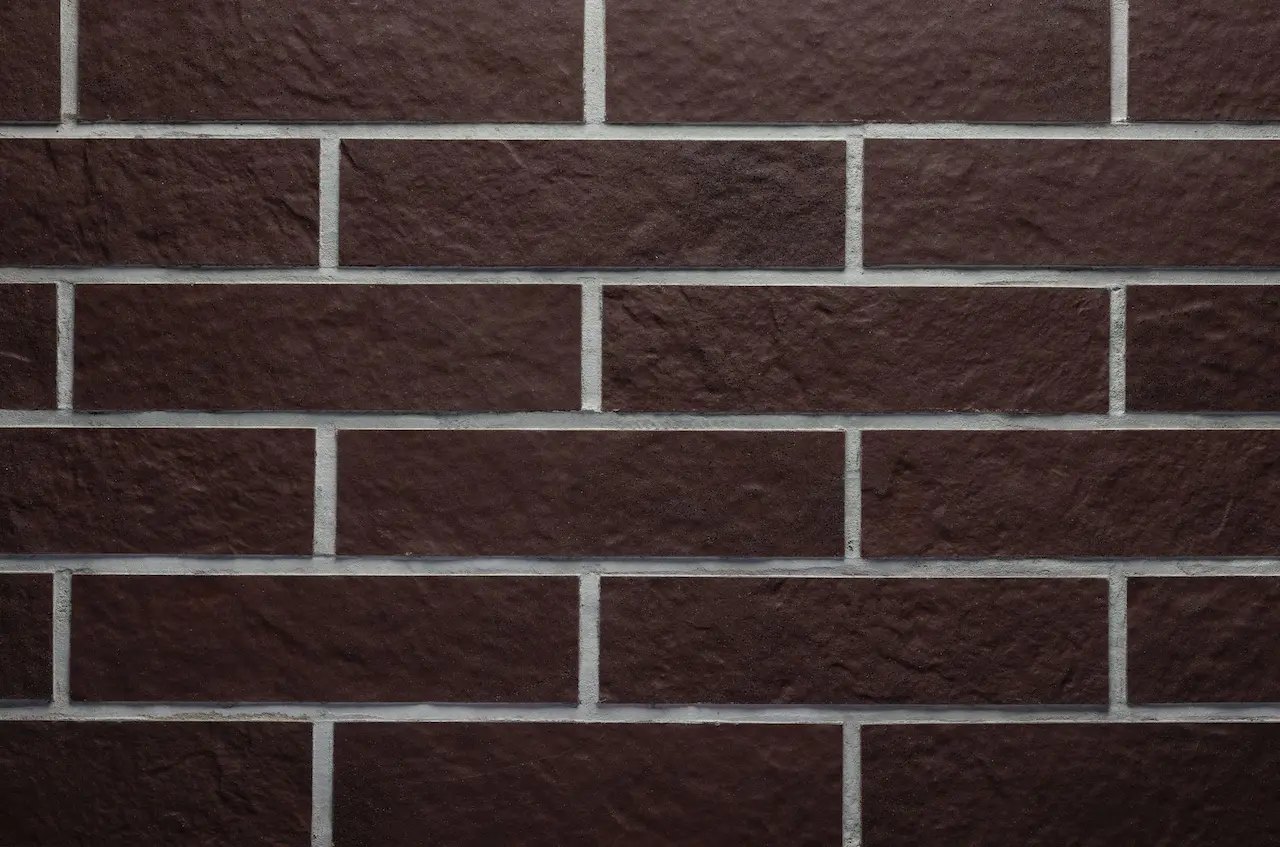
Dark brick can completely change the perception of a building. It gives architecture a sense of solidity, emphasizes window geometry, and can turn even a simple rectangular building into an expressive object. Materials with rich texture and deep natural color are especially interesting, rather than merely dark surfaces.
BR07 Chocolate Rock from the KORDEKO ROCK STONE BRICK collection is exactly such a material. A rich chocolate-brown palette, black mineral inclusions, and the characteristic roughness of stone create the effect of dense dark masonry. Light gray joints emphasize the elongated shape of the modules and make the brick pattern particularly clear.
Chocolate brick: why dark masonry changes architecture
Dark brown brick cladding has long been used in European architecture. It can be seen on modern urban houses, country residences, and buildings inspired by the traditional brick architecture of Northern Europe.
However, BR07 differs from conventional smooth facing brick.
Small recesses, irregularities, and non-uniform areas are visible on the surface of each module. They create the impression of natural stone rather than perfectly molded industrial tile.
Combined with light joints, this texture creates an expressive geometric pattern that remains clearly visible even from a distance.
Chocolate Rock looks especially interesting on buildings with simple volumes, where the brickwork becomes the main decorative element.
Light joints on a dark facade: a small detail with a major effect
In the presented BR07 version, the light gray joints are particularly important.
They create clear horizontal lines that visually unite individual modules into a single masonry surface. Thanks to the contrast between the dark tile and the light joint fill, the facade acquires an expressive rhythm.
This effect can be used in different ways during design.
On a long wall, horizontal rows emphasize the length of the building. On a narrow architectural volume, the masonry helps create a more complex surface without additional decorative elements.
If a less contrasting appearance is required, a darker joint color can be considered.
However, it is precisely the combination of chocolate-colored tile with a light gray joint that makes the presented BR07 version particularly recognizable.
A modern European house with a chocolate-colored facade
Imagine a two-story house with a pitched roof, large windows, and a restrained entrance.
If the main cladding is finished in Chocolate Rock, the building acquires the character of modern European brick architecture. At the same time, it requires almost no complex decorative finishing.
BR07 combines well with graphite window frames, a dark roof, light concrete, and natural wood.
We covered combining stone, brick, slate and wood on one facade in the article how to combine textures on a facade.
Another interesting option is to use chocolate-colored masonry on the ground floor and finish the upper part of the building with light plaster. This visually separates the volumes and emphasizes the horizontal proportions of the house.
For modern urban residences, the opposite approach can be used: dark cladding on the upper volume against a lighter ground floor.
Dark masonry for fences and entrance areas
A building facade and the site fencing are often designed separately. As a result, even high-quality materials can look inconsistent with one another.
BR07 makes it possible to use the same cladding for the house, fence, and entrance area.
Chocolate-colored masonry looks particularly interesting on massive fence pillars, walls near the driveway, and architectural portals.
It can be complemented by black metal gates, light concrete elements, or wooden inserts.
With this approach, the house and surrounding site are perceived as a single architectural composition.
It is only important to prepare the substrates correctly and protect the upper horizontal surfaces of fences from constant exposure to precipitation.
BR07 in commercial architecture: from restaurants to urban hotels
A dark brick surface can become an important part of the visual identity of a commercial property.
For example, a restaurant facade clad in Chocolate Rock, with large windows and restrained signage, creates an atmosphere of solidity and comfort.
For small hotels, such masonry can be used on the ground floor, around the main entrance, or on individual architectural volumes.
In office buildings, BR07 works well with glazed facade elements and metal structures.
The material does not have to be used over the entire area. Sometimes finishing several main walls is enough to give the building a recognizable character.
A chocolate-colored brick wall in the interior
BR07 is also suitable for interior spaces, especially when the design is built around dark natural materials.
In a living room, Chocolate Rock can be used on the wall behind a sofa or near a staircase. In a home office, the brick texture creates an expressive background for wooden furniture and metal details.
For restaurants, coffee shops, and hotel lobbies, combining dark masonry with natural wood and light ceilings can be an interesting solution.
However, chocolate-colored cladding absorbs more light than white and beige surfaces. Therefore, in small rooms, it is important to plan the lighting and the number of clad walls in advance.
The appearance of brick masonry without a massive brick wall
BR07 Chocolate Rock belongs to the ROCK STONE BRICK collection and is produced in 7.5 × 30 and 10 × 30 cm formats.
KORDEKO Flexible Tile (PletaFlex) is produced on a mineral-polymer base with a reinforcing membrane. Its small thickness and low weight make it possible to create expressive brick cladding without the need to build an additional massive brick wall.
To preserve the characteristic Chocolate Rock pattern, particular attention should be paid to the horizontality of the rows, uniformity of the joints, and neat finishing of corners.
When installing on exterior walls, a suitable frost-resistant adhesive must be used and the substrate preparation requirements must be followed.
Chocolate Rock in a facade insulation system
Dark brick architecture can be combined with modern external thermal insulation technologies.
The general requirements for external thermal insulation composite systems (ETICS) are set out in the European assessment documents published by EOTA.
Properly designed Facade Insulation provides the required thermal protection for the building, while BR07 Chocolate Rock forms a decorative surface with the effect of traditional brick masonry.
Thanks to its low weight, flexible tile can be used as the finishing cladding of compatible facade thermal insulation systems.
When selecting a dark material, the additional solar heating of the exterior surface must be taken into account, and a system designed for the corresponding thermal loads must be used.
Correct reinforcement, compatibility of adhesive compounds, and high-quality execution of all facade junctions are particularly important.
BR07 Chocolate Rock: dark masonry that defines the character of a building
The chocolate-colored surface with black mineral inclusions and expressive light joints creates a recognizable architectural composition.
BR07 is suitable for projects that aim to preserve the aesthetics of a European brick house while implementing them with modern lightweight cladding.
This is a solution for architecture where deep natural color, masonry geometry, and the expressiveness of the material are more important than a large number of decorative details.
Frequently asked questions
Why does BR07 Chocolate Rock have light joints?
What materials go with chocolate brick?
Can BR07 be used on an insulated facade?
Need advice on your facade?
- Get a free consultation for your project
- Find out which material suits your facade
- We'll answer all your questions and help you choose