


Installing Flexible Tile in Summer: How to Work in Extreme Heat Without Mistakes
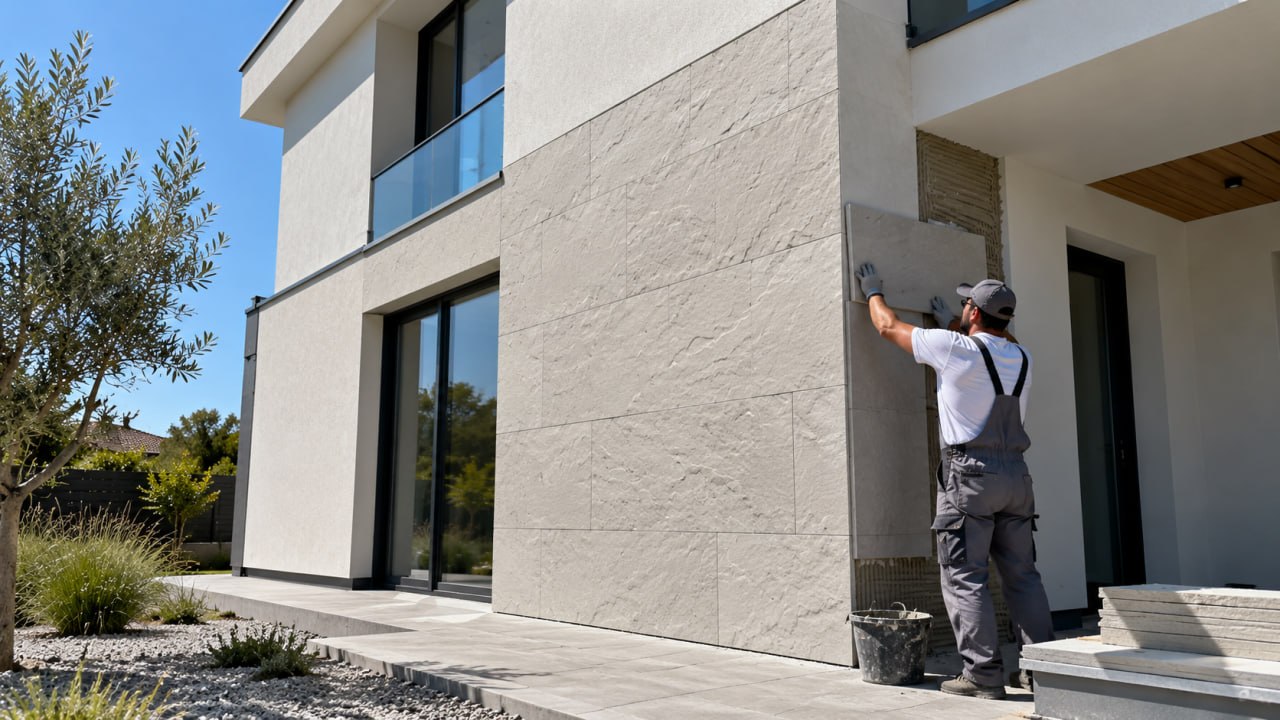
Summer may seem like the ideal time for facade work: dry weather, warm temperatures and no risk of frost. However, extreme heat can create just as many problems for installers as cold weather.
At high temperatures, adhesive dries faster, wall surfaces can become extremely hot, and both the material and the substrate are exposed to additional thermal stress. So the question is not whether flexible tile installation can be carried out in summer, but under what conditions it should be done correctly.
Why Extreme Heat Makes Installation More Difficult
When the air temperature is high, the facade surface can become much hotter than the surrounding air. This is especially true for walls exposed to direct sunlight.
Under these conditions:
- adhesive loses its workable consistency faster;
- the available working time becomes shorter;
- the substrate may become excessively hot;
- it becomes more difficult to position the material correctly;
- installers are forced to work faster;
- the risk of mistakes increases.
That is why working on a facade in direct midday heat without taking the conditions into account is not a good idea.
Air Temperature Is Not the Only Factor
A common mistake is to look only at the temperature shown on a thermometer. For example, the air temperature may be +30 °C, while the surface of a dark wall exposed to direct sunlight can be significantly hotter.
The following areas heat up especially quickly:
- south-facing walls;
- west-facing walls in the afternoon;
- dark substrates;
- metal elements;
- areas without shade.
Before installation, it is therefore important to evaluate not only the air temperature, but also the condition and temperature of the actual working surface.
Why Direct Sunlight Makes Working with Adhesive More Difficult
Adhesive needs enough time for proper application and bonding of the cladding. If the substrate has become very hot under direct sunlight, moisture can evaporate from the adhesive too quickly. The working time becomes shorter, making it more difficult for the installer to achieve proper tile contact.
This can result in:
- insufficient contact;
- weak adhesion;
- voids;
- uneven adhesive thickness;
- problems with fixing individual elements.
That is why, during extreme heat, it is especially important to follow the adhesive manufacturer’s recommendations.
The Best Time to Work Is Morning and Evening
When summer temperatures are high, facade work can be organised to avoid the hottest part of the day. A practical schedule is:
- morning — main installation work;
- midday — break or work on a shaded side;
- evening — continue installation.
Installers can also move around the building following the shade. For example, work can be carried out on the eastern side in the morning and later on areas that are no longer exposed to direct sunlight.
Canopies and Shading Help Control Working Conditions
If facade installation must continue during hot weather, the working area can be temporarily protected from direct sunlight. This can be done using:
- facade mesh;
- protective tarpaulins;
- construction screens;
- temporary shading.
The goal is not to create a completely enclosed space, but to reduce direct heating of the working surface and maintain more suitable installation conditions.
Do Not Cool the Wall with Water
Sometimes there is a temptation to simply spray or soak a hot wall with water before installation. This is not a universal solution.
Moisture can change the condition of the substrate, while rapid cooling of a very hot surface creates additional temperature stress. In addition, installation materials have their own requirements regarding substrate moisture.
Instead of continuously wetting the wall, it is better to provide shade and work during more suitable periods of the day.
What Happens to the Flexible Tile Itself?
KORDEKO flexible tile (PletaFlex) is designed for facade applications and is intended to withstand sunlight and temperature fluctuations during use. However, this does not mean that it can be installed under any conditions.
During installation, the following must be taken into account:
- air temperature;
- substrate temperature;
- direct sunlight;
- humidity;
- requirements of the selected adhesive;
- working time of the adhesive.
The material’s resistance during service and the conditions required for proper installation are two different things.
Especially Important on Insulated Facades
When carrying out facade insulation, all layers of the system must be considered during hot weather. High temperatures can affect:
- the substrate;
- primer;
- adhesive compounds;
- the reinforcement layer;
- the final cladding.
Winter installation practices cannot simply be used during extreme summer heat without accounting for temperature differences. Each product has its own working temperature range, so the recommendations of the adhesive and material manufacturers should always take priority. The general requirements for external thermal insulation composite systems (ETICS) are set out in the European assessment documents published by EOTA, while the specific temperature limits always come from the product instructions.
What to Do If the Facade Is Already Very Hot
Before beginning installation, the surface should be checked. If the wall is exposed to direct sunlight and has become excessively hot, it is better to:
- provide shade;
- wait for the surface temperature to decrease;
- check the adhesive manufacturer’s requirements;
- begin installation only after suitable conditions have been restored.
If the conditions do not comply with the manufacturer’s instructions, the work should be postponed.
Common Mistakes When Installing in Hot Weather
Working on an Overheated Wall
The adhesive loses its workable properties too quickly.
Applying Adhesive Over Too Large an Area
While the installer is placing the tile, the exposed adhesive may begin to dry.
Ignoring Direct Sunlight
Even when the air temperature seems acceptable, the surface itself may be overheated.
Adding Water to the Adhesive
This can alter the properties of the prepared mixture and violate the installation requirements.
Working During the Hottest Part of the Day
This creates unnecessarily difficult working conditions. Installation mistakes like these are what later turn into defects; we explained separately why a correctly installed flexible facade does not crack.
Mini Checklist for Summer Installation
Before starting work, check that:
- the air temperature is within the permitted range;
- the substrate temperature is within the permitted range;
- the surface is not overheated;
- direct sunlight is blocked when necessary;
- the adhesive has been prepared according to the instructions;
- the working area is not too large;
- the adhesive open time is respected;
- the substrate is neither excessively wet nor overdried;
- installation is carried out without unnecessary rushing.
Conclusion
A flexible facade can be installed in summer, but extreme heat requires adjustments to the working conditions. The main problem is not summer itself, but an overheated substrate, direct sunlight, and adhesive that dries too quickly.
In hot weather, it is better to work in the morning and evening, use shading, monitor the substrate temperature, and strictly follow the adhesive manufacturer’s requirements.
KORDEKO flexible tile is designed for exterior use, but a high-quality result begins with correct installation. Even a high-quality material requires proper installation procedures, especially under extreme temperatures.
Frequently asked questions
Can flexible tile be installed at +30 °C?
Should the wall be cooled with water before installation?
Which walls heat up the most?
Need advice on your facade?
- Get a free consultation for your project
- Find out which material suits your facade
- We'll answer all your questions and help you choose