


How to replace thick walls with a thin, warm facade
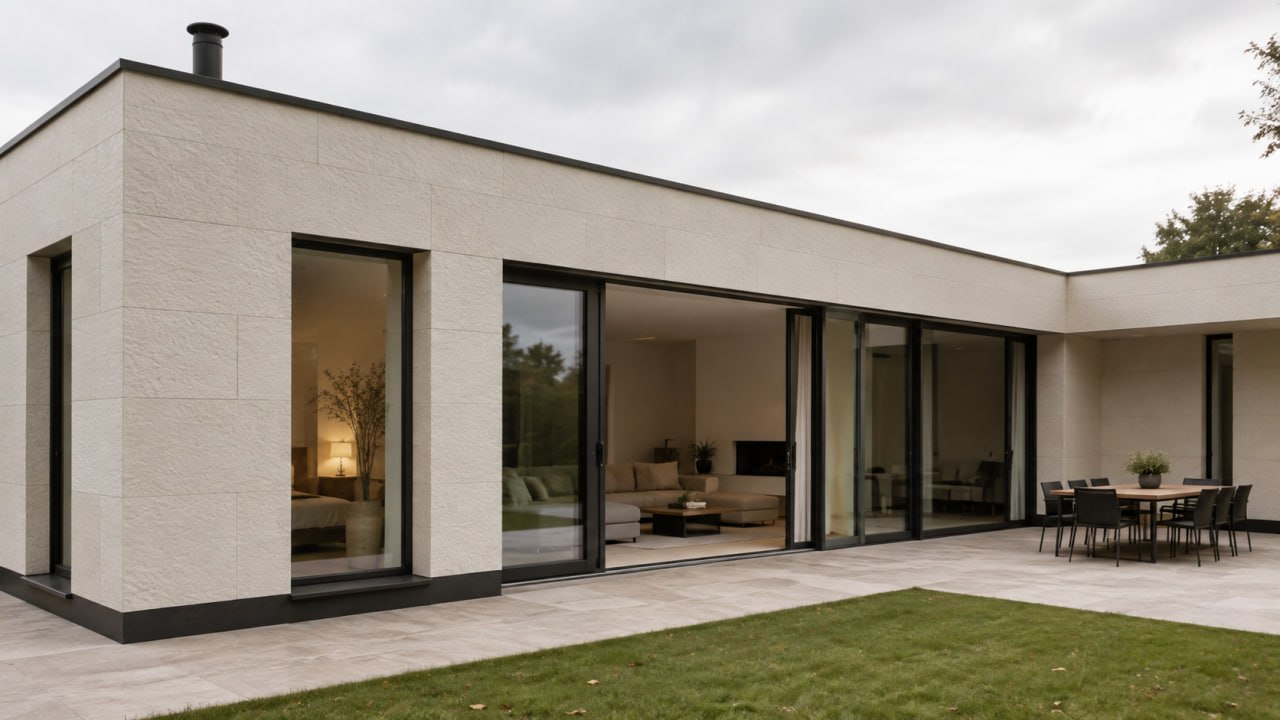
A warm house does not need very thick brick walls. A properly chosen facade system reduces the thickness of the structure, keeps usable space inside and delivers a warm facade without unnecessary weight.
A modern, energy-efficient house does not need very thick brick walls. More and more often, warmth and comfort come not from massive masonry but from a properly chosen facade system: load-bearing wall + insulation + reinforcing layer + final finish.
That approach reduces the overall thickness of the structure, keeps more usable space inside the house, and produces a warm facade without unnecessary weight.
Why a thick wall is not always the best answer
It used to be assumed that the thicker the brick wall, the warmer the house. In practice, massive masonry means:
- higher material consumption;
- greater load on the foundation;
- higher construction costs;
- less usable floor area inside;
- harder to correct heat loss once the work is finished.
Wall thickness on its own does not guarantee comfort. What matters is how the whole assembly holds heat and protects the house from cold, heat and moisture.
How a thin, warm facade works
The idea is simple: the main wall carries the load, while the external facade system retains the heat. That removes the need for excessively thick walls. The general principles of such systems are described by the European Association for ETICS.
A correct system includes:
- the wall substrate;
- insulation of the required thickness;
- the adhesive and reinforcing layer;
- the facade mesh;
- corners, reveals and junctions;
- the decorative and protective final finish.
When all the layers work together, the house is protected from cold, overheating and the outdoor environment.
Saving space inside the house
Even a few centimetres around the perimeter can make a visible difference. If a more rational assembly with external insulation replaces a very thick wall, the usable area inside is not eaten up by heavy masonry.
This matters particularly for:
- small houses;
- townhouses;
- houses with a compact layout;
- projects where every square metre counts;
- renovation of older buildings.
A thin facade helps preserve internal volume without sacrificing warmth or appearance.
Why insulating from the outside makes more sense
External insulation protects the wall from the street side. That reduces heat loss and keeps the house more comfortable across the seasons.
When facade insulation is carried out, it is not enough simply to glue the insulation on. A complete system is needed: reinforcement, corner protection, properly formed reveals, drip edges and a final finish.
Done that way, the facade becomes not only warmer but also stable.
The final layer affects the result too
The finish has to be light, durable and weather-stable. Choosing a heavy material can make the facade system more complicated and more expensive to install.
In that sense KORDEKO flexible tile (PletaFlex) suits a thin, warm facade well: it gives the appearance of stone without loading the structure with extra weight.
The material can be used on walls, the plinth, corners, reveals, the entrance group and architectural elements, keeping the house visually consistent. How it looks on real houses can be seen in the gallery of completed projects.
Where a thin facade helps most
A thin, energy-efficient system is especially useful when you need to:
- build a warm house without massive walls;
- renovate an old facade without excessive load;
- keep more space inside;
- reduce the overall thickness of the structure;
- achieve a modern appearance;
- combine insulation with a decorative finish.
This allows a more rational design: the structure handles strength, the facade system handles warmth and appearance.
Thickness is not the only thing that matters — the detailing does too
Even good insulation will not deliver if mistakes are made in the details. Particular attention is needed at:
- the corners of the house;
- window reveals;
- junctions with the plinth;
- connections to the roof;
- drainage and drip edges;
- the entrance group;
- transitions between different materials.
These are exactly the places where thermal bridges, cracks, streaks and a loss of neat appearance show up first. A great deal here also depends on careful flexible tile installation.
Why it pays off in the long run
A thin, warm facade solves several problems at once:
- lower heat loss;
- no excessively massive walls;
- usable area preserved;
- reduced load on the structure;
- an attractive, modern facade;
- lower future maintenance costs.
It is not merely a decorative choice but a more rational approach to building and renovating a house.
Conclusion
A thin facade with external insulation is a modern alternative to excessively thick brick walls. It helps make a house warm and energy-efficient while keeping more usable space inside.
If the insulation, reinforcement, detailing and final finish are chosen and executed correctly, a KORDEKO flexible facade becomes a practical solution for a house that should be attractive, warm and well thought through for years. If the full scope does not fit the budget at once, the facade can be split into stages.
Frequently asked questions
Does a thin facade really keep the heat in?
How much usable space is gained?
Where do most mistakes happen?
Need advice on your facade?
- Get a free consultation for your project
- Find out which material suits your facade
- We'll answer all your questions and help you choose